Southern Baptist Affirms Future of Denominationalism
There is a future for denominationalism, affirmed one Southern Baptist missiologist. But Christians should not assume that denominations are necessary for the mission of God.
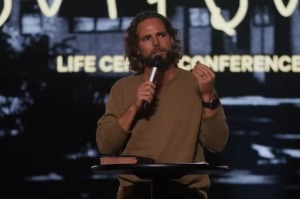
Ed Stetzer, president of LifeWay Research, addressed fellow Baptists Tuesday giving his thoughts on Protestant sects that have taken a verbal beating over the last few decades.
"Right now a lot of people are asking questions about the viability and the efficacy of denominations," he said before his talk at the "Southern Baptists, Evangelicals and the Future of Denominationalism" conference at Union University. "People have been swinging away at denominations like a low-hanging piñata on Cinco de Mayo."

Get Our Latest News for FREE
The criticisms and questions are probably appropriate, Stetzer acknowledged. In fact, there are some who are too inwardly focused and consumed with the "denominational machine" which can distract them from the mission for the church.
But denominations are inevitable, he said.
"Like-minded people will always find ways to associate with one another," he pointed out. "The positive side – missional cooperation."
"Denominations have been networking and partnering for decades, even centuries. ... for the sake of the Gospel. Denominations tend to be the tools used by local churches to get the global work done."
He added, "Independent churches can learn much about kingdom-minded cooperation from the denominations that they frequently criticize."
But denominationalism is unavoidable in the negative sense as well, he lamented. "Sometimes denominationalism leads to a perpetuation of a tribal, insular identity."
A second reason Stetzer sees a future for denominations is the hunger he's finding among younger evangelicals. They are looking for "a sense of rootedness in a fragmented society," he said.
"In a rapidly morphing age, the sense of historical solidarity and theological and ecclesial stability offered by a denominational heritage are a great value," the sought-after speaker said.
"Where some see age, decay, and obsolescence in denominations, many others actually find longevity, maturity, and wisdom."
Thirdly, churches that belong to denominations have confessional systems and accountability that ground them in orthodoxy.
"Today, evangelical denominations often are the bastions of orthodoxy, while independent congregations more easily shift in their theology," he pointed out.
That's one of the reasons Stetzer is a Southern Baptist. Well in tune with both the independent and emerging churches as well as the traditional ones, Stetzer said Southern Baptists most closely match his own convictions about Scripture and mission. He's a contemporary church pastor but he's also "an inerrantist, complementarian, cooperating Baptist," as he wrote recently on his blog.
"I'm really just a conservative theologian who loves God, His people, His Word, and the lost of the world," he wrote. "Being a conservative in doctrine and flexible in my method, I find a comfortable home with the SBC" (Southern Baptist Convention).
Although some believe Christians are moving into a post-denominational era and although being a part of a denomination has its challenges, Stetzer said that at the end of the day, "the SBC is a tool that God is using in powerful ways in the states and around the world."
"While I'm not impressed with denominations, I'm committed to mine."
This year, Baptists worldwide are celebrating the 400th year since their movement was founded, and the Oct. 6-9 conference at Union University in Jackson, Tenn., is being held in recognition of that anniversary.
As Baptists look toward another century, Stetzer made clear that he is not necessarily arguing for denominations in the sense that he thinks they are God's answer for the world.
But he feels they are valuable and offered a denominationalism that he believes is desirable.
Denominations, he suggested, should be missional as opposed to tribal; be based on confessional consensus; value methodological diversity; and assist local churches, not vice versa.
"God has allowed for the cooperation of churches in networks and denominations so that the greatest number of people in our darkened world can be most effectively reached with the one thing that brings true unity – the Gospel. I believe we can do more together than we can apart," he said.