Marijuana: The time for national reckoning has come

My East Texas grandmother had two homespun proverbs that she used quite often. The first was, “even a blind hog finds an acorn once in a while.” The second was, “even a broken clock is right twice a day.”
I was reminded of my grandmother’s pet phrases when I read The New York Times Editorial Board, declaring, “It’s Time for America to Admit That It Has a Marijuana Problem.” The Times Editorial Board began by acknowledging that it had argued for legalizing marijuana in “a six-part series” in 2014, and in doing so, had underestimated the problems such widespread legalization would bring.
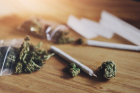
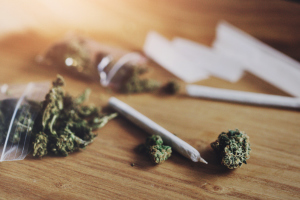
As I was an undergraduate at an Ivy League university in the late 1960s, I was part of the leading edge (born in 1946) of the generation that served as the test pilots for marijuana in the U.S. Anyone remember “Cheech and Chong”?
I know that in my dormitory in the 1968-69 school year, the use of “weed” was pretty widespread. I was in a minority as a nonuser, and I can remember some weekend nights in the late spring of 1969 when I put towels under my door to staunch the smell of marijuana smoke seeping through.
Those I knew who were indulging in smoking marijuana saw themselves as “recreational users,” and though I did not know anyone who had a serious reaction, I heard of a couple of students who had a bad experience.
However, as a minister and sometimes local pastor over the years, I have experienced families having to deal with serious drug addiction problems, and it almost always starts with marijuana. This is so much the case that it has been called the “gateway drug” because so many go on from marijuana to stronger, even more addictive and lethal drugs such as cocaine.
The Times acknowledges that widespread legalization “has led to much more use.”
“Surveys suggest that about 18 million people in the United States have used marijuana almost daily (or about five times a week) in recent years. That was up from around six million in 2012 and less than one million in 1992. More Americans now use marijuana daily than alcohol.”
The Times also acknowledged that widespread legalization and legal acceptance have brought with them far more significant societal problems than they and others had anticipated. Perhaps the major one is that today’s cannabis “is not your parents’ weed.”
“In 1995, the marijuana seized by the Drug Enforcement Administration was around 4 percent THC, the primary psychoactive compound in pot. Today, you can buy marijuana products with THC levels of 90 percent or more….It is as if some beer brands were still sold as beer but contained as much alcohol per ounce as whiskey.”
The tremendous increase in marijuana’s potency has exponentially increased its addictiveness and its contribution to physical and mental illnesses.
One important truth that the Times and those clamoring for widespread legalization overlooked is the important truth that a significant number of people in America will not do something if it is illegal, even if they want to do so. During alcohol prohibition in the United States, alcohol consumption actually went down because so many consumers of alcohol quit consumption merely because it was illegal.
It is probably too late to make marijuana illegal since it has been legal long enough to gain a foothold, which would make it difficult to eradicate it (similar to the problem with alcohol under prohibition). Instead, we as a nation should strictly regulate marijuana at the federal level, tax it substantially, and the higher the THC potency, the higher the tax should be.
The government should also much more strenuously regulate the use of medical marijuana and the claims the industry is making for its medical benefits. Also, “driving under the influence” of marijuana should be penalized at least as harshly as driving under the influence of alcohol. And young people and adults should be much better educated by the government as to the significant and sometimes lethal impact marijuana has on our fellow citizens.
In attempting to implement these reforms, America will face significant opposition from those who are making a great deal of money from legal cannabis. We must persist, however. If we are to love our neighbors as ourselves, we will do much more than we have been doing to keep them from ever experimenting with marijuana. It is probably too late to make it illegal, but it should be severely regulated at the federal level for both personal and medical use.
Dr. Richard Land, BA (Princeton, magna cum laude); D.Phil. (Oxford); Th.M (New Orleans Seminary). Dr. Land served as President of Southern Evangelical Seminary from July 2013 until July 2021. Upon his retirement, he was honored as President Emeritus and he continues to serve as an Adjunct Professor of Theology & Ethics. Dr. Land previously served as President of the Southern Baptist Convention's Ethics & Religious Liberty Commission (1988-2013) where he was also honored as President Emeritus upon his retirement. Dr. Land has also served as an Executive Editor and columnist for The Christian Post since 2011.
Dr. Land explores many timely and critical topics in his daily radio feature, “Bringing Every Thought Captive,” and in his weekly column for CP.