Why Did the Outrage of the Baghdad Church Bombings Die with Its Victims?
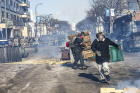
On September 15, 1963, four Klansmen bombed the Sixteenth Street Baptist Church in Birmingham, Alabama. Four young African-American girls were killed, and many were wounded. Shock and anger galvanized a nation. Less than a year later, President Johnson signed the 1964 Civil Rights Act that inexorably changed the lives of African-Americans for the better. On Saturday and Sunday, July 11-12, 2009, six churches in Baghdad were bombed. Six people lost their lives in one of the blasts, many more wounded. As of now no one believes that conditions of the persecuted Christian minority in Iraq will get any better. Within a matter of days, no one but the families whose lives have been shattered would even remember.
How could our collective radar screen go blank so quickly?
The patriots of our Revolutionary War relied on flickering lanterns in a steeple and a Midnight Ride in 1775 to warn that British troops were on the move across Boston's Charles River. Enraged citizens of Iran instantly warned one another about the movements of the Basiji through email and Twitter. At least initially, they thwarted the mullah's attempted lock-down on information. Using the new technologies, they instantly told the world about the extent of popular rage over the theft not just of an election but of their hopes of a better future. Many participants in the Green Revolution were buoyed by the solidarity of a shocked world that felt that they were witnessing, via the technological miracles of Internet 2.0, a massive Tiananmen Square. Ahmadinejad had the thugs, but the people had Twitter and Facebook and with it, the world's rapt attention.
Americans had particular reason to be optimistic about media bringing about positive change. Images from the battlefield beamed into American living-rooms each night helped to halt the Vietnam War. Today, communications are more ubiquitous and more universal. Surely, many activists posit, that should translate into a human rights bonanza! If YouTube and Facebook had been widely available at the height of the ethnic cleansing by the Janjaweed in Darfur, wouldn't the world have acted more quickly and perhaps saved more lives?
Not necessarily. In Iran and China, digital Big Brother internet interventions underscore that the new technologies can also work to undo individual liberties. A joint venture between German industrial giant Siemens AG and Nokia provided the Iranian regime with the superspy technology to eventually turn off the spigot of information, and to expose individual protesters to arrest.
We, however, live in democracies. It wasn't technological suppression that generated the stone-cold silence following the Baghdad church bombings. CNN and some wire services covered the story for a cycle or two, and then it disappeared. Church groups, interfaith groups, and ordinary citizens could have registered their outrage and demanded of our leaders that Iraq's minorities should not go unprotected. They didn't. The story died with its victims.
In the West, it seems, we are victims of too much information, apparently more than we are capable of processing. Too often we have become voyeurs, watching from a safe distance. There are too many channels, too many blogs, too many tweets to follow. They all becloud our focus, and compete for a limited supply of moral outrage. And when we are not in the mood to think of others at all, it is so easy to find refuge in the hand-held digital diversion. Why think, when we can be entertained?
The slogan used to go, "If talk is cheap, blame it on the phone company." Today's version might be "If complacency is rampant, blame it on downloads."
In the clash between the positive and negative consequences of instant information, one truth remains standing. No one can plead ignorance in the court of moral responsibility.
In the immediate aftermath of World War II, the judges at Nuremberg deep-sixed the most frequently used excuse of the architects of the War and of the Holocaust. "I was just following orders" would never again have traction in front of a war-crimes tribunal. The judges sent those who used the excuse to the gallows.
The ordinary citizens who lived near Nazi concentration camps often watched as pajama-clad prisoners were marched to and from their forced labor posts. When asked why they did or said nothing about these camps, most managed a feeble "We didn't know." It may have struck people as implausible defense, but it worked. "We didn't know" has gone the way of the rotary phone. It can offer no cover at all for inaction in a wired, linked world.
After Genesis, "Am I my brother's keeper?" does not work very well either. God holds us responsible for doing as much as we can. If today we realize that moral outrage quickly shrivels on the digital vine, then we need to find creative strategies to nurture and preserve it. We need to use the power of the new media to organize ourselves and to use its tools to overcome the complacency that it can also create.
The next time we read of attacks on houses of worship, or of human rights outrages perpetrated in God's Name, we ought not to be virtual bystanders.