Hate Crimes, Thought Police, and Religious Freedom
The Local Law Enforcement Hate Crimes Prevention Act (H.R. 1592), which passed in the House of Representatives in a veto-susceptible vote of 237-180, could well lead to serious infringements of our First Amendment freedom of speech protections in the United States. Such legislation has had a very chilling effect on free speech in Canada, Scandinavia and other parts of Europe.
The act would establish a new federal offense for so-called "hate crimes" and add "sexual orientation" and "gender identity" as protected classes, as well as mandate a separate federal criminal prosecution for state offenses for crimes motivated by "the actual or perceived race, color, religion, national origin, gender, sexual orientation, gender identity, or disability of any person."
In essence, it would codify into federal law that certain types of people—homosexuals and "transgenders," for example—deserve greater protection under the law than others.

Get Our Latest News for FREE
It's worth noting in this bill that discrimination on the basis of sex will become discrimination on the basis of "gender." But that's a whole different story.
We should not condone any act of violence against person or property—incidental or major—for any reason. There is no place for crimes of violence against homosexuals in America.
It is not new news that speech that leads to violent behavior can be penalized. In Brandenburg v. Ohio (1969), the Supreme Court said that the "constitutional guarantees of free speech and free press" prevent the state from forbidding speech unless it is "directed to inciting or producing imminent lawless action and is likely to incite or produce such action."
And it is not novel that one's speech prior to the commission of a crime can be used to determine the intent behind the criminal act.
From Wisconsin v. Mitchell (1993): "The First Amendment, moreover, does not prohibit the evidentiary use of speech to establish the elements of a crime or to prove motive or intent. Evidence of a defendant's previous declarations or statements is commonly admitted in criminal trials subject to evidentiary rules dealing with relevancy, reliability, and the like."
What is new with this bill is that is seems to draw a very dubious and dangerous line from the innocent free expression of religious beliefs to an act of violence against someone from a protected class.
Mike Pence, congressman from Indiana, said the legislation threatens to criminalize religious speech. Pence was rebuffed in his efforts to tighten the section of the bill that says "any expressive conduct" secured by the First Amendment would remain protected under this bill.
Pence's amendment stated, "Nothing in this section limits the religious freedom of any person or group under the Constitution."
Also, attempts to amend the bill to include policemen, members of the military, and pregnant women as a special class deserving protection under this act failed on party line votes.
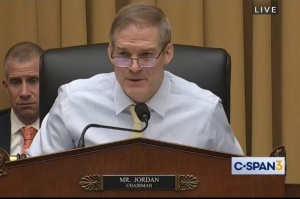
It appears from the bill and from astonishing comments made during the April 25 Judiciary Committee hearing that a pastor who preaches against homosexuality could be charged with inciting a hate crime if one of his church members—sometime after hearing the pastor's comments—commits a crime against a homosexual person.
Mr. Louis Gohmert (R-TX): Even with your amendment, you still have to go back to the "rule of evidence" at page 15 of the underlying bill. And it says that these things may not be introduced as substantive evidence at trial unless the evidence specifically relates to the offense. And if I understood the gentleman's amendment—and I will put the question back to you—if a minister preaches that sexual relations outside of marriage of a man and woman is wrong, and somebody within that congregation goes out and does an act of violence, and that person says that that minister counseled or induced him through the sermon to commit that act, are you saying under your amendment that in no way could that ever be introduced against the minister?
Mr. Artur Davis (D-AL): No.
Chairman John Conyers (D-MI): The gentleman's time has again expired.
Mr. Louis Gohmert (R-TX): And he answered no before the time ran out.
[Emphasis supplied.] [Source, .PDF.]
In addition to being a speech issue, it is also a federalism issue, in that H.R. 1592 would constitute a giant leap in the federalization of criminal law in the United States, which prior to this time has been left as much as possible to each respective state to administer, prosecute and adjudicate.
In United States v. Morrison (2000), the Supreme Court held that "the Constitution requires a distinction between what is truly national and what is truly local."
Looking to the Fourteenth Amendment, the ruling went on to say: "Congress therefore may not regulate noneconomic, violent criminal conduct based solely on the conduct's aggregate effect on interstate commerce."
The court continued, there are "limitations on the manner in which Congress may attack discriminatory conduct;" further, "gender-motivated crimes of violence are not, in any sense, economic activity."
There is no question that all violent crimes should be prosecuted to the full extent of the law, regardless of the motivation—real or imagined—of the perpetrators that commit the crimes and regardless of the identity of the victims.
Yet a law won't purge hate from the national conscience; only Christ can do that.
The greatest commandment, Jesus said, was that we should, "Love the Lord your God with all your heart, with all your soul, and with all your mind" and "Love your neighbor as yourself" (Matthew 22:37-40).
It is worth noting Jesus doesn't describe our neighbor. He didn't say he or she had to meet certain behavioral or moral guidelines, only that all our neighbors need to know God's love as much as we do.
We should all strive for a just society that treats all victims as equally valuable and innocent in the law and perpetrators as equally culpable.
In the meantime, I'm grateful the President has indicated he will veto this Orwellian bill if it reaches his desk.
____________________________________________________________
Dr. Richard Land is president of The Ethics & Religious Liberty Commission, the Southern Baptist Convention's official entity assigned to address social, moral, and ethical concerns, with particular attention to their impact on American families and their faith.