
Advanced Search

High-Tech Churches Worry Traditional Worshippers

By
Christian Post Reporter
Wed, Sep. 26 2007 11:37 AM ET
[-]Text[+]
E-mail Print RSS More on Topic AddThis Button

It's no secret that churches have stepped up their technology use as more projection screens adorn the front of churches and more preachers maintain a prominent presence on the Internet.

But not all are fans of high-tech churches.

"I feel like it's too much and it takes over the worship," said the Rev. Dorothy LaPenta, pastor of the 150-member Hope Presbyterian Church in Mitchellville, according to The Washington Post. "People will just be sitting there, their eyes fixated on the screen. They're waiting to be given something instead of participating."

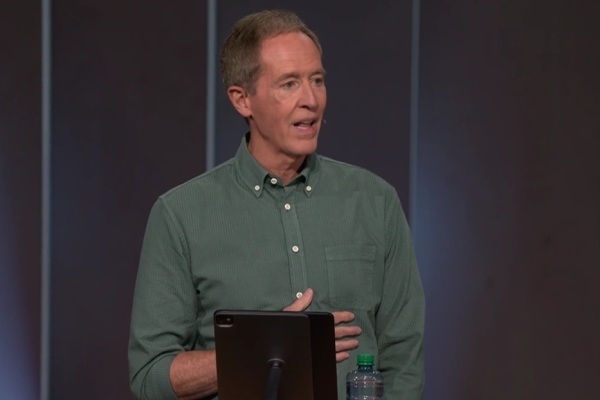
It's typical for worshippers who flock especially to megachurches to sing praises in tune with a full contemporary band and a high-tech sound system complete with stage lights and lyrics on jumbo screens. Pastors take the stage with camouflaged headset microphones and flash Scripture passages on the screens largely to the convenience of those who forgot their Bibles or who don't have one. At more innovative churches, a short video clip introduces the sermon.

Church leaders who implement the technology say it's all about reaching more people. And to reach people in today's culture, churches need to be at the forefront of cutting edge ideas.

"I don't think that God would want us to try to evangelize like Jesus did 2,000 years ago," said the Rev. Grainger Browning Jr., pastor of the 10,000-member Ebenezer AME Church in Fort Washington, according to the Post.

Well over half of Protestant churches use a large-screen projection system in their communication, according to a 2005 Barna study. Just five years earlier, only 39 percent were using that technology. And double the proportion of Protestant churches (61 percent) were integrating video content into their worship services in 2005 compared to 2000. Also, with the advent of big screens, fewer churches are providing Bibles in their pews – dropping from 86 percent in 2000 to 80 percent in 2005.

Last year, churches spent $8.1 billion on audio and projection equipment, according to TFCinfo, an audiovisual market research firm, as reported by the Post.

Too much technology, however, may take away from the message and the focus of worship, some caution.

"One of the problems is that with video technology, you don't watch the pastor, you watch the screen, where he appears like a movie star 20 times bigger than reality," James B. Twitchell, author of the book "Shopping for God: How Christianity Went From In Your Heart to In Your Face," told The Washington Post.

And an even newer technological advance that a small but growing number of churches are picking up is the "Internet campus."

LifeChurch.tv, for example, has 12 campuses scattered across the nation – one of which is an Internet campus. Launched in April, the interactive virtual campus can be found in the popular 3-D online world Second Life.

LifeChurch also opened three other physical campuses within this past year and has witnessed its total attendance jump by some 2,000 since early this year. All campuses are made possible through video and satellite technology with senior pastor Craig Groeschel's messages video fed each week.

The multi-site church now claims nearly 20,000 people every weekend.

Despite their growth, churches such as LifeChurch have had their share of critics over the incorporation of satellite technology into worship services.

Some church leaders wonder if the trend is creating churches as the Bible defines churches or if it is "wal-marting" churches.

"It is a substandard substitute, when you compare it to what God intended," said Michael Hall Sr., pastor of the 125-member New Beginnings Community Ministry Center in Bowie, according to the Post. "How can we break bread? We're not going to have dinner over the computer."

With a passion to bring the unchurched to Jesus, Groeschel, however, says, "We have to care more about reaching people than about obeying man's stupid rules because that's what they are.

"In order to reach those that no one else is reaching, we will have to do things that no one else is doing," he has said.

But the innovative pastor cautions, "We must become less impressed with our latest program, less impressed with our latest website, and less impressed with our own what we call creative idea and become more focused on becoming less and making Jesus more in everything that we do."

The 12,000-member McLean Bible Church, one of the largest churches in the Washington, D.C.-area, plans to launch an Internet campus this year complete with chat rooms and online small groups. The megachurch has also embraced the multi-site approach in order to reach all of "secular Washington."

BACK TO TOP Print E-mail More on Topic AddThis Social Bookmark Button

Comments

Most recent comments
mbdil
  • Thu Oct 11, 2007 11:53 am
  • : 0
  • : 1
  • Flag
I'm curious about the "small but growing number of churches" picking up an internet campus. Currently I'm only aware of two (Lifechurch and Seacoast) that are going this direction. There are other internet churches that exist, but generally they don't have the support and resources of an established brick-and-mortar church, and then often appear as little more than a pet evangelism project. I wish that more churches would go this direction. As pgcfriend pointed out and I've noticed from experience, there are a great many people out there who would not attend a real life church, but will check out one on the internet and often find Jesus.

Also, I could not disagree more with the suggestion that the satellite-feed-based campuses are "impersonal". Rather than spending 20 hours in his study preparing a sermon, the pastor of these extended campus churches has the time to meet with more leaders, visit more sick people, and be human with his congregation, including joining them for much of the worship service. That sounds like a good thing.
rwsmd
  • Mon Oct 01, 2007 9:02 pm
  • : 2
  • : 1
  • Flag
Did Pastor Browning in Fort Washington really say that he didn't think God would want us to try to evangelize like Jesus did 2000 years ago? It's good to know such titans of the faith are around today to straighten God out...sheesh!
adc1967
  • Thu Sep 27, 2007 12:18 pm
  • : 3
  • : 1
  • Flag
Technology and its use can be helpful. How one uses it becomes the question. LifeChurch has a presence in our city. It's certainly different. Every campus has its music and pastor, but the message is piped in via satellite. If this is an effective way to get crowds of people, so be it. However, for a local church, the impersonal aspects of it come off as bizarre.

It shows me how different we view what a local church experience should include; our varied definitions of a pastor; and the level of intimacy we want. Technology, for me, is not a problem; but at what expense do we want to be different? Unless I am interested in retaining authority over the people reached, it makes more sense for trained leaders to take the helm and lead at the various campuses. Duplication of leadership is the greatest contribution one leader gives to the body of Christ. LifeChurch appears to be set up to primarily serve evangelism by being unique or different. If they intend to be around beyond one generation the impersonal elements will need some adjustments.

Also, placing too much emphasis on the number of people participating is one of the biggest mistakes made when we evaluate ministry effectiveness. Depending on the care with which mega churches handle communicating the gospel to the individual determines in large part whether they are effective at reaching the lost. Unfortunately most are not reaching new people but are recycling disenchanted Christians and church members.

I don’t want to come off as a mega church or LifeChurch basher. What they are doing is certainly evangelical, for that I am supportive, but I do not think their structure could be described as people building; it’s not necessarily the technology used.
GreatNW
  • Thu Sep 27, 2007 8:34 am
  • : 2
  • : 3
  • Flag
I wonder if the mega churches are all that effective in reaching the lost? Most seem to pull in people who are already Christians who want to attend the newest and latest thing. It is the Nordstrom phenomenon of church attendance. We live in an age where the culture is very brand conscious and it has rubbed off on Christians. I would predict that the mega church trend is already on the wane. The real hope for Christianity in America is in the revitalization of the small church and developing a more effective model of small church ministry. Even the large churches realize their limitations and spend enormous amounts of resources trying to become "small" in order to be more effective at creating disciples and not just creating numbers.
KeithPas
  • Wed Sep 26, 2007 5:10 pm
  • : 3
  • : 2
  • Flag
I don;t like to come to church to read the sermon, I come to church to listen to the sermon. As long as the Gospel is being preached and the general state of the congregation is healthy I don;t think it matters too much. My preference is to be in a smaller church where the use of audio visual tools is somewhat limited and used but in a sparing way. I have no problem with bigger churches that choose to go in the other direction, it is just not my thing.
RBB
  • Wed Sep 26, 2007 3:14 pm
  • : 4
  • : 1
  • Flag
This article takes one of the most important problems facing Christianity right now, and trivializes the situation and the problem. The questions addressed are nowhere as unimportant as, should there be a video screen or rock music, or if the church should be available on the internet. It goes much deeper than that. It goes to the point of what is a church. Who is more important God or man. What is worship. Whether the church is the house of God or a business. What is being taught and more importantly what isn't.
pgcfriend
  • Wed Sep 26, 2007 12:27 pm
  • : 8
  • : 10
  • Flag
Why should so-called 'traditional' worshippers care one bit about this issue? If the people are preaching the clear message of the gospel that is all that matters. Those that do not like it can live their lives without it. Those that appreciate the use of technology to reach others should use it to the max. The Internet helped me tremedously when I was horrified at the idea of attending anywhere. I watched Internet services online for quite a while before I was able to scrape up enough nerve to go anywhere else. I found the church I attended because of on-demand and streaming media that I listened to. These types of articles are a waste of precious time and space. The issues here have nothing at all to do with the message of Christ but preference. We have better things to do. I guess I spent too much time responding to this:)
Please help us to monitor our message boards by flagging Abusive, Spam, Offensive, Illegal, Racist or Libellous Posts.

Comment on this story

ID Password
Submit Don't have a Christian Post ID?Signing up is easy. Click Here