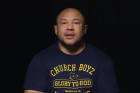
Matt Chandler on political idolatry, deconstruction and why spiritual growth is ‘slow and disorienting'


In an era that prizes immediacy and instant transformation, even within the Church, Matt Chandler is making a countercultural case that sanctification does not move linearly “up and to the right.”
“I haven’t heard bad preaching on it,” the 51-year-old pastor of The Village Church in Flower Mound, Texas, told The Christian Post. “But there’s just this assumption that sanctification … is just going to be up and to the right … my struggles are going to go away … and I’m not going to get disoriented.”
Chandler’s latest book, Becoming Like Jesus: The Everyday Journey to Living a Life of Holiness, decades in the making, confronts that assumption head-on. Drawing on more than 30 years in pastoral ministry, Chandler describes spiritual growth not as a straight ascent but as something more like a winding coil; a pattern of highs and lows that, over time, still moves forward.
“I wanted to write an honest book about how it happens,” he said.
The timing, he added, is not accidental. In recent years, Chandler has paid close attention to the rise of what is often called “deconstruction,” a term he describes as broad and imprecise — “it’s kind of a junk drawer word,” he said — but still revealing.
Beneath many of those stories, he hears a common thread: disappointment when faith does not remove suffering or struggle.
“Some of the deconstruction stories, healthy, good ones, are, ‘We want to own our faith. We don't want our parents' faith,'" Chandler said. "I just read so many testimonies of, ‘I tried Jesus, He didn't work.’ If you would get into the nuance of their story, it would be that … life didn’t go their way, or this super disorienting experience happened to them, or the fight with sin persisted, and so they would interpret that as, ‘It doesn't work for me, or Jesus isn't real,’ and then frame it in trauma language.”
For Chandler, a husband and father of three, that reflects not a failure of the Gospel, but a misunderstanding of it.
“I always wondered, what version of the Gospel did you receive?" he said. "What did you say yes to? Because what we should say 'yes' to is Jesus and a personal relationship with Him. The good news of the Gospel isn’t that, 'if I give my mind, body and soul to Jesus, everything goes my way.' The good news … is that I get God, and regardless of what comes, He will be with me, and He won’t waste it.”
That theology has been tested in his own life, from a brain cancer diagnosis that brought years of treatment, early struggles in his marriage and more recent health crises involving both himself and his wife.
“There are three or four moments … that were so disorienting to me … it felt like the floor fell out from under me,” he said.
And yet, in retrospect, those moments became formative.
“I have seen the most profound shaping of my soul, not when I’m winning … but when I am in the dark night of the soul, when I am disoriented,” he said.

According to Chandler, that perspective allows him to reframe suffering not as an obstacle to spiritual growth, but as one of its primary instruments. Still, the pastor acknowledged that such a claim can feel unsatisfying, even offensive, in the face of real loss.
“I still have no good answer for you on the death of a 6-year-old,” he said. " I cannot make sense of how that's going to somehow, one day glorify God. But one of the things I talk about in the book is, if you don't quit, you win. ... I'm trying to lead people into closing the distance between them and the Lord for the sake of their own souls, so that the good work of the disorienting season can accomplish the purposes of God in allowing them into our lives."
There are practices that sustain faith in the absence of clarity, he said, pointing primarily to confession. In 2024, he spoke to CP at length about the topic of confession after a tumultuous 2022 season that led to a temporary leave of absence from the pulpit at The Village Church.
During that time, Chandler acknowledged an “inappropriate” but non-romantic online relationship, which church elders described as “unguarded and unwise.”
“When I stumbled, I was met with both grace and accountability,” he told CP at the time, noting that the culture of transparency ultimately strengthened trust and encouraged others to confess struggles more quickly.
In his latest interview, Chandler explained that, though often misinterpreted, confession is “just telling God the truth.” Truth, he said, may include doubt, anger or confusion, emotions often suppressed in church settings but modeled throughout Scripture, from David to Jeremiah.
Rather than distancing believers from God, such honesty draws them closer.
“I don’t want to create distance from the Lord by trying to hide that doubt from Him,” he said. “I want to bring that doubt right into His presence.”
Chandler said the call to peacemaking addresses not just the internal life but the external one, particularly in a moment marked by cultural and political division. He distinguished peacemaking from what he called “peacekeeping,” a more passive approach that avoids conflict and allows it to fester rather than resolving it.
“I wonder how much deeper and richer our belonging … would be … if we would take serious peacemaking versus peacekeeping,” he said. “Things that should just be a skirmish turn into a full-blown war, because we just don’t want to say anything.”
That same cultural moment, he said, has exposed deeper issues within the Church, particularly when it comes to politics. Looking ahead, Chandler, who has been critical of both political parties, believes this is one of the areas that will require significant reform.
“I think … the political idolatry and ideology today, I think it’s just killing us,” he said. “And I think that’ll be something 10, 15 years from now, we look back with maybe some embarrassment and shame around because I think it's so subversive in how it plays out.”
Underlying many of these challenges, Chandler reflected, are inherited distortions of the faith, many of them magnified in the 1990s, from the prosperity gospel to moralistic deism, a framework that reduces Christianity to behavior rather than relationship.
“Not that the Lord wasn't at work, but the 90s they were a disaster in a lot of ways,” the pastor said. “I want to be real careful, because we've built on that ground. I think every generation does this. Every generation looks at what was going on and tries to keep the best of it, but also do the work of reforming. … The current iteration of what Jesus is doing in His Church is healing some of that and rewriting it.”
The history of the Church is that we drift,” he said. “Each generation will have some reforming to do.”
Even virtues like meekness, often dismissed in a culture that rewards certainty and volume, require redefinition, Chandler said, emphasizing that meekness is not weakness but “strength under control.”
And for those discouraged by the slow pace of their own spiritual growth, Chandler offered the reminder that God is neither frustrated nor surprised by that reality. The Christian life, he said, is not a straight line toward perfection, but a long, uneven journey.
“From the moment you said yes to Jesus … until you either die or Christ returns, you are a work in progress,” he said. “Jesus knew what He was buying on the cross,” he said.
Becoming Like Jesus releases on April 28.
Leah M. Klett is a reporter for The Christian Post. She can be reached at: leah.klett@christianpost.com