‘I never knew’: Phil Robertson’s unknown daughter shares journey from trauma to healing


When Phyllis Robertson Thomas finally stood face-to-face with the father she had spent more than four decades not knowing, Phil Robertson placed his hands on either side of her face, looked her in the eyes and spoke three words that would eventually become the title of her book: “I never knew.”
For Thomas, the words initially brought relief; the “Duck Dynasty” patriarch, beloved by millions around the world, hadn't known she existed, rather than knowing about her and choosing not to pursue a relationship. But in the years that followed, the phrase took on a weightier meaning as Thomas confronted childhood trauma, depression, marital struggles and long-held patterns she says had shaped both her relationships and her understanding of God.
“I never knew how much healing there is in the Lord,” Thomas told The Christian Post in an exclusive interview. “I never realized how much God can take an ugly past, or a broken past, or a painful past, and transform it into something beautiful.”
In her new book, I Never Knew: Finding Healing and Renewal After Trauma,Thomas, a licensed professional counselor and former psychiatric nurse, candidly details the circumstances surrounding the discovery of her biological father while delving into some of the most painful chapters of her life.
Thomas was 45 when she learned Robertson was her biological father, the result of an affair he had before his conversion to Christianity. Robertson, who had been open about his past struggles with alcohol, infidelity and other destructive behaviors before becoming a Christian, didn't know he had a daughter until Thomas tracked down the family.
Thomas' discovery began after a DNA test revealed that the genealogy she had been told about growing up didn't match her genetic results. She also discovered that she and her siblings were half-siblings.
After researching her family tree, Thomas came to believe Robertson might be her biological father. She eventually contacted Robertson's sons, Al and Jase Robertson, and a DNA test confirmed the relationship.
Thomas had heard of the family's hit reality television series, “Duck Dynasty,” but had barely watched it. She was serving as a missionary during much of the show's success and later avoided watching too much of it because she didn't want the television series to create preconceived ideas about her newfound family.

Before meeting Robertson, however, Thomas went to hear him preach at a church service at the end of 2019. At the time, she was fairly certain he was her father, though paternity had not yet been confirmed. Despite not being raised in a churchgoing family, Robertson had a strong faith and always knew God’s hand was on her life.
“Hearing his voice for the first time live, he was sharing the Gospel, and I thought, ‘Wow, like this man is, I think, my dad, and how cool is it that he is up there proclaiming the name of Jesus and just loving the Lord and bringing others to the Lord,’” she recalled.
“My faith was a huge part of my life. I took myself to church basically,” she said. “And so to see him there sharing the Gospel was a moment I'll never forget.”
After paternity was confirmed, Thomas was welcomed into the Robertson family, including by Robertson's wife, Kay, who also publicly forgave her husband.
During a 2020 episode of Robertson's “Unashamed” podcast, the family publicly introduced Thomas and discussed the unusual circumstances that had brought them together. Robertson would later describe his daughter as an unexpected good that emerged from the darkest period of his life.
“Girl, you're the best thing that ever came out of my past,” he told her.
In I Never Knew, however, Thomas goes well beyond the story that first introduced her to millions of “Duck Dynasty” fans. She writes openly about childhood abuse and neglect and the ways those experiences followed her into adulthood.
The father who raised Thomas loved her, she told CP, but had suffered a traumatic brain injury before her birth and struggled with responsibilities such as managing bills and paperwork. Thomas consequently became “very parentified,” taking on adult responsibilities while she was still a child.
By age 12, she was attempting to manage her own finances and was surprised when a bank employee told her she needed an adult to help open an account.
“I have to do things on my own. ... I have to take charge. I can't trust anybody,” she said of the coping mechanisms she developed.
Even after becoming a committed Christian, those patterns affected her relationship with God: “It was hard for me to let go of things. It was hard for me to trust God with things,” Thomas said.
Meeting Robertson unexpectedly became part of her healing. Unlike the father who raised her, Thomas didn't need her to take care of him. Experiencing him as a capable earthly father helped reshape the way she viewed God as her Heavenly Father.
“My dad helped me with that because I began to see him as a competent father,” she said. “It helped me see our Heavenly Father in a more competent way. Like, He could handle it. I didn't have to do everything.”
Watch CP's interview with Phyllis Robertson Thomas below:
Thomas had only about five years with Robertson before his death in May 2025 at age 79. Those years were healing. Because Thomas lived near Phil and Kay, she was able to experience mundane father-daughter moments she’d always craved.
“I would walk in, and he would get his Bible out and start sharing Scripture with me,” she said. “I would be discouraged, and he would share a word with me.”
Once, when Thomas needed to drive to Missouri without her husband, Robertson went outside and checked her tires.
“He just stepped into such a sweet fatherly role, a role that I really didn't think I needed,” Thomas recalled.
She already had faith in her Heavenly Father, a husband and sons, she said, but discovering Robertson revealed a longing she had not realized remained.
“I didn't realize how much I needed that girl dad and some of the things that he brought to the table,” she said. “It healed my heart. It really did.”
In her book, Thomas also opens up about her struggles with mental health, from bouts of depression and anxiety to a suicide attempt, revelations she said were difficult to make.
“I knew that when I put those words in that book, people would read it and say, ‘Wow! Like she really struggled with her mental health,’” she told CP.
Thomas emphasized that she wants to challenge teachings within some Christian circles that exacerbate the suffering of people experiencing mental health problems. Christians, she lamented, can sometimes create a false divide between spiritual and psychological healing when the two can work together.
“I suffered because of theology and teaching that was not in alignment with Scripture,” she said. “That's pretty bold. I expect some pushback on that, honestly. … I know that there are men and women in the church who are suffering mentally. It's not a lack of faith if you go and get treatment for mental health care. I don't think that's a lack of faith.”
“I think that people are suffering in the church, and it just breaks my heart,” she added. “I do think the church is getting it wrong in that way so many times.”
Pointing to Romans 12:2 and its command to “be transformed by the renewing of your mind,” Thomas said modern understandings of the brain can help explain why changing deeply ingrained patterns takes time.
While Christians are spiritually made new in Christ at conversion, she said, the mind doesn't necessarily lose years of learned behaviors and coping mechanisms instantaneously.
“God created our brains,” Thomas said. “He created a brain that wires around what's repeated, and those become the pathways, and they become automatic for us.”
“So anything that we're trying to change about ourselves, even as we are being made more like Christ, it does take time.”
Thomas' views are informed by both personal and professional experience. Before becoming a licensed counselor, she worked in psychiatric nursing. She later studied clinical mental health counseling through Liberty University Online. Her experiences with trauma, she said, have made her more empathetic toward those she counsels.
“I can take the faith piece. I can take what we know about science and the body. I can take what we know about psychology,” she said, adding that when psychological practices align with Scripture, “it's a beautiful combination to be able to treat people with trauma.”
Thomas also uses the book to address forgiveness, including the process of forgiving her mother after discovering the truth about her biological father.
Learning that Robertson had been her father all along could have left her consumed by questions about the childhood and relationship she missed. Instead, Thomas said she has worked to surrender those questions to God.
“I leaned heavily into just trusting God's timing and His sovereignty, and knowing that, again, that I'm not in control,” she said, emphasizing that forgiveness “is not a one and done” but an “ongoing position of the heart and choice every day to make.”
“It's hard to live with the joy of the Lord if we're also carrying around the heavy burden of unforgiveness,” she said.
Thomas also addresses difficulties in her marriage, including infidelity. She said her husband initially struggled with whether that portion of their story should be made public, but ultimately, they concluded that vulnerability could serve a greater purpose if their experiences helped someone else.
“If putting this out there is so raw and vulnerable, if one person is encouraged, if one person can see God in a different way, if one person can come to know the Lord and be healed, it's well worth every bit of pride that maybe wants to prevent us from putting something in a book,” she said.
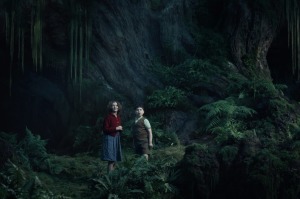
It is a willingness to expose the ugly parts of a testimony that Thomas said she also witnessed in Robertson. His life before conversion, including his addictions, marital turmoil and eventual transformation, was depicted in the 2023 film “The Blind," a film Korie Robertson told CP brought thousands to Christ.
Thomas recalled sitting beside Robertson and Kay at a screening and hearing her father question why anyone would want the worst moments of his life displayed on a movie screen.
“What kind of man would want to have their whole past, you know, put up there on a big screen TV?” she recalled him saying.
But Robertson understood the purpose, she said, adding that if someone might look at his life and conclude, “If God did it for this guy, He can do it for me.”
“That's the only reason to go through that,” Thomas said. “It's not a pleasant experience. I know it made him uncomfortable, but I loved his heart that he was willing to do it.”
Now, Thomas wants churches to become places where people can acknowledge psychological suffering without fearing that their faith will be questioned. The author said she hopes greater education will encourage pastors to have difficult conversations with their congregations and help dismantle the stigma surrounding mental illness.
“I really want to encourage church leaders to educate themselves, to learn more about it,” she said, stressing that Christianity and psychology are not in opposition.
“I know what it feels like to be depressed in church, [how it] affects your church ministry and affects your life outside of church,” Thomas said. “And I know what it feels like for no one to understand that.”
Ultimately, Thomas said I Never Knew is intended to provide readers with hope, to help them identify the ways their past has shaped their present and then recognize that those patterns do not have to determine their future.
“No matter what a person has gone through, there is actually hope,” Thomas said. “There is actually healing. There's resilience and strength to be drawn from in the Lord. … Just like we learn something, we can unlearn it and learn something new.”
“I pray that they are filled with so much hope,” she added. “They can be made whole and have joy and live this life that we have to the fullest.”
I Never Knew releases Oct. 6.
Leah M. Klett is a reporter for The Christian Post. She can be reached at: leah.klett@christianpost.com