Churches Sound Alarm on Secret Killings
Church leaders across denominational lines and from around the world gathered in the Philippines this past week to respond to the hundreds of extrajudicial killings and "disappearances" of mostly human rights activists in the archipelagic nation.
To date, more than 800 people have been killed and hundreds missing since President Gloria Arroyo took office in 2001, according to the United Methodist News Service. Among the victims are dozens of lawyers, judges, and church leaders.
"There has been an unprecedented increase in violations of human rights, and the brazenness, brutality and impunity by which they are being perpetrated by the military, police, paramilitary groups and death squads under the command, control, inducement or tolerance of the administration of President Gloria Macapagal-Arroyo have reached alarming proportions," the National Union of Peoples' Lawyers stated, according to UMNS.
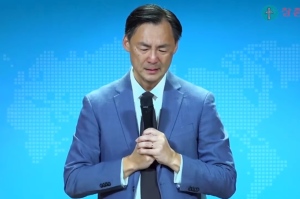
In response, the general secretary of the World Council of Churches (WCC), the Rev. Dr. Samuel Kobia, who spoke last Wednesday at a press conference in Manila, called for stronger ecumenical advocacy efforts to bring the Philippines under international scrutiny.
Kobia reaffirmed the WCC's "unequivocal condemnation" of the extrajudicial killings and its "grave concern" regarding the increased militarization of the Philippines, according to WCC.
The leaders of the ecumenical body said the WCC will bring victims of human rights abuses in the Philippines to the upcoming session of the Geneva-based U.N. Human Rights Council, which the country is a member of.
"We condemn the ongoing practice of the Philippine government and the military of labeling and persecuting the churches, pastors and church workers who work for justice, peace and protection of human rights as subversives or communists," Kobia said.
Attention was brought to the killings of several church workers and pastors in recent months, including the "brutal stabbing" of Philippines Independent Church Bishop Alberto Ramento in October last year, Kobia told journalists.
In August, Philippine Supreme Court Chief Justice Reynato Puno, a United Methodist, called a summit in Manila to expose the crisis. In the following months, the number of killings decreased, but the number of disappearances rose, according to Edre Olalia, international officer for the Counsel for the Defense of Liberties.
"There's a perceptible shift after the worldwide condemnation and concern and especially after the summit," Olalia said.
WCC's Kobia called for the Philippines government to "take necessary action to stop the enforced disappearances" and "put an end to extrajudicial killings." He also called for "an immediate and impartial investigation of all recent extrajudicial executions."