Freeman Johnson, oldest known Pearl Harbor survivor, dies at 106: 'I did my job'

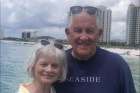
The oldest known survivor of the Japanese attack at Pearl Harbor died last Saturday at his home in Massachusetts at the age of 106.
Freeman Johnson was a 21-year-old U.S. Navy sailor when the Empire of Japan launched a surprise attack on the U.S. Pacific Fleet in Hawaii on Dec. 7, 1941, according to his obituary in The Boston Globe. He said he never saw the kamikaze attack, but knew something was amiss when he heard machine gun fire and felt vibrations as he was reading below deck on the USS St. Louis.
The USS St. Louis, a Brooklyn-class light cruiser dubbed "Lucky Lou," was the only major ship in the fleet that escaped unscathed from the Japanese onslaught, which led to 18 ships being sunk or run aground, including five battleships.
"I was in my bunk when the whole thing started [at around] 7:56 in [the] morning," Johnson said in a 2025 interview with Pacific Historic Parks – USS Arizona Memorial. "We'd already had breakfast; that was over. I heard the machine guns fire over my head, then [general quarters] started. Everybody on board has a specific spot they're supposed to be in. So, I went to my spot."

Johnson recalled in a May interview with The Associated Press that while all the "rigamarole was going on topside, I was inside a steam drum."
"Couldn't see anything, absolutely nothing," he said.
When the call went out to man the battle stations during the attack, Johnson worked feverishly below deck with another sailor to repair a boiler. By the time he emerged on deck after the attack, the ship had evaded midget submarines and safely set out to sea.
"We were way out to sea, way out. You couldn't see any land at all. All you saw was ocean," he told the AP. "I was just a sailor, just a swabbie, I was not an officer. They don't tell you anything if you don't need to know. And I didn't need to know it. So they tell you nothing."
Johnson was born on March 11, 1920, in Springfield, Massachusetts, and was present at other historic moments of the war. He watched from the mast of the USS Iowa as the Japanese surrendered aboard the nearby USS Missouri in Tokyo Bay on Sept. 2, 1945.
Johnson's 106th birthday party in March prompted media attention and a celebration at his local community center in Hyannis, Massachusetts, according to the Pentagon.
The Dec. 7, 1941, attack on Pearl Harbor, which killed 2,403 Americans and wounded 1,178 more, pulled the United States into World War II and was famously condemned by former President Franklin D. Roosevelt at the time as "a date which will live in infamy." Only 11 known Pearl Harbor survivors are still living, all of whom are centenarians, according to The Guardian.
In an interview with Pacific Historical Parks last year, Johnson reflected on how suddenly the geopolitical situation can change, noting that the men at Pearl Harbor had considered World War II a distant problem on the other side of the world until that fateful Sunday morning.
"It wasn't going to happen to us, until it did," he said. "And then the attitude changed. The tension was there."
Johnson also offered insight into the dutiful, humble nature of the Greatest Generation. He gave them collective credit for what they achieved for their country during the war.
"It was the Greatest Generation, the whole group. Individually doesn't really matter. It was a combined effort. What I did at the time was only a little piece. I was no hero," he said. "I wasn't brave; I was there."
"I just did what I was told. I did my job. That's all the Greatest Generation did. They did what they were told," he added.
Jon Brown is a reporter for The Christian Post. Send news tips to jon.brown@christianpost.com