

'It cost me my job': Myrka Dellanos on the price of speaking about God in secular media

MIAMI — Veteran Hispanic television journalist Myrka Dellanos recently spoke about what she described as a crisis of objectivity in the secular press, editorial pressures during health coverage, and the professional cost of openly defending her Christian faith on U.S. Hispanic networks.
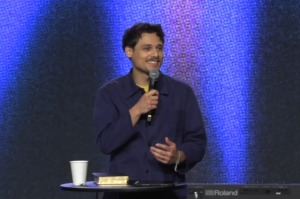
During her participation in the panel entitled "When Reporting Has a Price" during the Media Music Marketing Summit 2026, Dellanos contrasted the journalistic exercise of fifteen years ago, when she taught at the University of Miami, with contemporary practice.
Dellanos rose to prominence hosting the program Primer Impacto on the Univision network from 1994 to 2004, a career that continued in other networks such as Telemundo, along with humanitarian work.
Loss of objectivity and bias in newsrooms
During her recent participation in the media and marketing summit, the journalist explained that the historical news standard required rigorous adherence to verifiable facts, a boundary that, she said, has been blurred by the deliberate insertion of opinions and political activism in daily broadcasts.
"A news channel is not supposed to have an editorial line. The editorial line is not supposed to exist because you are giving the truth of what is happening; you are showing the public the facts,"she said.
According toDellanos, newsrooms have adopted subtle mechanisms to direct the audience's interpretation through the tendentious formulation of questions and scripts.
"Well, nowadays they color your words, the scripts, with words like: 'Could you believe that the president just said and made a decision that he is against Hispanics, or against African-Americans, or against LGBTQ?' And so, by asking the question [...] immediately by asking the question you are coloring what the audience is hearing."
Coverage of the pandemic and censorship
Referring to her work on television during the COVID-19 crisis, Dellanos said that directors and executive producers imposed a single narrative, suppressing what she called legitimate doubts of the population and the criteria of health professionals that differed from government provisions.
"They began to want to manage information with an agenda, a really, I would say dark, agenda to try to manipulate the public. For me, that is already political propaganda," said Dellanos.
The journalist described the internal tensions experienced in the recording studios when trying to incorporate balanced coverage of emergency vaccines.
"They didn't allow you to say what the news really was. What was the news? That there was an audience that also questioned whether they should use the vaccine or not. So, the public only had to receive the part that says, 'You have to get vaccinated,' for example, you only had to interview doctors who said that they should definitely get vaccinated. But there were many others and I said: 'Why don't we have the two doctors to talk to?' 'No, we can't go against science,'" her editors replied." ... I said: 'But these others are doctors too, graduates of the same universities.' But we couldn't hear them."
Dellanos also said she faced direct intervention on her own texts. "They kept wanting to handle the news and change scripts. I would write something and they would take it away from me; that was a point where I said: 'This cannot be worked on in this way. This is no longer a way we can really do real journalism.'"
The professional cost of proclaiming the Gospel
On the personal and spiritual level, Dellanos said she faced obstacles over decades in making her Christian convictions visible in spaces of entertainment and secular information. She said that in print magazines and entertainment coverage her references to God were systematically omitted, a situation that escalated to formal questioning by news directors.
Recalling a call to cover a national news story, she recounted the warning she received before going on the air: "The news president calls me and tells me: 'Look, I want to know, are you going to be talking about God when you are giving this information?' I told him: 'Look, you can trust me, I'm a professional. But the part of my faith, first of all, people know it, and secondly, it is part of me. So that's always going to color what I say.'"
The communicator stressed that resisting institutional restrictions against the message of Christ had direct consequences on her contractual stability. "Many times they told me that I could not say something and I did. It has happened to me on television, it has happened to me on the radio. Yes, it cost me my job in both of them and it doesn't matter, because God opens the doors He wants and closes them with a purpose to go somewhere else."
Direct initiatives in digital media
Faced with polarization and censorship in large corporate networks, Dellanos said a significant part of the audience has migrated to independent alternatives.
Through her YouTube platform (@myrkadellanosshow), she combines the monitoring of news of high social impact with live broadcasts dedicated to Bible reading and collective prayer.
"That part, which is very simple, opening the Bible and praying, is the one that has the most views. Everything I do when I do the devotional," she concluded, also confirming the editorial launch of her testimonial volume Where Are You, God? When Life Has No Meaning, scheduled to be published in November under the imprint of Editorial Shaddai.
Dellanos announced last July that she now partners with The LIBRE Initiative, a national Hispanic advocacy organization that, according to its announcement, works to advance policy solutions that expand freedom and opportunity for Latino families.
During an interview with journalist Juan Manuel Cao on his program Cao Live, Dellanos shared details about this new professional facet and the vision that motivates her collaboration with the entity.
In March 2025, Dellanos faced severe criticism and accusations on social networks after citing, during Telemundo's La Mesa Caliente program, a U.S. government document, issued by the Trump administration to justify tariffs on Mexico and Canada, that pointed to alleged alliances of certain Mexican politicians with drug cartels.
On that occasion, the communicator denied having issued offensive comments against the Mexican people, defended her reporting, and attributed part of the attacks to media hostility towards her conservative stance and her faith convictions, receiving public support of colleagues in the media and Hispanic evangelical organizations such as the National Hispanic Christian Leadership Conference (NHCLC).
This article was originally published at CP Español
Javier Bolaños is a journalist with more than 20 years of experience in radio, television and written press. He has extensive knowledge of the Latin American reality, having traveled to most all of the countries of the region. He has been the regional producer for Latin America of Global News Alliance (GNA), a news agency that is a partner of Christian Daily International.
He was general producer of CBN News' Mundo Cristiano news program for 10 years and until recently also served as director of Evangélico Digital, an online publication focused on Latin America linked to the Spanish Evangelical Alliance. He has been an international correspondent for various media outlets covering presidential elections, natural disasters and major sporting events such as the Olympics and World Cups.
You can contact him at: javier.b@christiandaily.com