

Oil and gas prices plunge after Trump announces Iran deal, reopening of Hormuz Strait

The prices of crude oil and liquefied natural gas (LNG) plunged in early trading on Monday following the announcement by U.S. President Donald Trump that a deal had been reached to end the war with Iran and reopen the Straight of Hormuz.
Brent crude fell to $83 a barrel, while West Texas Intermediate dropped to $80 a barrel. Liquefied natural gas (LNG) prices also declined.
“The Deal with the Islamic Republic of Iran is now complete,” Trump declared on Truth Social. “Ships of the World, start your engines. Let the oil flow!”
However, the president added in a second post on Truth Social that the strait would be opened "upon the signing of the Deal on Friday, for purposes of mine removal." Only then, "oil will flow on both ends again for the Region, and the World!"
Although the United States and Iran remain divided over parts of the agreement, President Trump said Iran would not collect tolls on ships passing through the Strait of Hormuz. Iran has not publicly confirmed that provision. The final agreement is expected to be signed in Switzerland on Friday.
Furthermore, oil industry experts have warned that even if the Strait of Hormuz reopens smoothly in the coming days, it could take months for global energy production, exports, and supply chains to return to pre-conflict conditions.
However, reports on Monday morning said the first LNG tanker is now heading toward the Strait of Hormuz to load cargo from QatarEnergy’s Ras Laffan facility.
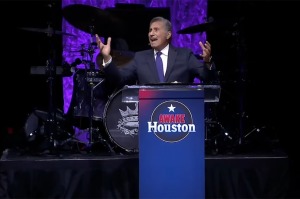
U.S. Energy Secretary Chris Wright said last Friday at a Bloomberg Energy event in Houston, Texas, that the United States has been conducting a military-backed effort to keep roughly 7 million barrels per day of oil moving out of the Persian Gulf in recent weeks, despite Iranian attempts to disrupt traffic through the Strait.
He added that no Iranian oil shipments are currently moving through the waterway.
This article was originally published by All Israel News.
ALL ISRAEL NEWS is based in Jerusalem and is a trusted source of news, analysis and information from Israel to our Christian friends around the world.