This content is paid for by an advertiser and published by CP Brand Solutions. The Christian Post newsroom was not involved in creating this content. Learn more about CP Brand Solutions.


God, the Science, the Evidence: The Dawn of a Revolution
As debates over science, meaning, and morality grow ever more polarized, a groundbreaking, accurate, and easy-to-read new book arriving in English invites readers to reconsider one of humanity’s most profound questions: could science itself now point us back to God?
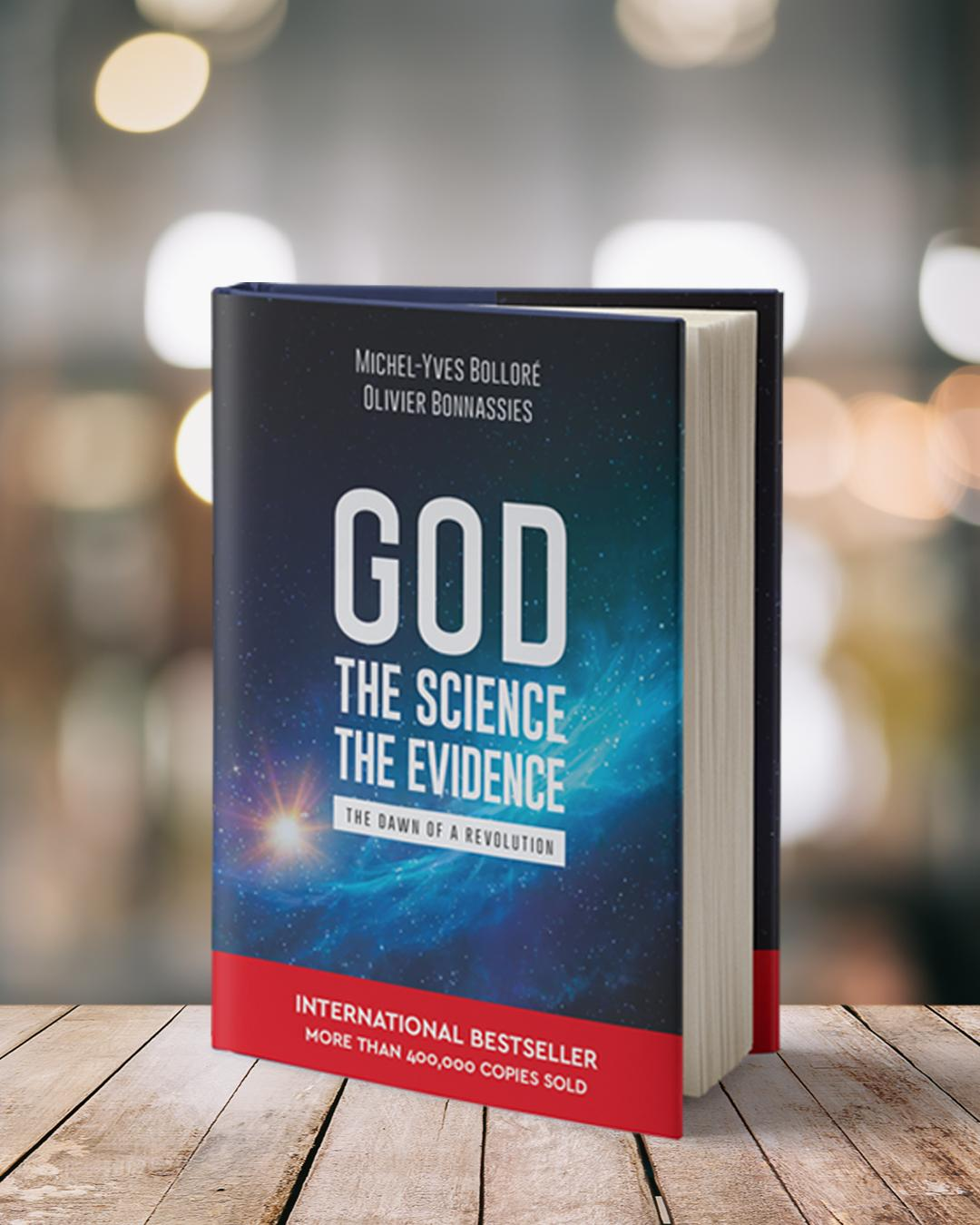
The international bestseller God, the Science, the Evidence, an accessible yet rigorous investigation, has sold more than 400,000 copies across Europe. Now, this landmark work comes to the English-speaking world in an updated and expanded version.
The publication of God, the Science, the Evidence marks a major milestone in the renewed global interest in the scientific evidence for the existence of God. Representing years of research and reflection, it presents complex ideas in a clear and engaging style, one that has already made it a cultural phenomenon throughout Europe.
At its core, the book tackles one fundamental question: Is there a Creator God?
And it approaches that question through a single lens—rationality—by examining twelve independent fields of knowledge.
A Question That Changes Everything
The existence of God is one of the most consequential questions of human life. As thinkers from Dostoevsky and Sartre to Richard Dawkins have observed,
“If God does not exist, everything is permitted.”
Without God, there is no objective good or evil, no moral law, no ultimate meaning or destiny. Humanity would be, in essence, a temporary arrangement of atoms, clusters of cells brought together by chance through the blind forces of physics and chemistry.
But is that true?
The way we answer this question shapes our entire vision of reality, yet in modern times, it is discussed far less than its importance deserves. Many assume the question is unknowable or beyond reason. Classical philosophy and Christian theology, however, have long argued the opposite—and today, modern science is reopening that conversation in surprising and persuasive ways.
A New Framework for an Ancient Question
Today, the question of God’s existence can be framed in entirely new terms. The public remains largely unaware of this shift, but it rests on three crucial insights:
- Science can also examine the evidence, because both theism and atheism have measurable implications for how the universe operates.
- This is not just a matter of faith. The question of God’s existence can be approached as a matter of knowledge and evidence.
- Scientific progress has clarified, not obscured, the issue. As discoveries multiply, they increasingly point toward a coherent and intelligible universe, one that invites explanation rather than randomness.
A Comprehensive, Courageous Inquiry
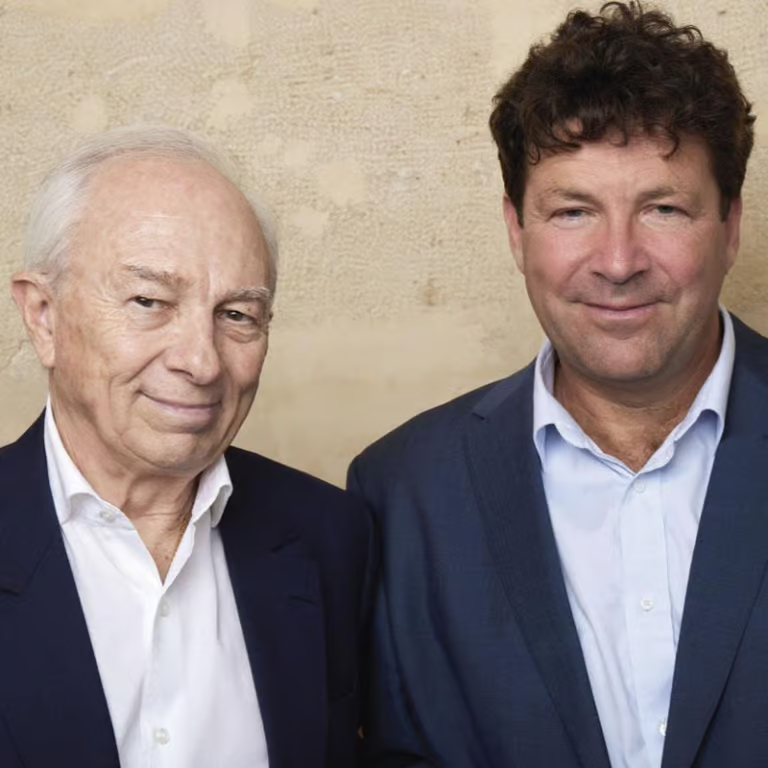
No other book quite approaches this topic like God, the Science, the Evidence. Its originality lies in its breadth and in its willingness to confront ideological assumptions that still influence scientific thought.
One striking chapter recounts how the scientists who discovered the Big Bang theory were persecuted by atheist regimes in the 20th century, in Russia, Germany, and China, precisely because their findings suggested a beginning to the universe. Ideology, the authors note, often stands in the way of open inquiry.
Even in the West, ideological commitments can distort objectivity. As biologist George Wald once admitted, “We cannot accept supernatural creation on philosophical grounds.” Geneticist Richard Lewontin went further: “We have a prior commitment, a commitment to materialism.” These statements reveal that for some, materialism is not the conclusion of science but its unexamined premise.
Yet the authors of God, the Science, the Evidence chose to engage this issue head-on, convinced that an open, evidence-based debate is both possible and necessary.
Two Central Messages
The investigation leads to two main conclusions:
1.A remarkable convergence of evidence. Across physics, cosmology, biology, philosophy, and history, the data increasingly point toward design and purpose. Materialism, the belief that matter and chance alone explain existence, now appears less rational, not more.
2.A scientific “great reversal.” For centuries, science seemed to explain the universe without invoking God. But that narrative has changed. The discovery of a cosmic beginning and the extraordinary fine-tuning of the universe’s parameters strongly suggest that the existence of a Creator is the most coherent explanation.
The Implications of a New Understanding
Over the past five centuries, science has undergone a profound transformation. From Copernicus to Freud, through Galileo, Newton, Laplace, and Darwin, it appeared to build an increasingly self-sufficient picture of reality. By the 19th century, figures like Marx and Freud, claiming the authority of science, went so far as to portray religion as “the opium of the people.”
This led to the dominance of a powerful materialistic worldview, one that regarded belief in God as obsolete.
But over the last 150 years, a series of scientific revolutions has dramatically altered that picture. This “great reversal” represents one of the most important intellectual shifts in the history of science. For centuries, God was thought to be displaced by knowledge. Now, knowledge has led us back to God.
The success of God, the Science, the Evidence in Europe stems from its balance of accessibility and rigor. It presents complex issues in an accessible, factual, rational, and objective manner, while grounding its arguments in verifiable evidence. Its conclusions have been reviewed by leading scientists and specialists, and its moderate tone invites reflection rather than confrontation.
A Rational Hypothesis
With these findings, science itself leads us back to the classical definition of God found in philosophy and religion: a transcendent, intelligent Creator who brought the universe into existence and ordered it with precision.
Of course, one may still ask: What are the alternatives?
After decades of exploration, competing theories that attempt to explain these findings without invoking God have largely failed or require extraordinary leaps of imagination. The most popular, the multiverse hypothesis, proposes that our finely tuned universe is merely one of an almost infinite number of universes, each with different physical laws. But this theory raises even greater difficulties. The mechanism that supposedly produces universes would itself need to be finely tuned, and it offers no explanation for the order or beauty we observe. And that does not explain the beginning of the Universe at all.
In short, materialism increasingly appears as an irrational belief, demanding more faith than theism itself.
A Milestone for the English-Speaking World
The English edition of God, the Science, the Evidence, updated and expanded for new readers, has the potential to become a landmark in the modern dialogue between science and faith.
As the evidence increasingly suggests, the universe had a beginning, a purpose, and a mind behind its creation. And if that is true, then we are not living in a meaningless cosmos, but in one designed with intention, order, and astonishing beauty.
For readers of faith, God, the Science, the Evidence is more than a scientific inquiry; it’s an invitation to rediscover awe, purpose, and the harmony between revelation and reason.