


This content is paid for by an advertiser and published by CP Brand Solutions. The Christian Post newsroom was not involved in creating this content. Learn more about CP Brand Solutions.


Hope Is Growing: How Families in Kenya Are Breaking the Cycle of Hunger
Through faith, compassion, and practical solutions, families facing food insecurity are finding new opportunities and building brighter futures.
For Regina Mutia, hunger was more than an empty stomach. It was the uncertainty of how she would feed her children, the strain it placed on her marriage, and the fear that tomorrow would be no different from today.
Living in Kalulini, Kenya, Regina and her husband, Muendo, struggled to provide for their household of eleven. Their 2.5-acre farm produced barely enough to survive. Year after year, poor harvests left the family with little food and even fewer options.
Eventually, Regina reached a breaking point.
“I was ready to go back home, because of hunger,” she recalled.
But Regina’s story did not end there.
Today, her family is harvesting more food, earning income, and looking toward the future with renewed confidence.
What changed wasn’t simply the weather. It was access to knowledge, new opportunities, and the compassion of people who believed that families like Regina’s deserved more than a lifetime of struggling to survive.
Her story is a powerful reminder that even in places where hunger seems overwhelming, hope can grow.
Hunger is a crisis, but it is not the end of the story
Around the world, millions of families face the daily uncertainty of food insecurity. For some, that means missing meals. For others, it means choosing between buying food, paying school fees, or meeting other basic needs.
In East Africa, years of severe drought, flooding, and economic hardship have made those decisions especially difficult.
At the beginning of 2024, approximately 50 million people across the Greater Horn of Africa faced food insecurity, according to the World Health Organization.
Behind those numbers are mothers and fathers working tirelessly to provide, and children whose futures are shaped by circumstances beyond their control.
For Christians, these stories carry particular significance.
In Matthew 25:35, Jesus reminds us, “For I was hungry, and you gave me something to eat.”
His words remind us that caring for people experiencing hunger is more than an act of generosity. It is an expression of our faith and a reflection of Christ’s love for humanity.
But what if our response to hunger could do more than provide the next meal? What if it could help families build a future in which they are better equipped to feed themselves?
That is the kind of lasting hope the Adventist Development and Relief Agency (ADRA) is working to cultivate.
Planting seeds of lasting change
Through its Nature+ program in Kenya, ADRA is helping 18,000 households develop practical ways to grow food, strengthen their livelihoods, and become more resilient in the face of drought.
Rather than relying solely on outside assistance, families are learning techniques that allow them to make better use of the resources they already have.
For Muendo, that meant learning how to create terraces across his sloping farmland, slowing the flow of rainwater and allowing moisture to soak into the soil. He also set aside part of his land so trees could regenerate naturally, helping protect the soil for future harvests.
The results were remarkable.
Before participating in the program, the family’s annual harvest amounted to just one bag of maize and approximately 50 kilograms of cowpeas.
By June 2026, Muendo had harvested seven 90-kilogram bags of maize, along with cowpeas and three bags of green grams, a crop the family had never grown before.
Regina sold the green grams, earning money that helped meet household needs and pay school fees.
“Thanks to ADRA Kenya and the Nature+ project for the knowledge and skills,” Regina said. “Without these, we could not be smiling today.”
For a family once considering separation because of hunger, the harvest represented something much greater than food.
It represented stability, dignity, and the freedom to imagine a different future.
When hope spreads from neighbor to neighbor
Elsewhere in Kitui County, another woman was discovering that even a small beginning could lead to extraordinary change.
Zipporah Peter started raising chickens in June 2024 with a flock of just 21 birds.
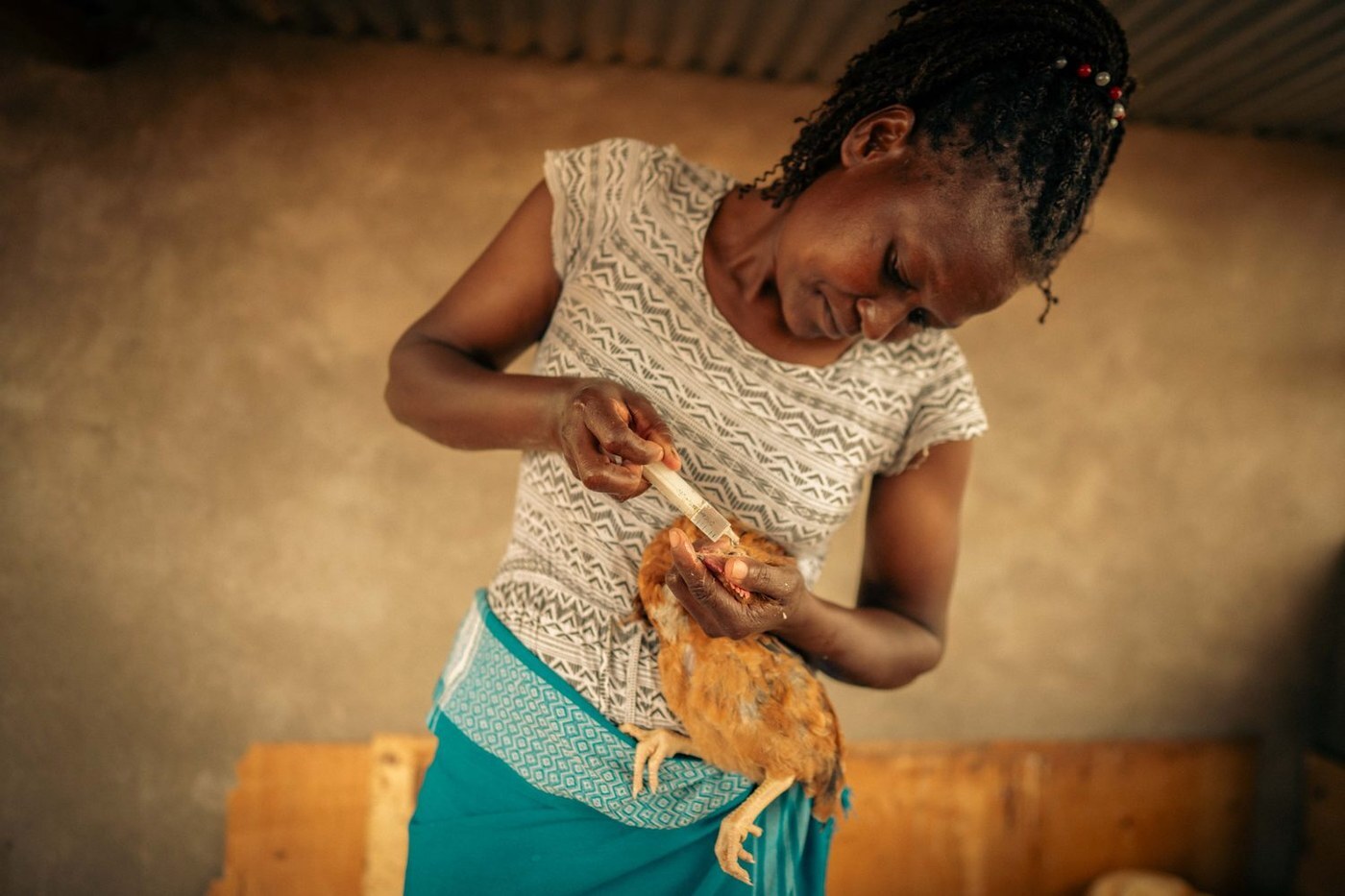
Through ADRA’s Nature+ program, she learned how to improve poultry housing, prepare affordable feed, prevent disease, and manage her growing business.
Her flock eventually grew to 146 chickens. After selling 103 birds, she earned a documented profit of 19,415 Kenyan shillings.
Instead of stopping there, Zipporah reinvested in her business, purchasing equipment, raising additional chicks, and building a second poultry house with money from her community savings group.
But perhaps the most meaningful part of Zipporah’s story is what she did next.
She began teaching other women.
Members of her savings group are now learning to raise chickens, earn income, and provide food for their own families. The knowledge Zipporah gained is spreading from household to household.
This is what sustainable change can look like.
One woman learns a new skill. One family gains a more reliable source of food. One community becomes stronger.
And hope multiplies.
Faith that goes beyond the next meal
When we think about hunger, our first instinct is often to provide food. And rightly so.
When a family is hungry, immediate assistance can save lives. ADRA provides emergency food and other essential supplies to communities affected by disasters and humanitarian crises around the world.
But addressing food insecurity also means looking beyond the immediate emergency.
It means helping farmers grow more resilient crops, supporting women as they build businesses, and strengthening communities so they are better prepared when the next difficult season comes.
This approach reflects an important principle of Christian service: compassion recognizes immediate suffering while also affirming the dignity and potential of every person.
For ADRA, a global, Christian, humanitarian organization, this commitment is an expression of faith in action.
Serving people regardless of their background or beliefs, ADRA works to bring justice, compassion, and love to communities facing some of life’s greatest challenges.
The goal is not simply to help families survive today. It is to help create opportunities for a healthier, more secure tomorrow.
We can be part of the hope
The challenge of global hunger can feel overwhelming. It is easy to look at the statistics and wonder whether one person can truly make a difference.
But Regina’s story offers a different perspective.
A family that once struggled to harvest enough food is now planning for future seasons. A mother who once considered leaving her home is smiling again. A woman who began with 21 chickens is helping her neighbors build businesses of their own.
These stories remind us that meaningful change often begins with something small: a new skill, a helping hand, a generous gift, or someone willing to care.
As Christians, we are called not to turn away from suffering, but to respond with compassion and love.
Hunger may be a reality for millions of families, but it does not have to define their future.
With practical support, the determination of communities themselves, and people willing to put their faith into action, hope can take root even in the most difficult circumstances.
Because every family deserves the opportunity to live as God intended.
Discover how you can help hope grow for families around the world at CountOn.ADRA.org.
ADRA | Justice. Compassion. Love.





