This content is paid for by an advertiser and published by CP Brand Solutions. The Christian Post newsroom was not involved in creating this content. Learn more about CP Brand Solutions.



The Peace of God
How to Find It—and Keep It
The apostle Paul confessed in 2 Corinthians 2:13, “I had no rest in my spirit” during what appears to have been an anxiety attack he experienced in the city of Troas (modern-day Turkey). The time was AD 51–52. Paul searched the city for his friend Titus but could not find him anywhere. As with anyone searching unsuccessfully for a treasured friend, Paul may have succumbed to panic and catastrophic thinking. He left Troas immediately when God called him to (Acts 16:9–10), but he may have done so with a heavy heart and a sense of failure.
You might be able to identify with Paul. Perhaps you’ve experienced a situation in which fear clouded your vision and caused you to lose your composure. The feeling of failure now triggers an emotional response.

What Is God’s Peace?
The supernatural peace of God results when the Lord turns our triggers into triumphs. When we experience God’s peace, our pain can become our purpose as we minister to others with the comfort God showers on us (see 2 Cor. 1:3–4). Paul will show us how to move from panic to peace—but first, let’s understand what the Bible says peace really is.
It’s more than the absence of anxiety. The word peace, along with its variations, appears 614 times in Scripture’s original languages and was a constant theme in Jesus’ teachings. After the name of Jesus itself, there is no finer word or concept than shalom (peace).
Shalom originates in God Himself. It epitomizes the gospel and the active relationship God initiates, pursues and perfects with each of us. Shalom is both active—inviting us to flourish—and holistic, affecting our entire being: body, soul, heart and mind.
How can we obtain this peace? The first step is a commitment to God’s ways. Scripture tells us, “There is no peace... for the wicked” (Isa. 48:22). Peace simply isn’t available to anyone living a worldly, God-free life. God and His peace come hand in hand—you can’t have one without the other.
If you have committed your life to following the Light of the world, God’s Son, Jesus Christ, you are a candidate for God’s beautiful, life-altering peace.
But how do we know peace and maintain it?
Paul’s Peace Plan
Let’s look at the way Paul found to obtain, maintain and savor peace.
To do this, we must first finish Paul’s Troas experience. Troas may have become a bad memory for Paul (2 Cor. 2). Because “a door was opened to me by the Lord” (v. 12), he may have felt his anxious response to Titus’s absence meant he had failed there. But he did not yet see his situation from God’s perspective.
In Acts 16, we learn that part of God’s purpose may have been for Paul to meet a new friend named Luke (v. 10)—a medical doctor who became a missionary traveling companion. Later in 2 Corinthians, Paul’s prayers were answered and he reunited with Titus: “For even when we came into Macedonia, we found no relief” until Titus arrived (7:6, author’s rendering). There was a purpose in Titus’s delay, and perhaps Luke’s joining Paul was part of that purpose. The Holy Spirit would later use Luke to author a Gospel and the Book of Acts.
Because of his hasty retreat, Paul may have thought the door of ministry in Troas was forever closed. Yet God had other plans. Not only did He bring Paul (and Luke) back to minister in Troas in AD 57–58, but the Lord also used Paul to perform his greatest miracle there—raising Eutychus from the dead (Acts 20:7–12).
What happened in Paul’s life between his Troas visits? He left Troas after an anxious experience and returned in the peace of God. How did Paul find freedom from anxiety and see his ministry flourish?
The answer becomes clearer when we study Paul’s peace plan, which he shared in Philippians 4:6–8 (NKJV):
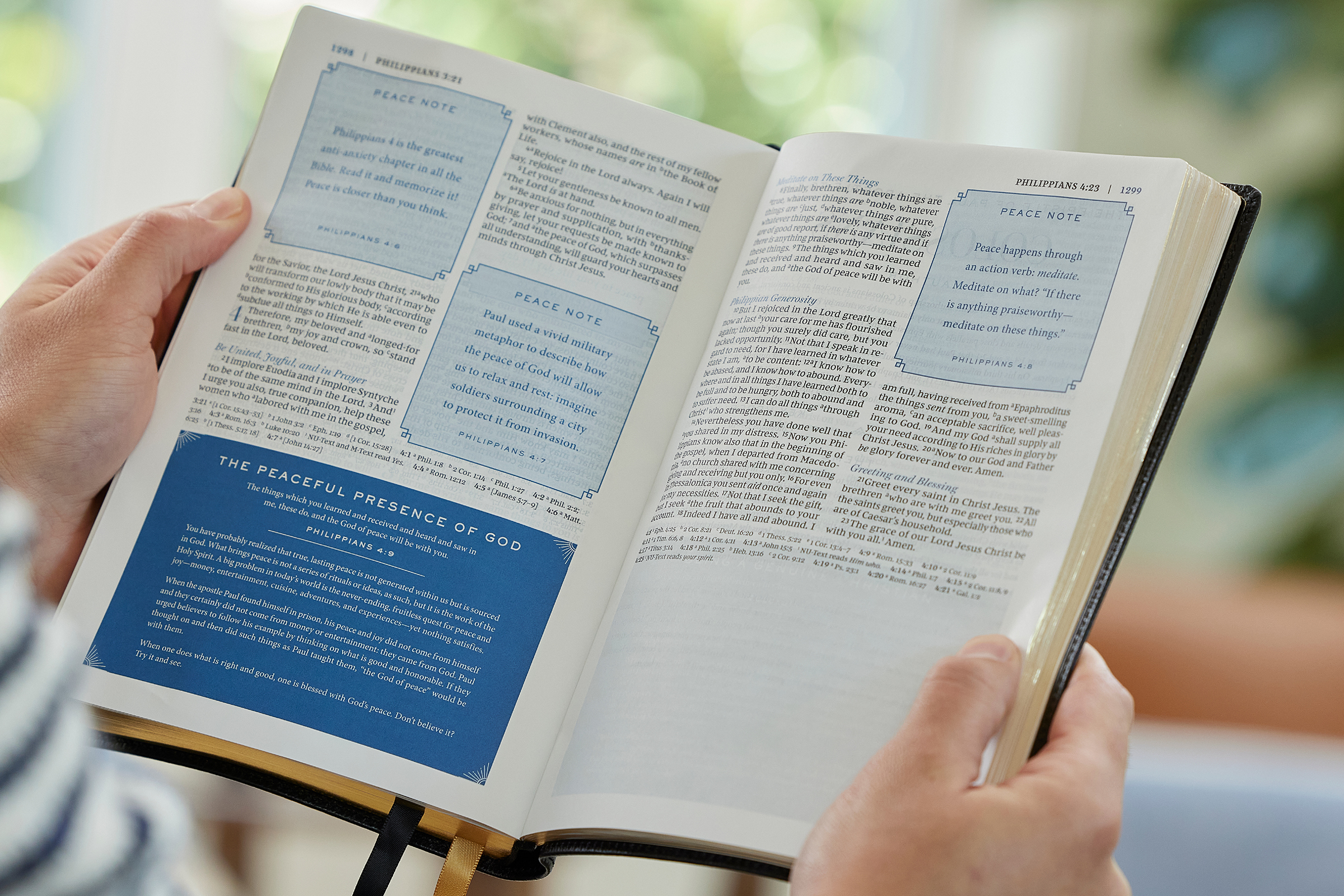
“Be anxious for nothing, but in everything by prayer and supplication, with thanksgiving, let your requests be made known to God; and the peace of God, which surpasses all understanding, will guard your hearts and minds through Christ Jesus.
Finally, brethren, whatever things are true, whatever things are noble, whatever things are just, whatever things are pure, whatever things are lovely, whatever things are of good report, if there is any virtue and if there is anything praiseworthy—meditate on these things.”
Paul knew anxiety in Troas with a great door open; Paul knew peace in a prison cell while writing this epistle under the inspiration of the Holy Spirit. We receive Philippians’ promise when we, like Paul, follow God’s plans for peace in our lives:
- Be anxious for nothing.
- Remind yourself of God’s promises.
- Know peace.
Discipline Your Thoughts to Maintain Peace
The content of our thinking determines our peace and happiness. God’s Word says we have been “given... exceedingly great and precious promises” (2 Pet. 1:4). We must lean on those promises and continuously trust Him. With God there are no hopeless situations, and that’s why we can be assured of His peace that surpasses all understanding. His peace will guard our hearts and minds through Christ Jesus.
It is wise to ask ourselves: Am I trusting what I know is true in my life through Christ or am I focusing on the problem and factoring God out of my situation?
Christians must learn peace and happiness. Mental, physical, emotional and spiritual health are part of a never-ending battle. The peace of God is unleashed when we are disciplined thinkers—when we focus on what we know is true of our lives in Christ. Live your faith as a discipline and the peace of God will be with you. Ask the Lord to envelop you in peace so transforming that it surpasses your ability to understand it.
The peace of God results in a state of genuine, meaningful happiness. Having met and embraced the risen Christ, Paul could affirm the psalmist’s words:
“Happy are those whose iniquities are forgiven and whose sins are covered; happy is the man against whom the Lord will not reckon his sin”
(Rom. 4:7–8, paraphrased; see Ps. 32:1–2).
Frequent contemplation of these and other Scriptures related to God’s peace helps heal our minds and eliminate anxiety.
We live in the peace of God by knowing and trusting the God we believe in. When we are committed to truth and search the Scriptures, we come triumphantly to the Person of all peace—Jesus, who established peace for us. His peace is an objective reality. We experience the peace of God when we have peace with God, and we attain that through faith in Jesus Christ and His finished work on the cross on our behalf.
It is God’s will for every Christian to experience His peace. It is not God’s will for us to live in conflict, confusion or anxiety. This is good news: the peace of God is not something reserved only for “good Christians.” It is available to everyone on the journey toward Christlikeness.
God Wants You to Know Peace

The story of the Bible is the story of peace—peace with God and with one another. Throughout Scripture, this transformative theme weaves through every page, inviting us deeper into relationship with the Prince of Peace.
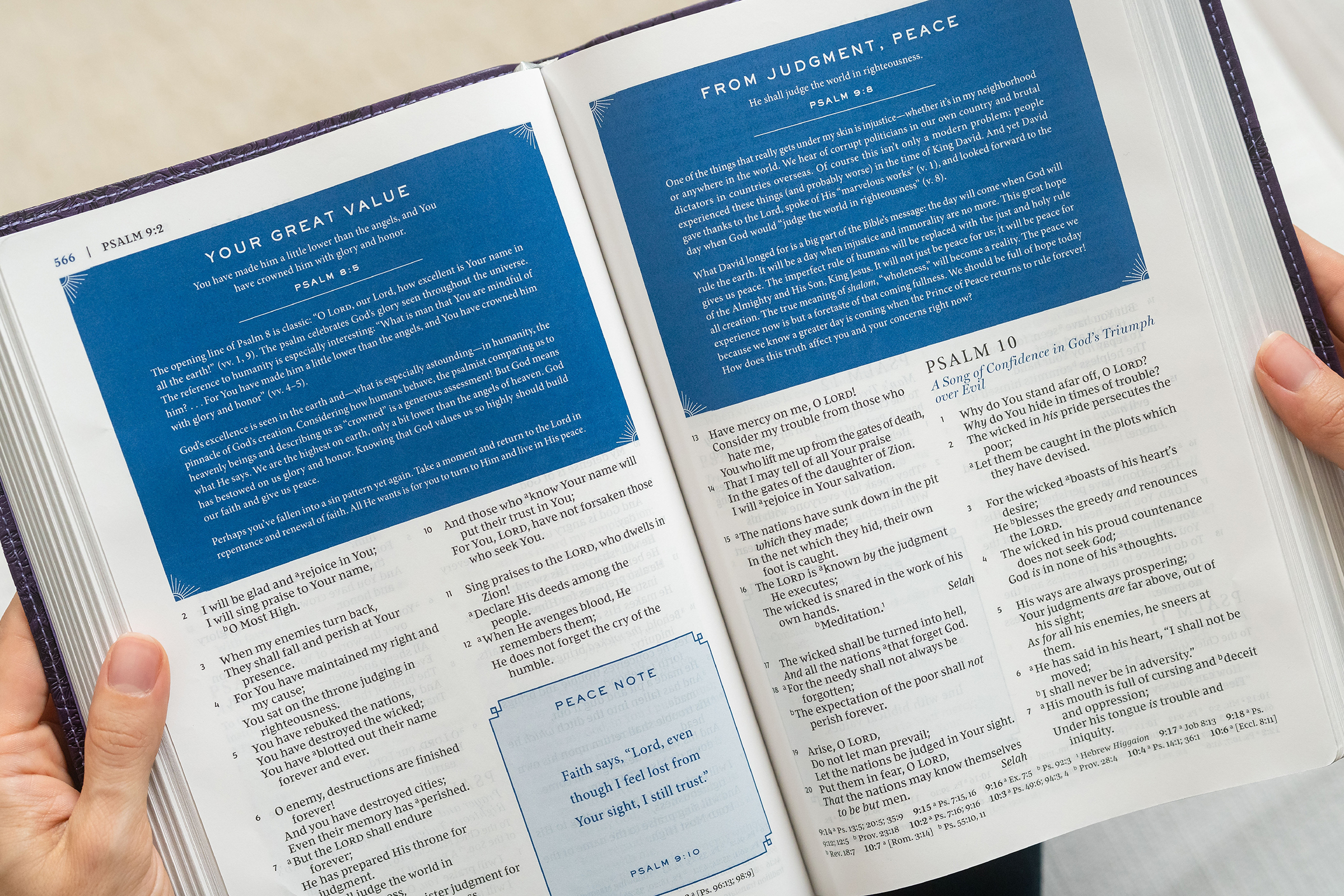
The Peace of God Bible was created to help you experience this peace daily. With 365 devotions and insights from Dr. Jeremiah J. Johnston, you'll trace the theme of peace from Genesis to Revelation. As you meditate on God's Word each day, you'll find the encouragement you need to live out of the wholeness you have in Christ—and be equipped to share that peace with others who are anxious, hurting and searching.
Get Your Copy at Amazon