Billy Crystal Doesn’t Trust God. So tell God that

Award-winning actor and comedian Billy Crystal recently revealed he no longer talks to God because he doesn’t trust Him.
In January 2025, Crystal, 78, lost his home in the Pacific Palisades wildfire. Then Crystal’s friend and longtime collaborator Rob Reiner was killed, along with his wife, by their son, Nick.
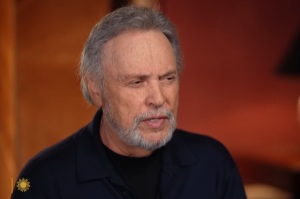
In an interview with “CBS Sunday Morning,” correspondent Tracy Smith asked Crystal if he has been talking to God over the last two years, given the amount of grief and pain he’s endured.
“No, ‘cause I don’t trust Him,” Crystal replied. “Too many bad things have happened. The Earth is in bad shape. This is a weird, scary time, so no. Not anymore.”
The heartbreaking disclosure comes as a change for Crystal, given his 2004 Tony Award-winning play, “700 Sundays,” about the 700 Sundays he spent with his dying father, in which he described conversations with God.
Crystal’s revelation is wholly understandable, given the difficulties he’s faced recently. He deserves nothing but empathy and compassion.
He’s also not alone in wrestling with questions about the age-old problem of evil, and in struggling to comprehend why there is so much suffering in the world.
After losing his wife, Joy Davidman, to incurable metastatic bone cancer, C.S. Lewis wrote in his personal reflections, which became A Grief Observed, “Go to Him when your need is desperate, when all other help is vain, and what do you find? A door slammed in your face, and a sound of bolting and double bolting on the inside. After that, silence.”
According to the Pew Research Center, 16% of Americans say suffering in the world causes them to doubt God’s omnipotence; 16% say it causes them to doubt God’s goodness; and 14% say that suffering is an indication that God doesn’t even exist.
But Crystal’s struggle, while perhaps new for him, is not new at all. Indeed, “There is nothing new under the sun” (Ecclesiastes 1:9). Christians have had 2,000 years to contemplate the problem of evil. And before the Church, the Jews were exploring these questions for another 2,000 years.
Thankfully, the Christian faith provides good reasons for why we can trust God when the storms of life rage. And pondering these reasons can help us walk with God when tragedy strikes.
Here are essential ideas Crystal — and all those wrestling with the problem of evil — should consider.
First, the problem of evil is a difficult theological problem. But it’s not a uniquely Christian problem. In fact, every religion — even those with no religion — must try to answer the problem of evil and suffering. The question is not whether Christianity alone can provide a satisfactory answer to the problem, but whether it can provide the best answer.
Second, when Crystal claims the world is in “bad shape” since “bad things” have happened, presumably he means more than just things he wouldn’t prefer or doesn’t personally like — like not preferring the taste of asparagus, for example.
Rather, he probably means there are objective evils in the world — things that violate an objective standard that everyone should agree are wrong. If this is true, then Crystal should realize that such a standard points to the existence of God.
As C.S. Lewis wrote in Mere Christianity, “My argument against God was that the universe seemed so cruel and unjust. But how had I got this idea of just and unjust? A man does not call a line crooked unless he has some idea of a straight line.”
Third, just because we recognize that God and evil can coexist does not alleviate the struggle we face and our need to wrestle with why God might allow bad things to happen.
When we face trials, difficulties and sufferings in life, it’s unhelpful to ignore the pain and immediately minimize the agony. Don’t paper over the trial with a cavalier, “God’s got this,” or “It’s ok, it’ll all work out for good.”
While true, it’s essential to, as Jacob did, “struggle with God” (Gen. 32:28). Don’t turn away from God, waiting to speak with Him until you feel better. Rather, bring yourself out of hiding before Him, expressing your anger, frustration, weariness and sadness. The Psalms are an excellent model of this.
In their book Where Prayer Becomes Real, authors John Coe and Kyle Strobel write, “Prayer is not a place to be good, it is a place to be honest. Prayer is not a place to perform, it is a place to be present.” When we face trials, difficulties and sorrows, whatever comes out of our soul, good or bad, becomes good material for prayer.
After Crystal’s interview, evangelist Franklin Graham kindly responded to him, urging him to remember that “everyone has bad things happen in life.”
“But I trust God,” Graham said. “He has done everything to keep me out of Hell, by sending His Son, Jesus Christ, to save me — and to save Billy Crystal.”
And therein lies a crucial and uniquely Christian answer to the problem of evil. Only Christianity teaches that, amid evil and suffering, God enters our world and experiences the pain as we do. Only the Christian God — Jesus Christ — has suffered with us, for us and because of us.
Pastor Tim Keller wrote in his book Walking With God Through Pain and Suffering, “In Jesus Christ we see that God actually experiences the pain of the fire as we do. He truly is God with us, in love and understanding, in our anguish.”
We may not always know why God allows bad things to happen. But Christianity provides us with hope and confidence that we can trust in God who walks with us in our pain and loves us enough to bear the cross with us.
Please join me in praying for Billy Crystal.
Zachary Mettler is a staff writer and communications liaison for The Daily Citizen at Focus on the Family. In his role, he writes about current political issues, U.S. history, political philosophy, and culture. Mettler has been featured in The Daily Signal, Life News, The Colorado Independent, and The Millennial Review. In his free time, he enjoys reading, running, hiking, backpacking, and walking his dog. Find his writing at: https://dailycitizen.focusonthefamily.com