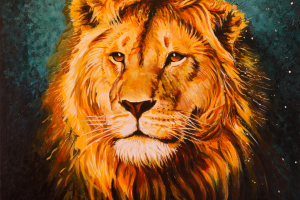


Netflix's Narnia is an attack on Aslan's Christ figure

For more than 70 years, Christians throughout the world have enjoyed C.S. Lewis' epic seven-volume masterpiece, The Chronicles of Narnia. The story, set against the backdrop of the mythical and magical land of Narnia, is meant to be a Christian “supposal” of sorts, a clear parable of the Gospel told in a way that children can understand.
At the center of all of it is the hero, the great lion Aslan. Aslan is the “Son of the Emperor Beyond the Sea,” the creator and savior of Narnia. Aslan gives his life to save Narnia (and the children who discover it) and comes back to life to defeat the evil White Witch and restore the people. Lewis describes Aslan as more than just a representation of Jesus Christ. He is a “supposal” of our Lord, what Lewis imagines the biblical Jesus would be like if there were such a place with talking beasts and magical creatures.
In the age of film and movies, there have been several attempts to bring Lewis' masterpiece to life on screen, but each with little success. The most recent and celebrated attempt came in the early 2000s, when Walden Media (in partnership with a pre-woke Disney) put "The Lion, the Witch, and the Wardrobe" on the big screen with incredible box-office success. They then made a valiant but ultimately doomed attempt to do the same with all seven Narnia books, stopping production after “Prince Caspian” and “The Voyage of the Dawn Treader” each failed to repeat the success of the first movie.
Fast forward to today: Netflix, armed with director Greta Gerwig and the movie rights to Narnia, stepped in and made Aslan transgender. Yes, you read that right.
Critics will argue that I am speaking out of bias. But the proof is in the pudding. Just recently, Empire magazine confirmed that Aslan, the Jesus figure of Narnia, would be played by Hollywood icon Meryl Streep. To add insult to injury, the magazine released a first look at the King of the Whole Wood, complete with rainbow-colored whiskers, multicolored feminized eyes and shades of rainbow in “his” mane.
This is a well-known ploy of the enemies of God, to subvert and destroy symbols of Christianity in an effort to win a war of attrition for the heart of the culture. It is not just an attack on Lewis or Narnia. It is an attack on our faith, no matter how subliminal it seems.
Lewis portrayed the Narnians to be archetypes of Christians. They are the people of Aslan, as we are the people of Christ. And when they remembered the “old stories,” the truth about their creator and savior, they prospered. When they did not remember, disaster soon followed.
In the final Narnia installment, The Last Battle, Lewis ironically and unintentionally gave us an unsettling foreshadowing of what Netflix would do a mere 70 years later. In that tale, in the “last days of Narnia,” a donkey named Puzzle appears in the land and wears a lion suit at the behest of a conniving ape named Shift. Puzzle dons the Aslan skinsuit; the people are deceived. The downfall of Narnia follows shortly thereafter.
Netflix is simply doing what Shift the ape already tried.
Friends, we need to remember our creator. We need to know Him for who He is, and we need to follow Him to the very end. Let's cling to the old stories and fight for the glory of our King, who created us and died for us and rose again to save us.
For all of us, my hope and prayer is that you will never even consider investing in the stock of a company such as this. For many of us, it may also mean canceling the account and not giving them another cent of your patronage dollars.
But no matter what you do, there is a lesson for all of us, and it is this: We need to know and worship the King of kings as He is glorified in the Bible, not some pretend Jesus that fits into whatever the godless culture around us desires him to be.
He is the mighty King of kings and Lord of lords. May we honor Him as such in our hearts.
Seth Udinski is the producer and co-host of “Financial Issues,” a nationally syndicated talk radio and television program that teaches investors how to honor God with their finances through the discipline of Biblically Responsible Investing (BRI).