Should Christians eat halal meat?

Most Christians have probably eaten halal food without thinking much about the label. It may have been at a neighborhood restaurant, during a lunch at work or while sharing a meal with friends. But for Christians who want to honor Jesus Christ in every area of life, the question deserves careful consideration: When does halal meat become more than a matter of food?
My conviction is that Christians should not fear halal food, but they should exercise discernment when they know meat was slaughtered with an Islamic invocation.
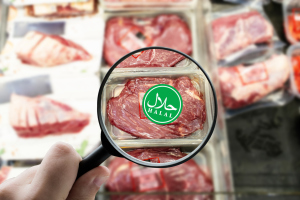
The word halal means “permissible” or “lawful” in Arabic. In Islamic dietary practice, beef, lamb, goat and chicken may be halal if they come from permitted animals and are prepared according to Islamic requirements. Pork can never be halal because it is forbidden in Islam. Fish is generally regarded as halal and ordinarily does not require ritual slaughter, although Islamic practices concerning certain types of seafood may vary.
That distinction is important. This is not an argument that Christians should avoid every food product carrying a halal label, nor is it a call to avoid halal restaurants or Muslim neighbors. Bread, vegetables, rice, fruit and fish may be halal without raising the particular concern addressed here. The narrower question concerns meat from land animals or poultry — such as beef, lamb or chicken — when it has been slaughtered as part of a religious act.
For many Muslims, halal slaughter is not merely a food-preparation method. It is an act of obedience to Islamic religious law. Traditional halal procedures commonly include invoking the name of Allah at the time of slaughter. Requirements may vary among certifiers and Islamic legal traditions, but that religious element is central to why some Christians pause before knowingly eating such meat.
Christians should speak carefully and respectfully at this point. Allah is simply the Arabic word for God, and Arabic-speaking Christians use the word in their Bibles and worship. The issue is not the sound of a word or an ethnic label. The issue is the theological meaning of the invocation. Islam does not confess Jesus Christ as the divine Son of God, crucified and risen, nor does it worship God as Father, Son and Holy Spirit. For Christians, those truths are not secondary. They define the God we worship.
That is why a Christian may conclude that knowingly eating meat slaughtered with an Islamic invocation would suggest participation in a religious act he cannot affirm. The concern is not that the meat itself has become spiritually contaminated. It is about whether an informed action communicates fellowship with worship outside the Christian confession.
The New Testament gives believers two truths that must remain together.
First, Christians are commanded to flee idolatry. The Jerusalem Council instructed Gentile believers to abstain from food sacrificed to idols (Acts 15:29). Paul warned the Corinthians that participation in pagan sacrificial meals could involve fellowship with worship that Christians must reject: “You cannot drink the cup of the Lord and the cup of demons too” (1 Cor. 10:20–21).
Second, food does not possess spiritual power over the Christian. Paul wrote that “food will not commend us to God” (1 Cor. 8:8). He also told believers to eat what was sold in the market without questioning its background and to receive what was set before them in someone’s home without conducting an investigation (1 Cor. 10:25–27).
Therefore, Christians who have eaten halal meat unknowingly need not be anxious. They have not accidentally denied Christ. A piece of chicken, beef or lamb is not spiritually polluted because of a label or a past religious association. Our standing before God rests in Christ, not in what appears on our plate.
But Paul also gave an important qualification. When food was specifically identified as having been offered in sacrifice, he instructed Christians not to eat it—not because the food was inherently unclean, but because of the religious meaning connected with it and the conscience of those involved (1 Cor. 10:28–29).
Scripture does not mention halal slaughter by name. Christians should not claim that every halal-certified item is the same as the idol sacrifices addressed in the New Testament. Faithful believers may reach different conclusions, especially because halal certification can apply to a broad range of foods and practices.
Still, Christians should not dismiss the question when they know the meat was slaughtered with an Islamic invocation. For my part, I choose not to eat beef, lamb or chicken when I know it was prepared in that way. I am not afraid of the food, and I do not believe a Christian who eats it unknowingly has sinned. I simply do not want my own conduct to be understood as participating in a religious act that does not confess Jesus Christ as Lord.
This conviction should never become an excuse for suspicion, hostility or disrespect toward Muslims. Christian love requires truth and kindness. A believer can share fellowship with Muslim neighbors, eat a vegetarian meal or fish at a halal restaurant, and receive hospitality with genuine gratitude.
If a Christian decides to decline a particular meat dish, it can be done quietly and graciously: “Thank you for your kindness. Because of my religious convictions, I prefer not to eat meat prepared that way, but I am grateful to share this meal with you.”
Christians do not need to live in fear of food. But neither should we be careless about worship. Our neighbors deserve respect. Our consciences deserve honesty. And Jesus Christ deserves our undivided allegiance.
Pastor Miguel Bustillos is the founder of The Children’s Bread Deliverance Ministry, author and an internationally recognized deliverance minister and exorcist. He has trained churches around the world in spiritual warfare and inner healing. He is also a Kentucky Colonel, the highest honor awarded by the Commonwealth of Kentucky. Learn more at www.deliverancexorcisms.com.