3 pollution threats deadlier than climate change in Asia

In the era of TikTok and global governments, Biblical stewardship of creation does not mean surrendering our judgment to every environmental movement that claims the moral high ground. It means looking honestly at the evidence, identifying the problems that threaten human beings now, and pursuing solutions that improve the lives of our neighbors.
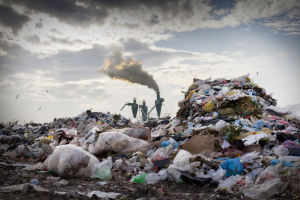
For much of Asia, the environmental emergency is not a hypothetical temperature projection for the year 2100. Rather, it is the real-time plague of land and water pollution, driven by mindless dumping and poor waste management.
Asian countries fill six of the 10 slots on lists of the world's worst plastic polluters and nations with the most mismanaged plastic waste. IQAir's ranking of the world's most polluted countries placed four Asian nations among the six worst for fine particulate pollution in 2025. Three of them, Pakistan, Bangladesh and India, together hold more than 1.8 billion people.
Uncontrolled dumps in India outnumber sanitary and controlled disposal sites by at least ten to one. An environmental risk assessment placed 13 of the world's 20 riskiest cities in India, driven by toxic air and contaminated water. You can understand the seriousness of this when you realize the country has 1.4 billion people!
Even places marketed as paradise cannot hide the problem. Bali, which draws millions of tourists each year, now battles an overflowing landfill and a growing garbage crisis. That decline grieves me. As a child of God, I cannot look at choked drains and burning dumps without thinking of the people, each made in His image.
Real threats today vs. hypothetical threats tomorrow
In the midst of this chaos, another major policy issue has been pulling away all the critical funding needed for sanitation and waste management: climate change funding.
Bengaluru, where I live, shows how this plays out. The city has put hundreds of electric buses on its roads in the name of climate action. Meanwhile, contractors rejected most of the city's waste collection packages, leaving a basic civic service in limbo. Garbage piles up on roadsides, even as I witnessed this morning before I began writing this article. Many neighborhoods still wait for a piped water connection. Poorly managed roads throw dust into air that already fails health standards.
Does an electric bus clean the air when it drives through road dust past a smouldering trash heap? City leaders have decided, in effect, that a poor person’s death by poor hygiene today is tolerable, while a wealthier person’s hypothetical death due to a hypothetical two-degree rise by the end of the century demands urgent spending. That is climate virtue signalling, and the poor of today pay for it. The result is an unintended transfer of wealth from the poor of today to the less-poor or rich of tomorrow.
Dirty water spreads cholera and typhoid. Smoke from burning garbage fills homes. Dust shortens lives. So, which threat will a child in Dhaka or Lahore be more likely die from: a warmer planet in 2,100 or the air and water around her today?
The answer, as you understand by now, is obvious, yet the money keeps flowing toward the distant scenario.
Energy poverty and environmental pollution
Another ignored aspect is the relationship between energy poverty and environmental pollution. They often reinforce each other. When people lack affordable power and formal waste services, they burn rubbish. When mothers do not have natural gas, they burn wood and cow dung for heating and cooking, eventually killing themselves and their children with indoor air pollution.
Again, the alarm regarding the distant hypothetical crisis has been obstructing the reach of natural gas to the poor communities and for the electrification of communities that would reduce pollution in these Third World countries.
The heart of the issue
I believe the Earth belongs to the Lord and that we answer to Him for how we treat it (Psalm 24:1). God placed Adam in the garden “to dress it and to keep it” (Genesis 2:15). That conviction leads to a simple conclusion: The world needs serious environmental action, but it needs action grounded in data and aimed at the dangers that kill people now, not the kind the climate movement keeps selling.
Also, laws and policies alone cannot reach the heart. Where people do not see nature as the handiwork of a personal creator who will hold them to account, little restrains them emptying their waste into streets and rivers. We see this when those from countries with poor pollution standards take a while before abandoning their littering habit when they migrate into countries with higher sanitation standards.
Hence, we need not only an evidence-based policy that tackles real environmental issues, but also a change in the mindset and the heart, which only the Lord can establish.
Vijay Jayaraj is Research Associate for Developing Countries with the Cornwall Alliance for the Stewardship of Creation. He holds a M.S. in environmental sciences from the University of East Anglia, postgraduate degree in Energy management from Robert Gordon University, both in the U.K., and a B.S. in engineering from Anna University, India. He served as a research assistant at University of British Columbia’s Changing Oceans Research Unit in Canada.