Trump’s Fraud Whistleblower Program reveals a Christian problem

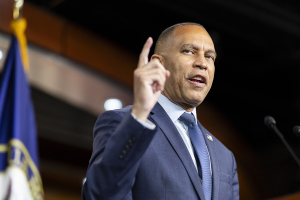
President Donald Trump recently announced an initiative offering financial rewards to Americans who expose fraud against the government. Through the Justice Department's new Fraud Whistleblower Incentive Program, individuals can receive thousands of dollars for providing information that leads to criminal charges.
I am thankful the president is taking fraud seriously. Those who steal taxpayer money, manipulate government programs, or exploit others should be exposed and prosecuted. Offering rewards to those who uncover wrongdoing is a reasonable approach. Fraud does not merely cost the government money. It takes resources from legitimate recipients, burdens taxpayers, and undermines public trust.
But something about this initiative troubles me, and it has nothing to do with President Trump.
Why should we have to pay people to do what is right?
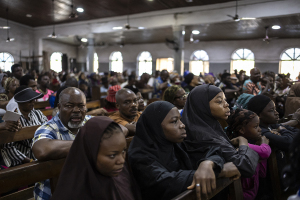
According to Pew Research Center's 2023–2024 Religious Landscape Study, 62% of American adults identify as Christians. That represents a substantial majority of the adult population. With so many professing Christians in this country, shouldn't we have been confronting dishonesty and corruption long before the government needed to offer financial incentives?
Where have Christians been?
How many Christians have witnessed dishonest business practices, fraudulent government claims, exploitation of the vulnerable, or outright theft and simply looked the other way? How often have we justified our silence because speaking up might create controversy, damage relationships, or threaten our personal interests?
Somewhere along the way, Christians began confusing keeping the peace with doing what is right, but Scripture does not give us that option.
Romans 12:9 tells us to “Abhor what is evil; hold fast to what is good.” We don’t merely tell Christians to avoid participating in evil; We must hate it. There is a tremendous difference between refusing to commit wrongdoing and refusing to tolerate it.
Proverbs 31:8 instructs us to speak for those who cannot speak for themselves. Isaiah 1:17 commands us to seek justice, correct oppression, and defend the vulnerable. These are not suggestions reserved for pastors, politicians, or law enforcement officers. They are moral responsibilities.
Even the purpose of government reflects this biblical principle. Romans 13:3–4 describes governing authorities as responsible for restraining wrongdoing and administering justice. Proverbs 11:1 condemns dishonest scales, while Leviticus 19:35–36 requires honest weights and measures.
God cares about fairness in commerce, integrity in government, and justice between individuals. Why, then, have so many Christians surrendered their responsibility to confront evil?
Perhaps we have become too concerned with being liked. Perhaps we have accepted the cultural argument that faith belongs exclusively inside our churches and private homes. Perhaps we have convinced ourselves that remaining silent is an expression of Christian kindness.
Or perhaps we have simply become comfortable.
We have been told not to judge, not to offend, not to rock the boat. And too often, we have believed those messages (many of which are coming from non-Christians) without examining whether they are consistent with the Bible.
But biblical love is not indifferent toward wrongdoing. In fact, allowing someone to exploit another person while we remain silent is hardly an expression of love for the victim.
Jesus was compassionate, but He was never morally indifferent.
Of course, Christians must distinguish between suspicion and proof. Reckless accusations are themselves a form of injustice. Our obligation to pursue truth includes protecting innocent people from false allegations.
I support President Trump's effort to uncover fraud. If financial rewards encourage people to expose criminal activity, taxpayers and legitimate beneficiaries may benefit.
But the deeper question remains.
When did Christians begin waiting for government incentives before fulfilling their moral obligations? Why would we be more incentivized by the love of money to do the right thing rather than the love of God?
Consider the irony. We live in a country where millions profess allegiance to a savior who confronted religious hypocrisy, challenged corrupt practices, and defended the vulnerable. Yet we sometimes behave as though confronting dishonesty is somehow inconsistent with following Him to the point where our leader must reward us for doing so.
America certainly needs stronger accountability and better enforcement against fraud. But it also needs Christians willing to demonstrate integrity when nobody is watching, speak truth when doing so is uncomfortable, and confront wrongdoing even when there is nothing personally to gain.
The government can reward people for exposing fraud.
Christians should never have needed a reward in the first place.
Peter Demos is a business leader and host of the 'Uncommon Sense in Current Times' podcast and author of Bold Not Belligerent. Once an outspoken critic of Christianity, he now owns a successful restaurant chain where faith actively shapes his leadership, culture and decision-making. Drawing on his own transformation, he equips Christians to engage a broken culture with truth, conviction and grace. Learn more at PeterDemos.org.