

What is the American Dream?


As we have been celebrating the 250th birthday of our nation in this year of our Lord 2026, we have witnessed and heard many things. We have also experienced the overwhelming enthusiasm with which approximately 10 million visitors from overseas for the World Cup have embraced our country. As they have traveled into the hinterlands beyond our coasts, they have been experiencing the America we all know and love. It has been a delight to watch their delight on YouTube.
Hopefully, it has caused many Americans to see this country with fresh eyes and with new appreciation. And it should be so. For all of our flaws, imperfections and shortcomings, we are privileged, by the grace of God, to be citizens of the greatest nation ever conceived by the mind of man and brought forth on this planet.
Why do you think it is that so many people from all over the world risk so much to try to come here?
And yet, according to a new poll (AP-NORC at the University of Chicago), only one-third of Americans believe the "American Dream" still exists. They define the "American Dream" as "the belief that if you work hard, you'll get ahead." Half of respondents say that while the American Dream used to be true, it is no longer valid. Only 15% say that the American Dream never was true.
It will come as no surprise that the status of the American Dream varies in the eyes of different Americans. People who identify as Republicans (57%) "are more than twice as likely" as independents (24%) and Democrats (17%) to believe in the American Dream.
There was also an age and gender disparity. Among adults 60 and older, 46% still believed in the American Dream, while only 22% of those ages 18–29 affirm the American Dream. A major difference was also revealed concerning race. Forty percent of white adults believe the American Dream still exists, while only 19% of black adults believe it still exists. Polling showed that 12% of black adults believe the American Dream has never been true.
When one delves into the particulars of the poll, one finds that the better off Americans are doing economically, the more optimistic they are about the future.
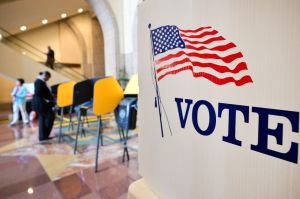
Turning from economic factors, the polling found that 87% of Americans say freedom of speech and 86% say the right to vote are essential parts of the American Dream. Eight in 10 believe the same about freedom of religion.
What this poll does is raise the question: What is the "American Dream"? Is it inextricably tied to economics? No, I don't believe it is.
The American Dream consists of far more than economic well-being. It is a rich tapestry of freedom of speech, freedom of religion and the freedom to "pursue happiness" as each of us defines it. It consists of the freedom to live wherever we want to live, worship as we choose, speak our minds in public and private, and live as we wish, as long as we don't interfere with other citizens' rights.
If the American Dream consisted mainly of economic well-being, would we have sent millions of men who volunteered during the last century to fight for other people's freedom? And would we have given so many billions from our treasury in foreign aid to help those around the world who live in poverty?
I believe the American Dream has more to do with human rights and a belief in individual human dignity, as stated in our justly celebrated Declaration of Independence.
I'm reminded of a conversation I had several years ago with a very bright German Ph.D. who was working for the American government. I was serving on a search committee attempting to convince this very talented young man to accept leadership of a division of the American government. As part of his application process, he had made it clear that he was applying for American citizenship.
I asked him, "Hans, why is it that you want to become an American citizen? I've been to Germany. It's a beautiful country with a high standard of living and less poverty than we have in America, and you have a constitution that guarantees you most of the rights we have in the United States."
He smiled and said, "You're only asking me that question because you're an American." He continued, "You have so much more freedom of choice here to be what you want to be and live where you want to live and do what you want to do without any constraints from who your parents were and where you grew up, etc." He said, "In Germany, there are many social constraints that are still with us. As a German in America, I am much more free than I could ever be in Germany."
When he said that to me, I replied, "I was taking too much for granted the freedom that I have in America as an American." I fear most of us take far too much for granted or simply see it as part of the "furniture in the room."
I pray that all of you will join me in doing all we can in this 250th year of our independence to teach our young people, our children and Americans of all ages about our priceless American heritage and to do all we can to pass the true "American Dream" to our posterity undiminished so that it can continue to live and inspire mankind for another 250 years.
Dr. Richard Land, BA (Princeton, magna cum laude); D.Phil. (Oxford); Th.M (New Orleans Seminary). Dr. Land served as President of Southern Evangelical Seminary from July 2013 until July 2021. Upon his retirement, he was honored as President Emeritus and he continues to serve as an Adjunct Professor of Theology & Ethics. Dr. Land previously served as President of the Southern Baptist Convention's Ethics & Religious Liberty Commission (1988-2013) where he was also honored as President Emeritus upon his retirement. Dr. Land has also served as an Executive Editor and columnist for The Christian Post since 2011.
Dr. Land explores many timely and critical topics in his daily radio feature, “Bringing Every Thought Captive,” and in his weekly column for CP.