Did Al Mohler really propose a religious test for political office?

Imagine my surprise when several Baptist colleagues texted or called me over the past 24 hours to express their surprise, and even bewilderment, at remarks made by Al Mohler, president of Southern Baptist Theological Seminary, concerning religious liberty and separation of church and state.
During a debate on Christian Nationalism at New Saint Andrews College in Moscow, Idaho, Mohler espoused several governmental actions that appeared to contradict long articulated, deeply held Baptist beliefs on religious liberty and separation of church and state.
My surprise and bewilderment stem from the fact that I have known and worked with Mohler for over 30 years on a host of issues in Southern Baptist life. Perhaps most relevantly, Mohler and I were both privileged to serve on the committee assigned to propose revisions for what became the Baptist Faith and Message (2000), the official confessional statement of the Southern Baptist Convention.
Subsequently, I participated with Mohler and Charles Kelley (president emeritus of New Orleans Baptist Theological Seminary) in writing a commentary on that Baptist Faith and Message (2000) confession for the SBC's denominational press.
Having interacted with Mohler for literally hundreds of hours over the years, specifically concerning both the importance of confessional statements and the precision of confessional language, I know how much Mohler values the importance and authority of confessional statements.
This is particularly true for the Baptist Faith and Message (2000), which has been adopted as authoritative both by his institution (Southern Baptist Theological Seminary) and his denomination (the Southern Baptist Convention).
First, what does the Baptist Faith and Message (2000) say? Article XVII, "Religious Liberty," states:
God alone is Lord of the conscience, and He has left it free from the doctrines and commandments of men which are contrary to His Word or not contained in it. Church and state should be separate. The state owes to every church protection and full freedom in the pursuit of its spiritual ends. In providing for such freedom no ecclesiastical group or denomination should be favored by the state more than others. Civil government being ordained of God, it is the duty of Christians to render loyal obedience thereto in all things not contrary to the revealed will of God. The church should not resort to the civil power to carry on its work. The gospel of Christ contemplates spiritual means alone for the pursuit of its ends. The state has no right to impose penalties for religious opinions of any kind. The state has no right to impose taxes for the support of any form of religion. A free church in a free state is the Christian ideal, and this implies the right of free and unhindered access to God on the part of all men, and the right to form and propagate opinions in the sphere of religion without interference by the civil power.
While I agree with Mohler that the ontological basis for the American experiment is stated in the Declaration of Independence's preamble:
"We hold these Truths to be self-evident, that all Men are created equal, that they are endowed by their Creator with certain Unalienable Rights, that among these are Life, Liberty and the Pursuit of Happiness -- That to secure these Rights, Governments are instituted among Men, deriving their just Powers from the Consent of the governed . . ."
The U.S. Constitution, ratified by the 13 states (former colonies) slightly less than a decade after freedom was obtained from Great Britain, was an "enabling" document, forming a "more perfect Union" than had been provided by the Articles of Confederation. Both the Articles of Confederation and the U.S. Constitution sought to implement the timeless truths of the Declaration of Independence.
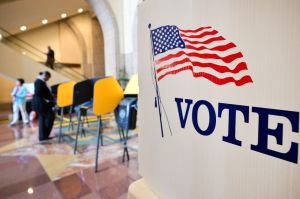
However, when Mohler advocates that officeholders make "public and authentic acknowledgment of the nation's formal commitment to the God of the Bible, specifically the Holy Trinity," and "an acknowledgement of the binding moral authority of the Bible, including both the Old and New Testaments," how is this not a "religious test" for political office by any other means? For example, Thomas Jefferson, a Unitarian, would be disqualified from holding office, much less being president.
While I would prefer all officeholders to meet at least Mohler's guidelines, the only Baptist and constitutional way to do that is by electing them to office, not disqualifying those who do not meet these spiritual standards.
Who is going to adjudicate Mohler's suggested legal standards? What does "authentic acknowledgment" mean? What are the "acceptable" parameters of belief or unbelief?
How is Mohler's proposal different from liberals who seek to disqualify Christian believers from running for office because it violates their twisted understanding of separation of church and state?
The only legitimate solution is to have a population of sufficient faith that they, the people, elect the right people to office. History and experience tell us that government is not nearly as qualified as the electorate to decide who governs them. It is called "the consent of the governed."
Religious liberty and "soul freedom" are at the bedrock of Baptist convictions along with "salvation by grace alone, through faith alone, in Christ alone." Aside from protecting religious freedom, it is always best to keep government out of religion.
While I believe Mohler's concerns are real, and I sympathize with them, I believe his prescription would sadly lead to severely diminished "soul freedom."
I fervently pray he will reconsider his position.
No one's beliefs, or lack thereof, should disqualify them by government edict, or law, from participation in the public debate, the electoral process, or serving in office. As has often been said, "I disapprove of what you say, but I will defend to the death your right to say it." (Evelyn Beatrice Hall, The Friends of Voltaire, 1906).
Dr. Richard Land, BA (Princeton, magna cum laude); D.Phil. (Oxford); Th.M (New Orleans Seminary). Dr. Land served as President of Southern Evangelical Seminary from July 2013 until July 2021. Upon his retirement, he was honored as President Emeritus and he continues to serve as an Adjunct Professor of Theology & Ethics. Dr. Land previously served as President of the Southern Baptist Convention's Ethics & Religious Liberty Commission (1988-2013) where he was also honored as President Emeritus upon his retirement. Dr. Land has also served as an Executive Editor and columnist for The Christian Post since 2011.
Dr. Land explores many timely and critical topics in his daily radio feature, “Bringing Every Thought Captive,” and in his weekly column for CP.