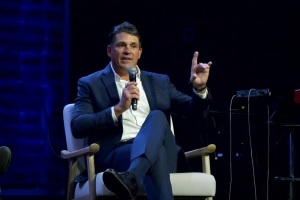
Secular Student Alliance takes aim at Christian 'privilege,' partners with Satanic Temple

Is Christianity privileged in the public square?
That’s the assertion of the Secular Student Alliance, the nation’s largest organization representing what it calls “secular and nonreligious students,” which last Wednesday announced recipients of its 2025 Secular Activist Scholarship, recognizing campus and community student activists who are “pursuing excellence in their academic studies.”
Spotlighting young leaders challenging what the group describes as “Christian privilege” in educational settings, SSA’s scholarship is aimed at advancing “secular values,” but not necessarily at the expense of promoting atheism or any other worldview, according to SSA Executive Director Kevin Bolling.
“Secular values mean supporting a civic culture grounded in reason, evidence, equality, and freedom of conscience,” Bolling told The Christian Post last Thursday.
“Our students come from diverse backgrounds: some identify as atheist or agnostic, while others simply believe that public policy and education should be based on facts, not faith. We also have student members who are religious, supporting church/state separation and freedom of, and from, religion.”
For SSA, freedom from religion isn’t just a slogan — it’s also the name of one of the organization’s partners, Freedom From Religion Foundation, a prominent Wisconsin-based atheist legal group which routinely advocates for a strict separation of church and state. The organization regularly pressures schools and government agencies to halt any perceived endorsements of religion. The group also rallies against religious initiatives in the public square, such as voluntary prayer in schools.
Founded in 2000, the SSA boasts a network of over 300 atheist, agnostic and humanist groups on high school, college and university campuses across the country, along with international affiliates.
For tax year 2023, SSA claimed over $1.22 million in total revenue.
Led by Bolling since 2017, SSA advocates for promoting what it calls “inclusive communities” and secular values amid growing concerns over discrimination against nonreligious and LGBT-identified students.
This year’s SSA scholarship recipients included Kyria from Emory University, who praised SSA’s existence “in a world where religious privilege dominates,” and Kyle from Pennsylvania Leadership Charter School, who highlighted the SSA’s role in normalizing nonreligious identities.
Kyle said the SSA is vital because it "creates a spaces for students like me who are non-religious independent thinkers and who care deeply about keeping church and state separate."
“SSA helps normalize that experience and shows that being non-religious is OK," Kyle said.
In fact, this notion of “religious privilege” runs like a scarlet thread throughout the group's platform. The SSA defines “religious privilege” as “the systemic and cultural advantages that religion, particularly dominant Christian faith traditions in the US, often receives in public life, government, and education.”
Bolling — who served as the director of Philanthropy at the Gay Men’s Chorus of Los Angeles prior to his role at SSA — clarified that the phrase isn’t about criticizing Christians, but rather about “identifying inequities in access, representation, and freedom of belief.”
So where do we see “religious privilege” in the public square? Everywhere from legislatures and schools to city hall, according to Bolling.
“Religious privilege shows up when laws, policies, or institutional practices assume or favor religion — in the US, Christianity — as the norm, such as prayer at public school events, mandatory religious oaths for public office, or taxpayer funds supporting faith-based schools,” Bolling said, adding dynamics such as recently-passed Ten Commandments laws can marginalize nonreligious students, making them feel “invisible, excluded, or pressured to conform to religious expectations.”
Bolling pointed to the group’s scholarship program and campus organizing efforts as a tool to “empower students to speak openly about their secular identities and advocate for policies that protect everyone’s freedom of conscience, religious or not.”
Those efforts include partnering with The Satanic Temple, a self-described satanic group which, in 2016, launched its “After School Satan Club” as part of a campaign to oppose Evangelical programs at schools.
In a 2024 interview with The Good Men Project, Bolling outlined the reason why SSA partners with TST on the so-called “Satan Clubs” in elementary schools.
“After-School Satan Clubs are a counter to the Good News Clubs,” he told the outlet. “The Good News Club comes mainly into elementary schools under the guise of being a club for Christian students who want to participate. However, it’s often driven by adults and is about proselytizing, not about students getting together to pray or learn about the Bible.”
“Our partnership with [TST] helps provide a balance and counters the influence of the Good News Clubs by offering an alternative that emphasizes critical thinking and secular values.”
Good News Clubs, which are an effort of the Child Evangelism Fellowship, are present in thousands of schools nationwide. With the rise of satanic clubs in schools in recent years, a spokesperson for Child Evangelism Fellowship told CP in 2022 that sensational media coverage of the satanic clubs have only helped promote them in a culture that she says is becoming increasingly hostile to the Christian faith.
“We see more unchurched children, more children who don't know basics like the real meaning of Christmas being the birth of Jesus, and more ignorance from adults about freedom of religious practice on public property,” the CEF spokesperson, Lydia Kaiser, said.
In October 2024, TST opened its second telehealth abortion facility to provide what it describes as “religious abortion services” in what the satanic group says is part of its “destruction ritual.”
But for Bolling, SSA’s efforts to address “religious privilege” are not about satanism, but rather “fairness and equality under the law.”
“We believe a truly pluralistic democracy depends on government neutrality in matters of faith, where every individual, religious or not, has an equal voice and the freedom to live authentically,” he said.
On Jan. 19, 2021, the final day of the first Trump administration, Americans United for Separation of Church and State filed suit on behalf of SSA to challenge a U.S. Department of Education rule that required public colleges and universities to exempt recognized religious student clubs from nondiscrimination requirements that apply to all other student groups.
In January, a district court ruled against SSA, concluding that "the agency had the broad statutory authority to promulgate the Rule."