Author says Evangelicals have overlooked parts of Scripture in debate over spiritual gifts in 'UnRedacted'


Author Henry Hastings says he moved from cessationism to continuationism after more than two decades in ministry, a shift he chronicles in his new book, UnRedacted.
Many cessationists hold that the miraculous sign gifts ended with the death of the last apostle. Continuationists hold that the gifts remain active today and are necessary for building up the Church. Many orthodox Evangelicals have revisited such positions, sometimes after believing their doctrine was firmly rooted in Scripture.
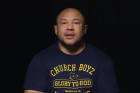
Hastings, a former U.S. Army Green Beret and Dallas Theological Seminary graduate who leads ministries with his wife, Amanda, describes the shift in UnRedacted: Awakening to the Life God Actually Intended. The Christian Post asked Hastings about the journey, including what he came to understand about God, Scripture and the Kingdom.
The following Q&A about his theological journey has been edited for length and brevity.
CP: In the book, you write that many Evangelical churches have effectively “redacted” parts of Scripture, including the apostles and prophets in Ephesians 4 and the spiritual gifts in 1 Corinthians. What do you mean by that, and how do you think it happened?
Similarly, the New Apostolic Reformation is a contested movement among Evangelicals. How does your understanding of the fivefold ministries differ from NAR?
Hastings: My journey from cessationism to believing that the gifts of the Spirit continue today wasn't something I went looking for. In fact, given my theological background, I was predisposed against it. I had been trained to read the New Testament through a framework that essentially said certain manifestations of the Holy Spirit belonged to the apostolic age and had ceased. I knew the arguments, and I believed them.
So when I began encountering things that didn't fit neatly within that framework, it created a genuine theological and spiritual crisis for me. I had to ask a difficult question: Was I going to interpret my experiences through my theology, or was I willing to go back to Scripture and ask whether my theology had adequately accounted for everything the Bible actually says?

That process was both unsettling and liberating. I didn't abandon theology; I went deeper into it. I began rereading passages I thought I understood, particularly Acts and 1 Corinthians 12–14, without starting with the assumption that the gifts had ceased.
What struck me was that I could find clear biblical instructions governing the gifts, but I could not find a clear biblical text saying they would cease with the death of the first apostles or the closing of the canon.
Eventually, the cumulative weight of Scripture, coupled with encounters with the Holy Spirit that I could no longer dismiss, forced me to reconsider a position I had held for 20 years. One of the pivotal moments I describe in UnRedacted was a powerful encounter with God in which He confronted this issue very directly for me. It wasn't simply an emotional experience; it sent me back to the Bible.
At the same time, I think the current exposures and abuses within parts of the charismatic world have to be taken extremely seriously. Calling something a manifestation of the Holy Spirit does not make it one. Scripture tells us to test the spirits, judge prophetic words, exercise gifts in an orderly way and examine fruit.
Spiritual gifts should never place leaders beyond accountability, excuse manipulation or substitute someone's claimed revelation for the authority of Scripture. But I also don't believe the misuse of something proves that the genuine thing no longer exists. Paul confronted serious abuses of spiritual gifts in Corinth, yet his solution was not cessation; it was correction. He told them to pursue love, desire spiritual gifts, and exercise those gifts in a way that builds up the Church.
Why does this matter so much? Because ultimately this isn't just a debate about tongues, prophecy or healing. It's about what kind of Christian life Jesus intended us to live. I came to realize that I had unintentionally reduced Christianity largely to believing the right things about God rather than also living in an active relationship with Him through the indwelling Holy Spirit.
UnRedacted is, in many ways, the story of discovering that there was more available in the Christian life than I had allowed myself to believe. The gifts are not the goal; Jesus is. But the Holy Spirit and His gifts are part of the way God chose to reveal Jesus, strengthen His Church, minister to people, and advance His Kingdom. I don't want counterfeit spiritual activity, but neither do I want fear of the counterfeit to cause us to reject what is genuine.
CP: Your subtitle speaks of “the life God actually intended.” Is that fundamentally related to the supernatural? How do you distinguish between the life God intends for a person and the life that culture, family expectations, religious institutions or our own fears tell us we should live?
Hastings: Yes, the supernatural is part of what I mean by “the life God actually intended,” but it is not the whole of it. At its core, UnRedacted is about recovering the life that becomes possible when we understand who God is, who we are in Christ, and what Jesus actually accomplished for us.
I believe Christianity was always intended to be supernatural because we worship a supernatural God and are indwelt and enabled by the Holy Spirit. But the goal isn't to accumulate supernatural experiences. The goal is intimacy with God, which means experiencing Him. From that relationship come freedom, transformation, purpose, and the ability to participate with God in what He is doing in the world.
One of the central ideas in the book is that all of us have had parts of our story “redacted.” Culture tells us who we should be. Families place expectations on us. Religious systems can sometimes give us boundaries and limitations that God Himself never gave us.
Our wounds, failures, disappointments and fears can do the same thing. Over time, we can begin living from those voices rather than from what God says is true about us. Romans 6–8 became enormously important to me because Paul describes something far greater than behavior modification or simply trying harder to be a good Christian. He describes an old identity that has died with Christ and an entirely new way of living, free from condemnation, empowered by the Spirit, and learning to live as sons and daughters of God.
So how do we distinguish God's intended life from all those competing voices? I think it begins with Scripture, but it also requires relationship with the Holy Spirit. Christianity was never intended to be a relationship with a book alone. Jesus said His sheep hear His voice, and Paul said those who are led by the Spirit of God are the sons of God. We learn to recognize His voice, test what we believe we are hearing against Scripture, seek wise counsel, examine the fruit it produces, and then have the courage to obey. Sometimes that obedience will challenge the expectations other people have placed on us, and sometimes it will challenge the limitations we have placed on ourselves.
Ultimately, “the life God actually intended” isn't a promise that everything will be easy, prosperous or spectacular. Jesus was very clear that following Him involves sacrifice and suffering. But I don't believe He died and rose again merely so that we could be forgiven and then spend the rest of our lives waiting to go to Heaven.
He (Jesus) came to restore us to relationship with the Father, set us free from what enslaves us, transform us into His image, fill us with His Spirit, and invite us to participate in His Kingdom purposes here and now. That is the life I spent years realizing I had only partially understood — and that journey is really what UnRedacted is about.
CP: You used to be a pastor and are transparent in the book about a moral failure in the book. There is tremendous debate about whether or not clergy can and should be restored to ministry after being exposed for certain kinds of sin, and the reality of spiritual abuse. Charismatics, in particular, have an unfortunate reputation for restoring people hastily, often enabling further harm. You're no longer pastoring a church, but you're still ministering to people. Why did you feel the need to include this part of your story in a book about moving in the supernatural?
Hastings: I included that part of my story because I didn't think I could write honestly about freedom, grace, identity and restoration while editing out one of the darkest chapters of my own life. UnRedacted isn't a book about how I discovered the supernatural and then everything became extraordinary. It is also the story of my failure, the consequences of my choices, and what God did in me afterward. If I'm going to tell people that the Gospel really can set us free and that our worst failure doesn't have to become our permanent identity, then I have to be willing to tell the truth about the places where I desperately needed that Gospel myself.
I also think we need to distinguish between restoration to God and restoration to a position. I believe wholeheartedly in restoration. That's the Gospel. There is forgiveness, healing, transformation, and a future for the person who genuinely repents and submits to the work of God. But forgiveness does not automatically restore someone to leadership, nor does repentance erase consequences.
Ministry leadership is a stewardship, not an entitlement. When a leader's sin has harmed other people, our first concern cannot be protecting his platform, reputation or calling. There must be concern for those who were harmed, genuine accountability, demonstrated repentance and enough time for the fruit of transformation to become evident. Depending on the nature of the failure, restoration to a particular leadership role may not be appropriate at all.
That is especially important in environments where spiritual gifts or charismatic personalities can create an unhealthy sense that someone is uniquely anointed and therefore indispensable. No one's gifting places him above character or accountability. In the New Testament, gifting and character are never meant to be separated. I think we make a serious mistake when we interpret someone's continued gifting as evidence that God has endorsed his character or restored his authority. The gifts of God are not a substitute for the fruit of the Spirit and godly character.
For me personally, I am not the senior pastor of a church today, nor do I desire to pastor a church again, but God has allowed me to continue serving people in other ways. My failure is part of why I understand the message of UnRedacted so deeply. I know what it is to discover that knowing theology, holding a ministry position, and even being used by God are not the same thing as being whole. And I know what it is to experience the grace and mercy of God not as a theological concept, but as the only hope you have left.
I included that chapter because I wanted readers who have failed, whether publicly or privately, to understand that repentance is real, consequences are real, and restoration is real. Your failure may become part of your story, but in Christ it does not have to become your identity.
CP: There is significant controversy around what has become known as NAR, and it has some deep theological and structural problems. You argue that, for all that Evangelicals get right, they have functionally redacted verses in Ephesians 4 regarding the fivefold offices or graces, essentially eliminating apostles and prophets, and in 1 Corinthians about the spiritual gifts. What do you say some Christians misunderstand about these verses, and how has NAR also skewed these fivefold graces?
Hastings: I think this is one of the clearest examples of what I mean by “redacted.” Evangelicalism has done an extraordinary job defending the essentials of the historic Christian faith: the authority of Scripture, the deity of Christ, the atonement, the resurrection, salvation by grace through faith alone. Those are hills worth dying on.
But in our desire to protect biblical orthodoxy, I think portions of the Evangelical world developed theological systems that effectively removed certain things from the Christian experience that are plainly present in the New Testament. We didn't literally take Ephesians 4 or 1 Corinthians 12–14 out of our Bibles, but functionally we sometimes behaved as though portions of those passages had been redacted.
Ephesians 4 says that Christ gave apostles, prophets, evangelists, pastors and teachers to equip the saints for the work of ministry until we attain maturity and the fullness of Christ. I became increasingly uncomfortable with the idea that we could affirm evangelists, pastors and teachers as continuing gifts to the church while declaring apostles and prophets essentially extinct when the text itself doesn't make that distinction.
I think much of this developed from a legitimate desire to protect the unique authority of the original apostles and the final authority of Scripture. I share that concern. The 12 apostles and Paul occupied a unique, foundational role in redemptive history, and no modern apostle or prophet possesses the authority to add to Scripture or speak with authority equal to Scripture. But recognizing that unique role does not require us to conclude that every apostolic or prophetic function described in the New Testament disappeared with them.
At the same time, I think parts of what has been called the New Apostolic Reformation have made almost the opposite error. Instead of functionally eliminating apostles and prophets, some have elevated those titles and offices in ways I don't believe the New Testament supports. When “apostle” becomes a title conveying status, unquestionable authority, territorial jurisdiction, or placement at the top of a spiritual hierarchy, we have moved a long way from Jesus' model of servant leadership.
The same is true of prophecy. New Testament prophecy is to be tested and weighed; it is never a mechanism for insulating leaders from accountability or controlling people's lives. Saying “God told me” cannot become a trump card that ends discernment, overrides Scripture, or prevents legitimate questions.
I prefer to think of Ephesians 4 primarily in terms of graces Christ gives His Church rather than titles people acquire for themselves. Apostolic people pioneer, build, establish and extend the work of the Kingdom. Prophetic people help the Church hear and respond to God. Evangelists proclaim the Gospel and equip others to do the same. Shepherds care for and protect God's people, and teachers ground them in truth. We need all of those graces functioning together, with Christ, not an apostle, prophet, pastor or celebrity leader as the Head. When one expression dominates the others, distortion becomes much more likely.
So I think there are errors on both sides. One response to abuse has been to remove or explain away things Scripture appears to give the Church; another has been to exaggerate those same things beyond what Scripture permits. Neither is the answer.
UnRedacted is an invitation to go back to the text and ask a more uncomfortable question: What if we allowed Scripture to challenge both our cessationist traditions and our charismatic traditions? My concern isn't whether something is labeled Evangelical, charismatic or NAR. The question is whether what we believe and practice can withstand the scrutiny of Scripture and whether it produces people who increasingly look like Jesus.
CP: What would you say to someone who recognizes themselves in your story but is afraid of what might happen if they become completely honest — with themselves, with God or with the people around them?
Hastings: I would tell them that I understand the fear. Honesty can feel incredibly dangerous when you've spent years protecting an image, hiding a failure, carrying shame or simply trying to survive. We become very good at compartmentalizing parts of our lives, even from ourselves.
But one of the things I discovered is that whatever we refuse to bring into the light eventually begins to exercise power over us. We expend enormous amounts of energy protecting what is hidden, and the very thing we are trying to conceal can become the thing that keeps us from experiencing the freedom Jesus purchased for us.
The first place for honesty is with God. And the remarkable thing is that you're not actually telling Him anything He doesn't already know. You're not going to shock Him. You're not going to reveal something that suddenly causes Him to reconsider whether He wants you. The Gospel is that Christ came for us knowing the whole story. For me, freedom began when I stopped approaching God as the person I thought I was supposed to be and began coming to Him as the person I actually was. Grace becomes more than a doctrine when you finally allow God into the places you've worked hardest to hide.
But bringing things into the light doesn't necessarily mean telling everything to everyone. There is wisdom involved. James tells us to confess our sins to one another and pray for one another so that we may be healed.
I believe we need trustworthy, mature people who can know our story, tell us the truth, pray with us, and walk with us without either condemning us or enabling us. And if our actions have harmed other people, honesty may also require confession, accountability, making amends where possible, and accepting consequences. Grace isn't avoiding consequences; grace is discovering that consequences don't get the final word over who you are.
If someone sees themselves in my story, I would tell them this: whatever is waiting for you in the light is better than remaining imprisoned in the darkness. It may be painful. It may cost you something. It certainly cost me something. But Jesus did not come merely to help us manage our secrets more effectively. He came to make us free. And freedom begins when we stop hiding and allow Him to tell us the truth, not only about our sin and our wounds, but about who we are now because of what He has done.
CP: Another shift in your theology is moving from being an Evangelical cessationist focusing on the Gospel of Salvation — which primarily emphasizes the importance of “getting saved" — toward a more comprehensive Gospel of the Kingdom. Certainly, as Jesus says in Luke 15:10, the angels rejoice when one sinner repents and we shouldn't undermine the necessity of salvation and putting our faith and trust in Him alone. But what was it like going from that narrower view of the Gospel to seeing the riches of the ever-increasing Kingdom the Lord inaugurated when He was walking the Earth?
Hastings: This was one of the most significant shifts in my understanding of the Christian life. I had spent years faithfully preaching the Gospel as I understood it: we are sinners separated from God, Jesus died for our sins and rose again, and through repentance and faith in Him we receive forgiveness and eternal life. I still believe every word of that. The problem wasn't that what I believed was false; it was that I had come to realize it was incomplete. I had largely reduced the Gospel to how a person gets saved and goes to Heaven when they die, while Jesus continually proclaimed something much larger: the Gospel of the Kingdom of God.
When I began looking at the Gospels through that lens, it was almost like reading them again for the first time. Jesus didn't simply announce that people's sins could be forgiven. He announced that the Kingdom of God was near. Then He demonstrated what that meant. He healed the sick, delivered people from demonic oppression, restored broken lives, confronted darkness, forgave sins, and ultimately defeated sin and death through the cross and resurrection.
Then He commissioned His followers to continue announcing and demonstrating that Kingdom on Earth. Salvation isn't diminished in that message; it becomes even more magnificent. We aren't merely saved from something; we are saved into something. We are reconciled to the Father, given a new identity, filled with the Holy Spirit, brought into His Kingdom, and invited to participate with Jesus in what He is doing in the world.
That changed the way I understood passages I had read for decades. When Jesus taught us to pray, “Your Kingdom come, Your will be done, on earth as it is in heaven,” I began to see that as far more than devotional language. It describes the mission of God's people.
Wherever the rule and reign of Jesus advances, darkness is displaced. People are reconciled to God. Captives become free. Broken people are restored. Justice advances. The sick are healed. The oppressed encounter freedom. And the Church becomes more than a place where people gather while waiting to go to Heaven; it becomes an outpost of the Kingdom through which God brings the reality of Heaven into the brokenness of the world.
It also gave me a framework for understanding the supernatural that I had never really possessed before. The gifts of the Spirit aren't spiritual entertainment, badges of maturity or proof that one group of Christians has discovered something others haven't. They are tools of the Kingdom. Healing, prophecy, discernment, deliverance, miracles and the other manifestations of the Spirit are ways God reveals His nature, builds His Church, ministers to people, and bears witness to the reign of Jesus. That understanding actually made the supernatural less sensational to me, because the focus shifted away from the manifestation itself and back to the King.
For me, this is ultimately one of the great themes of UnRedacted. Jesus didn't die simply to secure our destination after death. He died and rose again to reconcile us to the Father, destroy the works of the devil, make us new, fill us with His Spirit, and bring us under His loving rule so that we could participate in His purposes now. Eternal life certainly includes the incredible promise of eternity with Him, but it begins now. I had preached a Gospel that told people how to enter the Kingdom; I eventually discovered that Jesus also wanted to teach us how to live in it.
Brandon Showalter has a bachelor's degree from Bridgewater College in Virginia and a master's degree from The Catholic University of America in Washington, D.C. Listen to Showalter's Generation Indoctrination podcast at The Christian Post and edifi app Send news tips to: brandon.showalter@christianpost.com Follow on Facebook: BrandonMarkShowalter Follow on Twitter: @BrandonMShow