

Boston City Council proclaims Thanksgiving as 'Day of Mourning' for Native Americans

The Boston City Council passed a ceremonial resolution last week marking Thanksgiving Day as a "National Day of Mourning in the City of Boston" on behalf of Native Americans displaced by European settlement of the continent.
The resolution, which Boston City Councilor Benjamin Weber introduced for the third consecutive year and 11 other councilors co-sponsored, passed without objection on Nov. 18, according to footage of the meeting that went viral on social media.
Boston City Council passes a resolution to designate Thanksgiving Day as a “National Day of Mourning” to address “historical injustice” https://t.co/G0sMIDYz9H
— TheBlaze (@theblaze) November 24, 2026
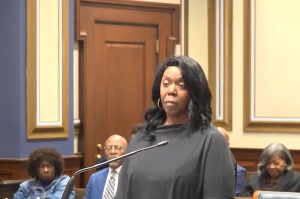
"The story of Thanksgiving that so many of us grew up learning in school fails to acknowledge the devastating consequences that colonialization had and continues to have on Indigenous peoples," Boston City Councilor At-Large Julia Mejia said during the meeting in support of the resolution.
"I think it's important that we recognize that these are not simply injustices of the past. And as a city, we have a responsibility to ensure that our commitment to equity and justice includes the Indigenous peoples whose lands we live on."
The resolution comes amid legal tension in the nearby town of Plymouth, Massachusetts. Local members of the Native Wampanoag tribe and the United American Indians of New England (UAINE) have gathered there since 1970 to mark their National Day of Mourning at the site where the Pilgrims landed in 1620.
UAINE organizers of this year's day of mourning were in court on Monday to request a temporary restraining order against the town, alleging it was impeding their annual event by not providing a stage, reports NBC Boston.
A court filing claims UAINE was told the Plymouth Select Board voted last week not to provide a stage or an alternative.
"We believe they are throwing up roadblocks because they don't want the tourists to see or hear Native Americans who are speaking about the true history of the Pilgrim invasion and resulting land theft and genocide of Wampanoag and other Native peoples," said Mahtowin Munro, a UAINE leader, in a press release.
The town pushed back, saying it has "offered multiple alternatives for a stage for UAINE's consideration," but that the organization has not agreed to them. The next court hearing is reportedly set for Dec. 15.
Kisha James, a UAINE co-leader and the granddaughter of the event's founder, said the day of mourning aims to dismantle the narrative of Thanksgiving, according to The Boston Globe.
"The Pilgrims are not ancient history, and we cannot allow their crimes to be sanitized and forgotten. That is why, year after year, we have gathered on this hill to tear down the Thanksgiving mythology," she said.
Thanksgiving Day is a uniquely American holiday that commemorates the three-day harvest celebration in autumn 1621 at Plymouth Colony. Accounts of the event survive in only two English primary sources.
A December 1621 letter by colonist Edward Winslow, published the next year, provides the only contemporary details. A later description appears in longtime Plymouth Gov. William Bradford's account of the colony, which he wrote between 1630 and 1651.

Approximately 52 surviving English colonists out of the original 102 Mayflower passengers gathered with Massasoit, the Wampanoag leader, and about 90 Wampanoag men to reaffirm the mutual peace and defense treaty they had signed earlier that spring.
In his 1621 letter, Winslow explicitly credited God for their survival and crop yield, writing, "Our corn did prove well, and God be praised, we had a good increase of Indian corn." The letter also expressed thanks for the peace they shared with their Wampanoag neighbors.
Jon Brown is a reporter for The Christian Post. Send news tips to jon.brown@christianpost.com