

Business and faith leaders warn Republicans may lose Latino vote gained in 2024 election

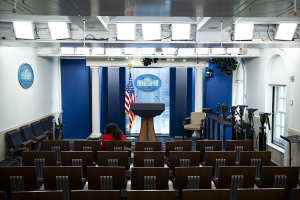
In a coordinated effort to address the volatility of the Hispanic electorate, the Committee of 100 convened a press conference on Thursday in Washington, D.C., to present a comprehensive investigation into the state of the Latino vote ahead of the upcoming midterm elections.
The coalition of business and faith leaders warned that aggressive immigration policies and economic dissatisfaction are eroding the historic support Republicans achieved in 2024, simultaneously launching a national campaign to mobilize influencers in key states.
Enrique Sanchez, state director of ABIC Action, noted that although President Donald Trump received a historic proportion of Latino support in the 2024 election, the situation has changed dramatically.
"Our data shows that after President Trump received the largest share of the Latino vote ... aggressive mass deportation policies and economic dissatisfaction have turned that support into a challenge," Sanchez explained.
For his part, Massey Villarreal, co-chair of the Committee of 100, underlined his stance as a Republican looking for practical solutions.
"Any party that ignores our needs will pay the price at the ballot box," he said. "President Trump and Congress must prioritize immigration reform, not excessive ones."
The group's research reveals that control of Congress in 2026 hangs in the balance that Latino voters hold tightly. According to the data, a shift of just 10% to 15% in the support of this electorate — a figure consistent with trends seen in recent elections — could radically transform the electoral landscape in more than two dozen strategic districts.
Not only does this change seriously jeopardize Republican-held seats, but it also bolsters vulnerable Democrats and neutralizes the advantages some states sought to gain through redistricting.
The report details critical projections in key states where the Latino Population of Voting Age with Citizenship (CVAP) is determinant. In Texas, for example, districts designed to favor Republicans could return to Democratic hands if the current discontent continues; Monica De La Cruz's 15th district would go from an R+22 lead to a precarious R+0.3 with a 15% change in the Hispanic vote. Similarly, in Florida, traditionally strong districts like María Elvira Salazar's (R+6) could swing drastically toward a D+14.5, evidencing that Latino support is volatile and based more on personal performance than on unshakable partisan loyalty.
The crisis in churches and the family economy
During the press conference, one of the most powerful testimonies came from the Rev. Samuel Rodriguez, president of the National Hispanic Christian Leadership Conference, who warned about the spiritual and social impact of current policies.
"The Latin Christian church is suffering in such a way in a forceful way. ... A pastor of a well-known church said, 'I'm going to have to close my church,'" Rodriguez said, noting that 70% of Latino Evangelicals who supported Trump for his values are now facing a "moment of desperation."
In January, Pastor Victor Martinez of the New Generation Church in Minneapolis detailed the impact the ICE raids were having on his community, specifically on church attendance. After stressing that "pastors are preparing for the possibility of losing their buildings" because church attendance has dropped by 80%, Martinez said his church "is probably considering closing right now, because it's very traumatic for me as a pastor to have to worry about the people in our church."
From an economic perspective, Ana Valdez of the Latino Donor Collaborative emphasized that 73% of the Latino workforce is critical to the country's growth.
"This is a very economic conversation," he said, highlighting the role of Latinos in entrepreneurship and home buying.
Regional impacts and calls for legislative action
Leaders from specific sectors shared alarming data about local economies.
Mario Guerrero of the South Texas Builders Association said that banks in South Texas have had "70% losses on construction loans."
"The Mexican vote is won with respect," he said.
Liliam Lopez of the South Florida Hispanic Chamber of Commerce said he feels "disappointed."
"As a Republican, logically Cuban-American, I feel very disappointed," he said. "This is inhumane and affects our economy."
Monica Villalobos of the Arizona Hispanic Chamber of Commerce stated: "Without work permits and protections for long-term workers, the nation's economy cannot move forward."
"If there is a change of 10 to 15 points among Latino voters ... the Republican Party could lose more than two dozen competitive districts," Sam Sanchez of Third Coast Hospitality warned.
Ramiro Cavazos of the U.S. Hispanic Chamber of Commerce stressed that there has been a "tremendous effect on a lot of companies ... because of the abuses, the way they are deporting innocent people."
The new national campaign will seek to promote commonsense solutions, including work permits for long-term immigrants and support for bills such as the Dignity Act, the DREAM Act, and the Farm Workforce Modernization Act.
The coalition's next mobilizations will take place in Dallas and Pasadena, Texas, during March, followed by Phoenix in June.
The Committee of 100 is a coalition of prominent Mexican-American and Latino business leaders from across the U.S. dedicated to advancing practical solutions on immigration. The coalition pushes for policies that ensure secure borders, respect for immigration laws, and protections for key groups such as Dreamers, mixed-status families, and essential workers who contribute to sectors such as agriculture, hospitality, and health.
This article was originally published at CP Español.