

Crosspoint Church petitions Supreme Court over Maine's LGBT rules for school tuition program

Quick Summary
- Bangor Christian School's operator, Crosspoint Church, filed the petition with the U.S. Supreme Court last Friday.
- Maine says the school is ineligible for tuition aid because of its religious stance on LGBT issues.
- The church asks the justices to apply strict scrutiny to conditions that burden religious exercise.

A church-operated private school has asked the U.S. Supreme Court to stop Maine from requiring the institution to adopt LGBT policies to qualify for a tuition aid program.
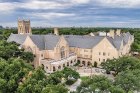
Crosspoint Church, which operates Bangor Christian School, filed a petition for writ of certiorari, a request for the high court to review a case, last Friday. The filing came about four months after an appeals court ruled against the church.
The church asked the high court to decide if “public-benefits conditions requiring religious schools to abandon their religious exercise to obtain the benefits are subject to strict scrutiny.” Strict scrutiny is the toughest standard courts use to review government actions.
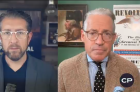
Ryan Gardner, senior counsel for First Liberty Institute, which is helping represent the church, called Maine’s policies "un-American" in a statement Monday.
“Religious education plays a historical and vital role in our diverse society, but Maine’s leadership still refuses to comply with the Supreme Court’s mandate to treat faith-based education fairly,” Gardner said. “Punishing religious institutions for their religious beliefs is odious to our Constitution. We now hope the Court will take this case and end Maine’s efforts to circumvent the First Amendment.”
In 2022, the U.S. Supreme Court ruled 6-3 in Carson v. Makin that Maine could not prevent parents from using a state tuition program to send their children to Christian schools.
The case was brought by parents from Bangor Christian who sued Maine over a ban on tuition assistance for children sent to a private school with religious elements in its curriculum.
After the Supreme Court ruling, Democratic Maine Attorney General Aaron Frey said Crosspoint’s school was still ineligible for the program over its religious stance on LGBT issues.
“The education provided by the schools at issue here is inimical to a public education,” Frey said in a 2023 statement. “They promote a single religion to the exclusion of all others, refuse to admit gay and transgender children, and openly discriminate in hiring teachers and staff.”
Frey promised to “explore with Governor Mills’ administration and members of the Legislature statutory amendments to address the Court’s decision and ensure that public money is not used to promote discrimination, intolerance, and bigotry.”
In response, Crosspoint sued Maine officials in March 2023 over the requirement that the private school follow state LGBT antidiscrimination policy, denouncing it as a “poison pill.”
In February 2024, U.S. District Judge John Woodcock, a George W. Bush appointee, denied a preliminary injunction requested by Crosspoint, ruling that the complaint was unlikely to succeed.
“The Court determines that the educational antidiscrimination provisions do not violate the Free Exercise Clause because they are neutral, generally applicable, and rationally related to a legitimate government interest,” Woodcock wrote.
In July, a three-judge panel of the 1st U.S. Circuit Court of Appeals ruled against Crosspoint. Circuit Judge William Kayatta, an Obama appointee, wrote the opinion.
Kayatta wrote that “Crosspoint has not shown that specific anti-BCS animus motivated” the policy. The panel sent the case back to the district court for further proceedings consistent with his opinion.
“[W]e conclude Crosspoint has not succeeded on its free-exercise claims against the Religious Nondiscrimination Rule or the Sexual Orientation and Gender Identity Nondiscrimination Rule,” Kayatta wrote.
“Crosspoint has failed to convince us that the Sexual Orientation and Gender Identity Nondiscrimination Rule should receive strict scrutiny as a content- or viewpoint-based regulation of speech.”
In its appeal to the U.S. Supreme Court, attorneys for the church argue that Maine's "maneuvers cannot be described as anything but defiance" of its 2022 ruling, saying the state replaced the sectarian-school ban with a condition that officials knew "would be unacceptable to BCS and other religious schools."
"To obtain tuition funds, Crosspoint must cease operating BCS consistent with its Christian mission to preach the Gospel and biblically rooted beliefs about sex and gender identity," the petition reads.