Democratic rep. endorses Republican as El-Sayed downplays parental rights concerns: 'Education is on the ballot'

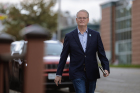
A Democratic member of Congress has endorsed Republican Mike Rogers in Michigan’s U.S. Senate race over Democratic candidate Abdul El-Sayed, the same day El-Sayed suggested concerns about trans-identified males in women’s sports and school culture war issues "are manufactured" for political distractions.
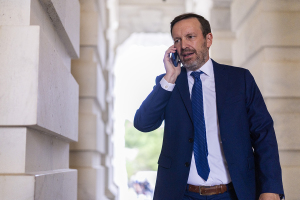
In a video posted to X Sunday, Rep. Haley Stevens, D-Mich., El-Sayed's opponent in the Democratic primary earlier this year, endorsed Rogers, saying El-Sayed told her she “was no longer welcome in his campaign.”
"He's right," Stevens, 43, said. "That's why I'm endorsing Mike Rogers for the United States Senate today."
The tension between the two Michigan Democrats unfolded over the past week amid efforts to host a unity event ahead of Tuesday’s election.
“I do not belong in Abdul’s campaign,” Stevens added.
“I do not stand with Hasan Piker, who gets trafficked on our college campuses” she continued, referring to the far-left activist who has praised communism and has engaged in heated rhetoric against Israel.
She also suggested that "education is on the ballot."
"What our students see, what our children see and who we are as Michiganders is not hate, and that is not what we are getting out from our Democratic nominee right now," she stressed.
El-Sayed sat down for an interview with CBS’ “60 Minutes” that aired Sunday, two days before Election Day. El-Sayed was asked for his views on “the rights of parents to [have] control over their children’s education” and “transgender kids on sports teams.” The Senate candidate responded, “I think we manufacture these social issues.”
El-Sayed downplayed the idea that children could be exposed to content or situations their parents find objectionable at school.
“The notion somehow that you are going to prevent your child from being exposed to something that you may find disagreeable and that that is going to be because of school is so profoundly outdated,” he said.
He cited the prevalence of smartphones as the reason for his opinion, insisting that the technology makes it so “you have all the information and they have all the information.”
“The free flow of information is actually a beautiful thing," El-Sayed said.
"It’s really important, and the most important thing you can do is not try to protect a person from seeing a thing; it’s about trying to make sure that as you coach your kid through the world, that you are engaging with them and saying, ‘Here’s what I believe, here’s what you may see in the world, you get to make your choices about who you’re going to be in the world.’”
El-Sayed said that society needs to "make do with the fact that like the internet is a real thing."
“This debate about, like, ‘what’s taught in a classroom’ I think has been made into a cultural flashpoint because a lot of the folks who want to make this a topic of conversation don’t want to be talking about the real issues that we face in our lives," El-Sayed claimed. “A lot of the culture war issues that get fought right now are about trying to distract us from the fact that we can’t afford our gas, can’t afford our groceries, can’t see a doctor, are worried about whether or not our kids are going to have a good life.”
He lamented that "we’re out here talking about who gets to play what sport, which … should be the question of the people who govern sports.”
“I’m not running to govern sports," he said.
The "60 Minutes" interview also touched on El-Sayed’s views on Israel. While El-Sayed repeatedly highlighted his opposition to using taxpayer dollars to fund Israeli defense efforts and the war in Iran, he was asked if Palestine has “a right to exist.” The Senate candidate said yes. When asked the same question about Israel, El-Sayed responded, “Yes, if there is a shared understanding.”
“If we want to talk about the right of Israel to exist, it has to exist alongside a Palestine that is the consensus of both of these communities,” El-Sayed maintained. “Too often when this question is asked, we start with the currently existing state of Israel that is existing in contraposition to the possibility of a state of Palestine."
"We have to start on that premise, and then from there we say, OK, where do we carve out a Palestinian state?”
El-Sayed identified his highest priority in the Middle East as ensuring that Palestinians and Israelis have “equal rights to peace, dignity, and self-determination.”
“When you take the currently existing state of Israel, and you take its claims as being the most important, what you are by definition doing is saying that the claims to self-determination are not equal," he said.
Ryan Foley is a reporter for The Christian Post. He can be reached at: ryan.foley@christianpost.com