

Former Google exec warns AI could become idol: 'Keeps me up at night'

A former Google executive who helped build some of its technology recently warned that he fears artificial intelligence has the capacity to become a source of spiritual darkness and idolatry.
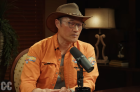
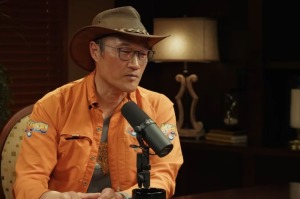
Vivek "Vic" Gundotra, who worked at Microsoft for 15 years before serving as senior vice president of social at Google from 2007 to 2014, also claimed during a Nov. 21 interview with The Epoch Times that he was led to embrace Roman Catholicism upon reflecting on the complexity of the universe.
Gundotra, who was born in Mumbai and raised as a Jehovah's Witness — a religion many Christians view as a cult — before becoming an atheist, explained that he grew convinced of intelligent design after helping create Google's cutting-edge technology, which included work on an early mobile version of Google Maps.
Gundotra said before he recently found his way to Catholicism, he had come to believe that he was God.
"I was a materialist. I believed in atheism. I believed in evolution. I believed that was the only answer, things that could be tested," he said. "And it was later in my life that I really had a chance — I was also retired, so I had a lot of time to think about this — that I came to the conclusion that there was too much evidence for, in the universe, of design for me not to believe an intelligent designer created it."
Building Google is what made former Google senior vice president Vic Gundotra believe in God. He was an atheist and a materialist until just a few years ago. Now he’s a devout Catholic, and he fears people will start worshipping AI. “I would say that I believed I was God. I was a materialist. I believed in atheism.” “There was too much evidence for me in the universe of design for me not to believe an intelligent designer created it.” “Having built Google Maps and Search and YouTube and Gmail and Android, if you told me those happened by accident, I would be angry at you.” “A single human cell exceeds everything Google has ever built.” “I do worry that for many people, AI will become their god.” “They will worship the creation rather than the Creator, and that is what keeps me up at night.”
— Jan Jekielek (@JanJekielek) November 23, 2026
Noting he would have been angered if someone had doubted that he and his team had played a role in designing the technology at Google, he came to believe it was absurd to do the same about the universe when it shows much more complexity than anything they could have made.
"I know how hard I worked and my team worked on those, and yet a single human cell exceeds everything Google has ever built. Charles Darwin didn't know that. He thought a single cell was like a jelly. Now we know the complexity," he said.
Convinced that God must exist, Gundotra said he studied various world religions and concluded that Christianity was true, that Jesus Christ was resurrected and that the Bible could not have been written solely by humans. He came to understand that mankind's ability to build their own technology is possible because they were created in God's image, as described in Genesis.
"If we're created in His image, we too will build things that are awe-inspiring. And humans have done that. We are, by our very nature, always trying to do better. Our entire history is one of creation. Now sadly, some of that creation has been technology for war," he said.
Gundotra went on to warn that while he believes AI "in many ways is the height of human creation" and surpasses the Industrial Revolution, it could also be used to spiritually destructive ends.
"But for the first time, with AI we extend the human brain. It's incredible. And we now are entering a new phase of what God enabled us to do. I do worry that, for many people, AI will become their god," he said.
"They will worship the creation rather than the Creator, and that is what keeps me up at night," he added, paraphrasing the apostle Paul's description of idolatry that invokes divine wrath in Romans 1:25. He said the spiritual afflictions of society, such as rising suicide, loneliness and broken relationships, cannot be solved by AI, but only by "a return to ancient wisdom."
Gundotra warned about the potential spiritual pitfalls of AI earlier this year at the Legatus Summit, a Catholic business leadership conference in California, according to EWTN News. He explained that he uses AI to aid his own theological studies, noting that "AI has read everything the Church has ever written for 2,000 years."
"You may be reading that verse for maybe the 20th time, but the AI can look at any commentary ever written by the Church on those verses and synthesize it, unique to you," he said, but added that such technology is "a double-edged sword" that poses "some danger."
"There will be people who think AI is their god," he said.
Gundotra's analysis about AI echoes that of fellow Christian tech executive Pat Gelsinger, who formerly served as the CEO of Intel and now serves as executive chair and head of technology at Gloo.
During a keynote address at an AI summit hosted by Gloo and The Christian Post in 2025, Gelsinger said AI is a neutral technology that Christians ought to harness for noble purposes.
"It's how we shape it, how we use it, how we form it," he said. "And we, as the Christian community, we as believers, will we be shaping technology as a force for good? Are we going to show up to be bending the arc of technology for good?"
Jon Brown is a reporter for The Christian Post. Send news tips to jon.brown@christianpost.com