Pastor, scholar debate Islam's compatibiltiy in Western society, Christian-Muslim relations

A Christian pastor who has spent years building relationships with Muslims and a historian who has studied Islamic history and doctrine debated whether Islam’s theological and political teachings allow the religion to coexist with Western society.
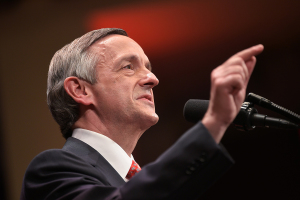
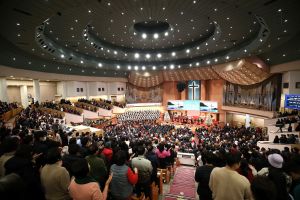
The disagreement surfaced during a question-and-answer session with historian and author Raymond Ibrahim and Pastor Bob Roberts at the THINQ Summit, held Oct. 1 to 3 in Nashville, Tennessee. The two discussed how Christians should understand and engage with Islam in a pluralistic culture.
Roberts, senior pastor of Northwood Church in Texas and host of the "Bold Love Podcast," said he has developed close friendships with Muslim leaders despite his conviction that Jesus Christ is the only way to God. The pastor pointed to Jesus’ command to “love your enemies” as the verse that has shaped how he approaches Muslims.
Roberts said he once feared things like Sharia, or Islamic law, but realized the U.S. Constitution wouldn’t allow it. After befriending an imam, he said, he went on to befriend other Muslims and Muslim leaders.
“I'm not an apologist for Islam. I am an apologist for religious freedom. I am an apologist for learning to live together,” the pastor said. “That's the only thing that's going to work.”
“We are so polarized as a nation. We're tribalized. We live inside. We have our opinions, and we can't be shifted generally because we don't have relationships,” he continued. “So it's easy to look at social media and say that's the way it is. But when you're in a relationship, it's different.”
Roberts recounted opportunities he said God has given him, including speaking at some of the world’s largest mosques during Friday prayers and sharing the Gospel.
The Christian leader argued that Americans must learn to live alongside Muslims rather than assume conflict is inevitable. Roberts pointed to America’s history of eventually learning to coexist with religious groups once viewed with suspicion, including Catholics.
Ibrahim, who authored Defenders of the West: The Christian Heroes Who Stood Against Islam, pushed back on the idea that existing American safeguards, such as the U.S. Constitution, could prevent future problems.
“With the passage of time, things get diluted, things get changed, more and more things creep in, and then before you know it, it's not safeguarding it anymore,” Ibrahim said.
“And that's what I mean by we're being too myopic because we just focus on the now and say, ‘Look, we have all the safeguards in place; we're going to be fine,’” the historian added. “Well, you can look at other countries and other precedents they had that too, but it gets watered down due to large numbers of Muslims clamoring for particular things, and then Western authorities give in thinking it's being multicultural.”
The two speakers agreed on one significant point: Christianity’s weakness in the West helps explain why some people raised in Christian environments are drawn to Islam. The speakers discussed a Pew Research statistic presented at the event indicating that 13% of new Muslims in the U.S. were raised in Christian backgrounds before converting.
“I think many of the young people that are attracted to Islam from Christian backgrounds, many of them don't have a vibrant faith of their own,” Roberts said. “I've known many of them. I've talked to them. I visited with them about it. And for them, they had an experience with Islam that they did not have with Christianity.”
“I would say it's almost the same thing that you see with Muslim young people that are coming to faith with Christ. Their faith was not alive and active as Muslims, and then they discovered who Jesus was,” the pastor continued, noting reports estimating that millions of Iranians are converting to Christianity.
Ibrahim agreed, saying people from Christian backgrounds are drawn to Islam because their faith has been “so watered-down” and they find in Islam something they are looking for.
“So there's nothing there, whereas Islam offers almost like a visceral kind of unapologetic approach, which is what you would expect religion to offer because this is about the ultimate truths; this is about God, so I think that's why they gravitate to it,” the scholar argued.

During his keynote talk, “Preparing for Islam,” Ibrahim said the issue was “not about hating Muslims.” Instead, he said, the point is to understand the truth about Islam “to help the world and Muslims at large.”
He pushed back on the idea that Christians and Muslims share a theological bridge because Muslims revere Jesus as a prophet. Ibrahim said Islam rejects the core claims of Christianity, including Jesus’ crucifixion, resurrection and divine Sonship, as well as the Trinity.
Ibrahim challenged what he called common misconceptions about Islamic history. He argued that Western historical narratives have sometimes minimized the religious motivations behind Islamic conquests while portraying Christianity as uniquely associated with violence and intolerance.
“Right before the First Crusade, there was another emanation of Islamic atrocities: 30,000 churches were destroyed. The Holy Sepulchre in Jerusalem was razed to the ground,” the scholar said.
While he acknowledged that there are “good” and “moderate” Muslims, Ibrahim argued that they do not reflect Islam and its teachings.
“This is not about hating Muslims. In fact, the more truth we know, the more we can help Muslims. Muslims are often the very first victims of what's going on because they had no choice; they're born into it. If they try to leave it, they can get killed,” Ibrahim said.
Samantha Kamman is a reporter for The Christian Post. She can be reached at: samantha.kamman@christianpost.com. Follow her on Twitter: @Samantha_Kamman