RFK Jr. says SSRI withdrawal worse than heroin, rolls out 'deprescribing' initiative during emotional summit

Health and Human Services Secretary Robert F. Kennedy Jr. announced a sweeping new initiative earlier this week to reduce what he characterized as the overprescription of antidepressant selective serotonin reuptake inhibitors (SSRIs) and other psychotropic medications, especially for children.
"Psychiatric medications have a role in care, but we will no longer treat them as the default," Kennedy said at a Monday summit on mental health and overmedicalization hosted by the Make America Healthy Again (MAHA) Institute in Washington, D.C.
"We will treat them as one option, to be used when appropriate, with full transparency and with a clear path off when they are no longer needed."
The plan being rolled out by HHS emphasizes "deprescribing" by helping patients taper off medications when they are not providing clear therapeutic benefit, and came days after The New York Times highlighted the increasing number of top psychiatrists who are raising concerns about structural problems in the medical industry that may lead to overprescribing.
The MAHA event opened with emotional testimony from a panel of young adult patients, who shared their stories about the profound suffering they endured from psychiatric overmedicalization, polypharmacy and the challenges of long-term use of SSRIs and other psychotropic drugs.
Panelist Danielle Gansky said she was 8 years old when a teacher's complaint that she was too fidgety in class led to a prescription for a stimulant medication, which she said ultimately "spiraled into a prescription cascade of antidepressants, benzodiazepines, mood stabilizers and antipsychotics, all before my 10th birthday."
Gansky, who at 30 years is still tapering off such medication, said she suffered debilitating neurological injury from the drugs and called for more transparency.
"The label doesn't warn you that these drugs can fundamentally alter your brain so severely that coming off may be impossible, or that even one dose can cause irreversible loss of emotions and the ability to feel love, leaving you chemically castrated and mentally lobotomized," she said. "And when it does happen, you're left blindsided, gaslit, and without any medical support."
Cameron LaBar, a 35-year-old man who said he was first placed on an SSRI at age 9 after being diagnosed with generalized anxiety, obsessive compulsive disorder and Tourette's syndrome, recounted that he came to believe the exhaustion, emotional numbness and indifference to relationships he felt on his medication were intrinsic parts of his personality.
"It took a really long time for me to end up figuring out that those weren't character traits, those weren't parts of my personality, but that those were side effects of a medication," he said, adding that he was never approached with an off-ramp to reduce or discontinue their use.
Attempts to reduce his medication resulted in "severe panic," he said, which medical professionals presented to him as evidence of his underlying condition and reason to increase their dosage. It wasn't until he stumbled upon videos by psychiatrist Mark Horowitz, a leading expert in psychiatric medication withdrawal, that he decided his suffering was likely a result of withdrawal from the medication.
"It took me 20 years to find that out," he said, choking up. Noting he has been tapering off Lexapro for three years and still has years to go, LaBar said his ability to feel has started to return, but that he continues to mourn the lost years when he was unable to form relationships or feel anything while having his experience dismissed by doctors.
"Now I'm dealing with the realization that I've missed a lot of life," he said. "And a lot of my experience, year after year, has been discounted and affected by these drugs, to where I never got to experience the full range of emotions and feeling of being human."
Panelist Lauren Friedman, a 23-year-old mental health and drug safety advocate, wept as she said taking an SSRI withered her once-emotional personality. The consequent Post-SSRI Sexual Dysfunction (PSSD), which lingers even after cessation of the medication, left her with genital numbness and an inability to feel love or take pleasure in anything, including the music that once brought her joy as a songwriter.
"I'm grateful that this administration is the first to seriously and thoroughly look into the devastation these medications are causing," she said. "But more than anything, I'm hopeful that this condition may be recognized, which it has been in many other countries, and funding might be allocated to research what is driving it."
"Because there is evidence that this may be reversible with intervention, and we as human beings, I think we can agree, deserve a road back to our lives. Losing your sexual and emotional function is not trivial. In fact, these things are why we're on Earth."
Speaking about the skyrocketing prevalence of psychiatric disorders among children, panelist Nick Taber suggested American society too readily medicalizes children for "having valid responses" to unpleasant environments, which often include abusive family situations and a dehumanizing school system that seeks to erase the individual while enforcing compliance.
"And in these environments, inconvenient traits are often the ones that are the most healthy," he said. "And when you eliminate those, you make people radically incomplete, broken and suffering."
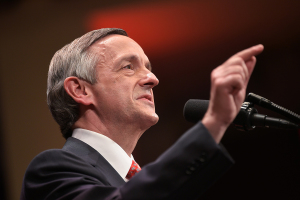
During his closing remarks at the event, Kennedy appeared to grow emotional, recounting a personal anecdote of the suffering his family member experienced going off SSRIs, which he described as much worse than the many times he withdrew from heroin when he was addicted.
RFK Jr. gets emotional sharing a story about a family member’s struggle coming off SSRIs.
— End Tribalism in Politics (@EndTribalism) May 4, 2026
He says it is harder than getting off heroin.
“I happen to be an actual expert on this because I was addicted to heroin for 14 years.”
“I went through cold turkey withdrawal probably over… pic.twitter.com/KOtM7Z1Mpy
"After 72 hours, it's over, so you just have to steel yourself for 72 bad hours," he said of cold-turkey heroin withdrawal. "But I've watched people come off of SSRIs, and it is not even comparable. I watched a family member get off of them after a couple of years on them, and she was suicidal literally every day."
"She woke up every morning and said, 'I don't want to live.' And she said, 'The only reason I'm staying alive is for you guys, for the family.' That's heartbreaking to hear from a family member. And I've heard that from hundreds and hundreds of people, the same story again and again."
Kennedy did not name the family member he was speaking about, though his second wife, Mary Richardson Kennedy, died by suicide in 2012 after suffering from chronic major depression and substance abuse issues. Her autopsy found three different antidepressants in her system.
"It can be prolonged, and for many patients, it's completely unexpected," Kennedy said of SSRI withdrawal. He noted many physicians use such symptoms as a reason to place patients back on the medication, thereby trapping them "in a lifelong cycle that, for many patients, is absolutely cataclysmic."
"This is a system failure. We're not going to ignore it," he said, adding that he was not advising anyone to stop taking their psychiatric medication. "We're making sure that you and your clinician have the information and support to make the right decisions for you."
Among the key measures of the HHS initiative is a "Dear Colleague" letter from the Substance Abuse and Mental Health Services Administration (SAMHSA) urging clinicians to prioritize informed consent, shared decision-making and non-pharmaceutical treatments such as psychotherapy, exercise, nutrition and family support.
Another part includes new guidance from the Centers for Medicare & Medicaid Services (CMS) allowing reimbursement for time spent monitoring withdrawal and assisting discontinuation. There will also be upcoming SAMHSA training webinars, a report on prescribing trends and a technical expert panel this summer to develop formal clinical guidelines on tapering.
CMS is also offering expanded billing codes for evidence-based non-pharmacological services, particularly for children and Medicare patients.
About one in six U.S. adults, or 16.6%, reportedly take an SSRI or SNRI, which includes medications such as Zoloft, Lexapro, Paxil and Prozac. More than half (56%) of patients who stop taking SSRIs suffer withdrawal symptoms, according to a 2019 study by British researchers.
The researchers, who consulted 24 relevant studies in their research, also found that nearly half (46%) experience severe withdrawal, which can include "brain zaps," restlessness, flu-like symptoms and other symptoms that often resemble symptoms of depression. They recommended antidepressant guidelines in the U.S. and the U.K. be "urgently updated," warning that antidepressant withdrawal is likely being widely misdiagnosed and leading to overprescribing.
Jon Brown is a reporter for The Christian Post. Send news tips to jon.brown@christianpost.com