Ukrainian President Zelensky responds to critics who say his country is persecuting Christians

Ukrainian President Volodymyr Zelensky responded to critics who accuse his government of persecuting Christians, saying religious groups in Ukraine are free and that American commentator Tucker Carlson has probably never been to the country.
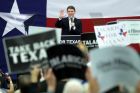
Zelensky made the remarks in an interview with host Tony Perkins on "This Week on Capitol Hill" on Saturday. Zelensky asked how Carlson could talk about religious life in Ukraine without having visited.
“We are very free,” Zelensky claimed, adding that Ukraine has the largest council of religious institutions in Europe and that its members meet every month at the presidential office.
The council talks through problems and the delivery of humanitarian aid, he said, and takes up cases of destroyed buildings and of church leaders tortured or jailed by Russia. Zelensky said Christians, Jews, Catholics and Muslims all sit in the same room.
He said Carlson, a former Fox News host, “doesn’t know what’s going on in Ukraine” and could come to see what Russia had destroyed and how Ukrainians treat different faiths and nationalities. Ukraine is home to many nationalities, Zelensky said, and can defend itself only if they stand together.
In 2023, the Orthodox Public Affairs Committee, a U.S.-based organization advocating for the global Orthodox church, condemned Carlson’s comments at the Family Leadership Summit in Des Moines, Iowa, about Christian persecution in Ukraine. Carlson asked former Vice President Mike Pence if he had asked Zelensky about the treatment of Christians in Ukraine during his meeting with the leader in June that year. Pence had voiced support for the U.S. giving Ukraine resources to thwart the Russian invasion.
The group accused Carlson of spreading “Russian propaganda.”
During Saturday’s interview, Perkins said he met the council and Zelensky during an August visit, prayed for the president on Independence Day and saw religious freedom there. Zelensky replied that thousands of people take part in that work and that they respect one another.
Earlier in the interview, Perkins raised accusations that Russian troops had detained and tortured Christian pastors and taken over churches in occupied parts of Ukraine. Zelensky said Russians had killed about 120 representatives of religious institutions and called the killings deliberate attacks on people and churches.
Zelensky also thanked first lady Melania Trump for helping to arrange a local ceasefire in Oleshky, a Russian-occupied town, where aid began arriving and civilians began leaving on Friday. He said a Ukrainian team brought in medical equipment with American partners, and residents who want to leave are being taken to Ukrainian-held areas.
Ukraine backed U.S. President Donald Trump’s call for an unconditional ceasefire at the start of 2025 and several times after that, Zelensky said, while Russia turned down every proposal, including pauses on strikes against energy sites and at sea. He said Kyiv would back more such steps if Washington proposed them.
Zelensky added that U.S. mediators suggested during a meeting in Oslo that Ukraine, Russia and the U.S. hold technical-level talks in Abu Dhabi in November, possibly between Nov. 6-10. He added that the date and location could change because of problems in the Middle East.
In 2024, Ukraine’s parliament, the Verkhovna Rada, approved a law banning religious bodies tied to Moscow, among them the Ukrainian Orthodox Church, or UOC, and the Russian Orthodox Church. The UOC had historic links to the Moscow patriarch and cut them in May 2022 to oppose the war.
Ukrainian officials accused the UOC of acting for the Russian church, whose leader, Patriarch Kirill, called the invasion “holy.” The ban did not cover the Orthodox Church of Ukraine, which most Orthodox leaders worldwide recognized in 2019. Zelensky backed the law as a move toward “spiritual independence.”
Ukraine also accused the UOC of spreading Russian propaganda and arrested some of its clergy on spying charges that advocates called false. The Ukrainian Council of Churches, a body speaking for most of the country’s faiths, supported the ban and said at the time that Russian forces had killed dozens of clergy and destroyed hundreds of churches. Each parish had nine months or more to choose whether to quit the UOC.
Wesley J. Smith, a critic of the law who chairs the Center on Human Exceptionalism at the Discovery Institute, said at the time that the state should not pick which church is legitimate. Kirill had condemned a 2023 vote on the measure as the work of “radical politicians.”
By January 2024, Ukrainian authorities had arrested 68 priests as well as Metropolitan Pavel, a UOC leader, and had placed Kirill on a wanted list. Investigators from the domestic security service had looked into dozens of priests and searched church sites.
Nina Shea, who heads the Center for Religious Freedom at the Hudson Institute, argued at the time that the crackdown might be extreme but was justified because Kirill supports Russia’s war.
Bob Amsterdam, a lawyer for the UOC, told Carlson in an interview that the government was targeting the church for political reasons.