

Franklin Graham's take on Highland Park Methodist's UMC exit adds confusion on LGBT views

Confusion abounds over Highland Park Methodist Church’s stance on LGBT issues, especially after world-renowned evangelist Franklin Graham entered the fray.
Following the church’s historic vote to leave the United Methodist Church — with 90.35% of voting members opting to leave the denomination — one question has repeatedly surfaced in chat groups comprised of current and former HPUMC/HPMC members: Has the church’s position on LGBT ideology changed?
Like an avalanche, one question leads to another: Will the church continue officiating gay marriages off campus? What about ordaining LGBT clergy? And what’s going to happen to the Affirmation Sunday school class?
Although the church's website has undergone a revamp by shedding “United” from its former iconic name — a name as synonymous with Dallas as one of the church's most famous members, the late Cowboys coach Tom Landry — the Affirmation class continues to be mentioned on the HPMC website, though it did not meet this past Sunday.
Over the decades, HPUMC has gained national prominence as the home church of former President George W. Bush and first lady Laura Bush. Several years ago, HPUMC began to lose members among those observant of its leftward drift. Yet leadership scarcely seemed to notice because the church's coffers remained full.
In 2024, after the UMC announced it was an LGBT affirming denomination, the Rev. Paul Rasmussen, then senior pastor of HPUMC, said the church would have a foot in both camps, describing it as a “big tent centrist church.” After all, the church had a politically diverse congregation comprised of both far-left progressives and staunch conservatives.
Thus, the church would indeed officiate same-sex weddings, but only off campus. Similarly, the church would also ordain LGBT-identified clergy and offer a Sunday school class that affirms people in their LGBT identities.
Some speculated that kowtowing to LGBT ideology was, in part, to pacify Southern Methodist University, whose board of trustees had voted in 2019 to sever the university's ties with the UMC after it reaffirmed its adherence to biblical ideology and opposition to same-sex relationships. Other members of HPMC believe SMU’s then-President R. Gerland Truner also urged church leadership to accommodate secular progressivism as the university made clear its support for inclusivity and independence from the denomination.
HPUMC provided a cozy support system for LGBT advocacy that was largely unseen by its conservative or legacy members, many of whom remained blissfully unaware or indifferent toward the ideological shift.
As people in Dallas ask what the vote to leave the UMC actually means for HPMC on a plethora of LGBT stances previously laid out and championed by Rasmussen before he handed over the reins to the Rev. Matt Tuggle, the responses from HPMC members to inquiring minds have been perplexing: “I have no idea …” and “I don’t know what the plan is around this” are common answers to an issue that should be of prime importance for Christians.
The confusion escalated on Nov. 16 after Graham heaped praise on HPMC in a post shared on X and Facebook in which he claimed that HPMC’s separation from the UMC was a rebuke of “the ordination of LGBTQ+ clergy and the performance of same-sex marriages.”
Graham added that members of the church “chose to stand up against the unbiblical progressive movement that has hijacked the United Methodist denomination. And I was glad to read that former President George W. Bush and his wife Laura participated in the vote and supported their longtime church’s stand.”
Graham’s perception mirrors that of other Christian influencers who quickly jumped to the same conclusion. But are they right? Even members of the church don’t have a clear picture, and they don't seem to care either way.
The Christian Post reported on Nov. 20 that it had made several attempts to get clarity from HPMC to no avail. Instead, the church's staff offered a lawyer-approved response: “HPMC's decision to separate from the UMC is not about LGBTQ issues; it is about governance and preserving our historic autonomy."
One reality that Graham and others who reside outside of Dallas haven’t considered is that many devoted members of HPMC are indifferent toward the church’s LGBT stances, regardless of how progressive or conservative they might be. Some are third-generation legacy members tethered to the long-established social connections at SMU and the upper echelons of Dallas society.
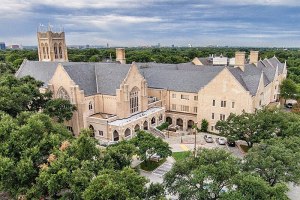
The church property — with its sanctuary building designated as a historic landmark — is a striking fixture in Dallas that many in the metroplex only catch a glimpse of as they drive past on their way to or from Love Field Airport, to their child’s high school football game at SMU's Gerald J. Ford Stadium, or to a graduation ceremony at Moody Coliseum.
Ergo, what many conservative Evangelicals fail to factor in is that the majority of HPMC’s members did not cast a vote against LGBT ideology; if they had felt so strongly about such issues, they would have left the church years ago. The votes cast had more to do with property rights, support for their beloved clergy, including Rasmussen, Tuggle, and the esteemed former senior pastor, the Rev. Mark Craig, and the deep roots members have in this church and its ties to some of the biggest names in Texas and our nation's history.