Why the world cannot ignore Christian Armenian hostages in Baku

Across the globe, Christians are enduring persecution and discrimination on a scale unmatched in the modern era. Recent assessments estimate that hundreds of millions of Christians — roughly 1 in 7 believers worldwide, and closer to 1 in 5 in Africa — live in places where their faith puts them at daily risk. In just the past reporting year, well over a quarter-million Christians were driven from their homes.
These are not just statistics. They are families. They are futures. And for my family, this crisis has a name: Ruben Vardanyan.
A personal story of faith under fire
As the world prepares to celebrate Christmas — a season of hope and freedom — my siblings and I are clinging to the hope of seeing our father again. My daughter has never met her grandfather; she was born after he was taken captive more than two years ago.
On Sept. 27, 2023, Azerbaijani forces captured my father as he attempted to leave Nagorno-Karabakh along with the last 120,000 indigenous Christian Armenians still living there — victims of one of the most severe campaigns of forced displacement against a Christian population in the 21st century. His “crime” was advocating for the right of Christian Armenians in Nagorno-Karabakh to live safely in their ancestral homeland.
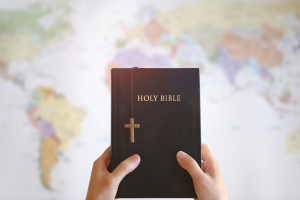
Today, he and 22 other Armenian Christian detainees remain imprisoned in Baku — denied due process, denied spiritual support, and even denied the right to possess a Bible.
And yet, the world has not remained silent.
My father’s case has drawn bipartisan support in the U.S. Congress, as well as strong advocacy from the French Parliament, the European Parliament, and leading human-rights organizations such as Amnesty International — all calling for his immediate and unconditional release. These voices are united: his detention is unlawful and unjustified. And yet, despite these efforts, my father remains behind bars.
The United States has leverage — and a duty to act
A diplomatic agreement announced at the White House on Aug. 8 offered a pathway to peace and an expectation that Armenian prisoners would be released. Yet Azerbaijan has not honored that commitment.
Washington holds significant leverage. Azerbaijan seeks stronger economic partnership with the West, closer defense and diplomatic ties, and cares deeply about its global legitimacy. And notably: it listens when the United States speaks.
This is where bold leadership matters.
President Donald Trump has a well-documented history of personally intervening to secure freedom for individuals unjustly imprisoned abroad — from Sudan to Pakistan — when others hesitated. That same purposeful leadership could determine whether families are reunited or left waiting in despair.
Holding on to hope
My father has always taught us that faith without courage is just a word — and that light always conquers darkness. Even after two years behind bars, deprived but not defeated, he continues to hold that light.
But no family’s faith should be tested by prolonged injustice.
If we believe that the freedom of belief is a universal human right, then we cannot look away from Armenian Christians — nor from the man who stayed behind to help them survive.
The world is watching.
Over a century ago, our ancestors survived the Armenian Genocide only because others found the courage to act. Today, Armenian Christians face renewed persecution and a familiar threat of erasure.
History will remember those who demanded justice — and those who allowed silence to prevail. As Christmas approaches, Christians around the world are watching and praying that action will once again be taken.
David Vardanyan, son of Ruben Vardanyan, is a seasoned investment and business development professional in the energy and real estate industries. Like his father, he is committed to impactful humanitarian and community projects related to Armenia.