Open Doors US releases 2026 World Watch List report: 'Persecution is expanding'
Quick Summary
- Open Doors US reports that Christian persecution is expanding globally.
- The 2026 World Watch List ranks 50 countries with record-high levels of discrimination.
- 388 million Christians face high levels of persecution, an increase of over 8 million from last year.

Nonprofit persecution watchdog group Open Doors US released its annual World Watch List on Wednesday, which ranks the top 50 countries where Christian persecution and discrimination are at a record high.
"We're seeing a continuation of a multi-year trend where persecution is expanding," Ryan Brown, the CEO of Open Doors US, told The Christian Post. "That number moved from 380 million to 388 million this last year."
Christian persecution has reached an unprecedented scale worldwide, and the findings of Open Doors US show that the 388 million Christians facing high levels of persecution and discrimination for their faith — more than one in seven — marks an increase of more than 8 million compared to last year.
Brown said there are multiple dynamics at play beneath the surface of such trends, but noted there is "expansion of the levels of really extreme violence that are taking place." He added that much of it is concentrated in sub-Saharan Africa, which is home to 14 countries on the watch list.
The large region of more than 720 million people, nearly half of whom are Christian and where one in eight Christians live in the world, remains a critical area of concern.
Brown said Nigeria is "at the center of a lot of the things going on," and the list notes the African country is the primary hotspot for deadly violence, accounting for the majority of faith-related killings globally. Of the 4,849 Christians killed worldwide for their faith during the reporting period, 3,490 were Nigerian, which marks an increase from 3,100 last year, according to the report.
Somalia landed as the second-most dangerous country for Christians for the fourth consecutive year, and Aweis Ali, who is the son of a Muslim cleric and converted to Christianity, recounted the violence Christians face there.
"Somali Christians are among the most extremely persecuted in the world," he said. "You could be sitting in a cafeteria, enjoying your meal, and somebody could come and attempt to decapitate you, to cut your head off."
The list also highlights Syria, which achieved its highest-ever score on the ranking system after experiencing the most significant single-year increase in Christian persecution recorded by any country since the nonprofit's ranking methodology began in 2014. The trend reflects intensified pressures on the Christian community amid ongoing conflict that has lingered for more than a decade.
The militant Islamist group Hay'at Tahrir al-Sham, which took power after the Assad regime collapsed, at first engaged in dialogue and expressed a willingness that Syrians "could worship freely and different faith persuasions would have a seat at the table," Brown said.
"While we haven't necessarily seen the difficulties at the hand of the central government, we have seen, due to the weak rule of law, that there have been vacuums of power that have been created throughout the country, and extremists have stepped into those vacuums," he said, adding that there are Christians suffering elsewhere because of similar examples of extremists filling a power vacuum.
Brown contrasted what he described as "smash persecution" that results in overt violence, like in Nigeria, with the "squeeze persecution" that he says is increasingly manifesting and making life "extremely difficult for Christians around the globe."
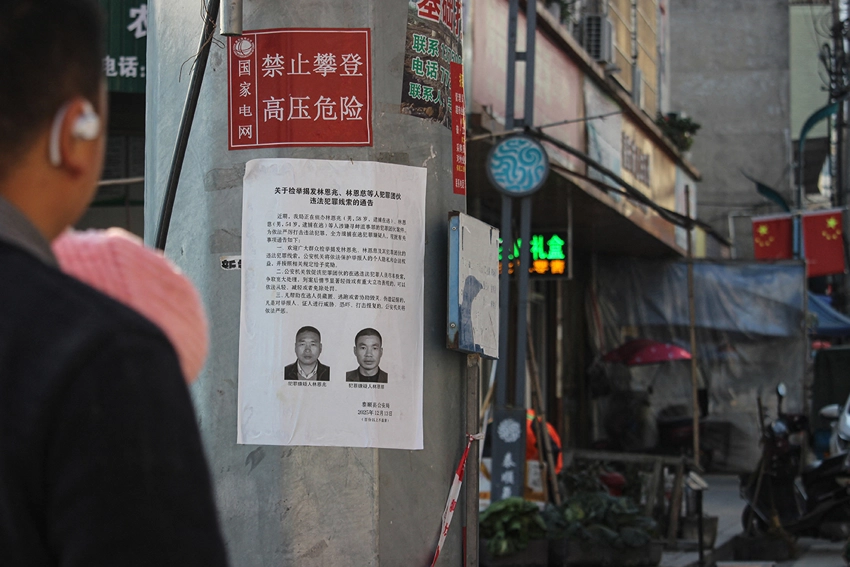
Such squeeze persecution is especially prevalent in China, he said, where the Chinese Communist Party increasingly spies on Christians and asserts state control over religion.
"The Chinese government has really sought to close down a number of the unregistered churches — those that were not officially aligned with the Communist Party, and close those churches out," he said. "Last year, on September 25, they rolled out a list of guidelines, about 18 rules governing the online behavior of Christians and religious expression. This included things such as Christians are not allowed to broadcast any live videos with religious or Christian intent; access to Bible apps was made illegal."
"It's not as visible as the violence or churches being lit on fire, but churches are being closed," he said of such persecution. "Christians are being told that they can't engage in worship or engage in community with one another."
Governments such as the oppressive communist regime in North Korea — which rates the the top most dangerous country for Christians overall — are also getting more creative, according to the report, which noted artificial intelligence is being used to identify "suspicious behavior patterns" that might indicate someone is a Christian believer.
Replying to a question about Vice President JD Vance's notable speech at the Munich Security Conference last February, when he rebuked European leaders for suppressing free speech and discriminating against Christians, Brown said any rising persecution against Christians in the West is not comparable to those in other parts of the world, but that ebbing religious liberty could potentially allow Western Christians to better empathize with their brothers and sisters elsewhere.
"We still have, by means of comparison, the rule of law and religious liberties that are protected," he said. "Many of us have certainly felt cultural shifts that, at times, have been aligned in opposition to our faith or misaligned with it. And so, I think many of us have experienced those types of things in recent years."
"I would never seek to equate that to the level of persecution and realities that our brothers and sisters represented on this World Watch List are experiencing," he continued. "If, on some level, it allows us to better identify with them, allows us to better empathize, then hallelujah for that. But we in the West still have freedoms, and we have recourse when those freedoms are being violated."
Brown said that the watch list is not just an informational resource, but also a prayer resource, and that persecuted Christians are asking their fellow Christians around the world to pray for them. The list offers specific prayer points for each of the 50 countries that are detailed.
"For the most part, these are prayer points that our brothers and sisters on the ground have told us," he said. "These are the things that they are praying for. So utilize that World Watch List as a resource, not just to be informed, but to know how we can not just pray for our brothers and sisters, but actually be praying with our brothers and sisters."
Jon Brown is a reporter for The Christian Post. Send news tips to jon.brown@christianpost.com