

15 men sentenced for deadly Sri Lanka Easter Sunday bombings

Christians in Sri Lanka have cautiously welcomed the sentencing of 15 men to more than two centuries each behind bars for their roles in the 2019 Easter Sunday suicide bombings, which killed at least 267 people at churches and hotels. At least 39 of the dead were foreign tourists, including at least four Americans.
A three-judge High Court bench last week convicted 15 of the 24 defendants and ordered them to serve consecutive terms totaling between 200 and 260 years each, according to the United Kingdom-based religious freedom advocacy group Christian Solidarity Worldwide (CSW).
Nine suicide bombers carried out the attacks on April 21, 2019. All of them died. Six struck three churches during Easter services and three luxury hotels. Another blew himself up at a motel, and two others died after abandoning a plan to bomb a fourth hotel. Hundreds more people were wounded, with estimates ranging from more than 500 to nearly 600.
The bombings, inspired by the Islamic State terror group (IS), rank among the deadliest terror attacks in Sri Lanka’s history. Two Sri Lanka-based Islamist militant groups were believed to be behind them. One of the Americans killed was a fifth-grader at a private school in Washington, D.C. Another 28 foreigners were wounded.
"After more than seven years, this is an important step towards justice for the victims, survivors and their families," The National Christian Evangelical Alliance Sri Lanka said in a statement. "However, this verdict should not be the end of the search for truth and accountability. Questions remain about whether others were involved in planning, supporting or enabling the attacks. These matters must continue to be investigated in a credible and transparent way."
The indictment, brought under Sri Lanka’s anti-terror law, the Prevention of Terrorism Act, listed 23,270 charges, including murder and terrorism conspiracy.
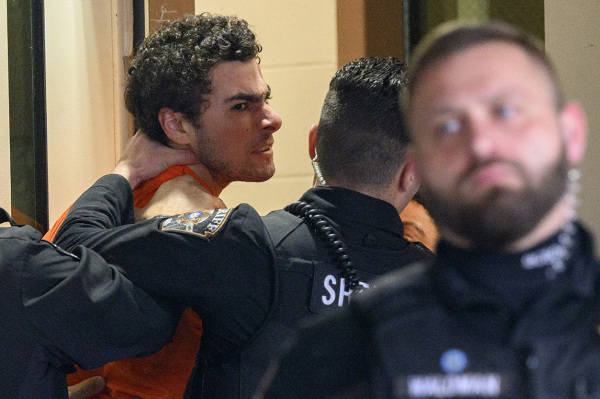
All 15 men belong to Sri Lanka’s Muslim minority. Hundreds of police officers guarded the courthouse.
Prosecutors identified Islamic cleric Naufer Moulavi as the man who planned the attacks. He was among those sentenced to life.
The court also ordered the convicted men’s assets seized, The Guardian reported.
Authorities filed charges in 2021 against 25 suspects accused of plotting or inspiring the bombings. One died before trial, and the court acquitted nine, ruling that the case against them had not been proven.
The defendants were accused of conspiring in and aiding attacks that deliberately targeted Christians and foreign tourists. The trial lasted nearly five years, and its slow pace frustrated victims and their families.
The Catholic Church in Sri Lanka has long argued that the men on trial were not the masterminds.
After a new government took office in late 2024, investigators reopened inquiries into whether parts of the state linked to former President Gotabaya Rajapaksa and his family had ties to the attackers. Critics have accused Rajapaksa of promoting Buddhist nationalism.
Investigators allege the bombings were part of a plot to create chaos and a security threat that would carry Rajapaksa, a former defense chief, to power. He won the presidency months later, campaigning as a strongman who would be tough on terrorism.
A parliamentary panel concluded that police and intelligence officers ignored repeated warnings. In July, a former police chief and a former senior Defense Ministry official were sentenced to death for responding too slowly to foreign intelligence alerts.
Earlier this year, police arrested retired Maj. Gen. Suresh Sallay, a former intelligence chief. Police allege he knew of the plot in advance and colluded with Islamist extremists to create a crisis for political advantage. Sallay remains in custody and denies the charges. The Defense Ministry and the Rajapaksa family have denied any role.
CSW President Mervyn Thomas warned against a form of justice that “punishes the facilitators while shielding political orchestrators or negligent officials.” In a statement, he urged the government to keep inquiries into intelligence officials free of political interference and to protect every citizen’s freedom of religion or belief.
"We remain deeply concerned by persistent and credible allegations that elements of the state may have been complicit in or allowed these attacks to occur," Thomas said.