Ex-Muslim threatened with beheading after finding Christ now educating churches about radical Islam

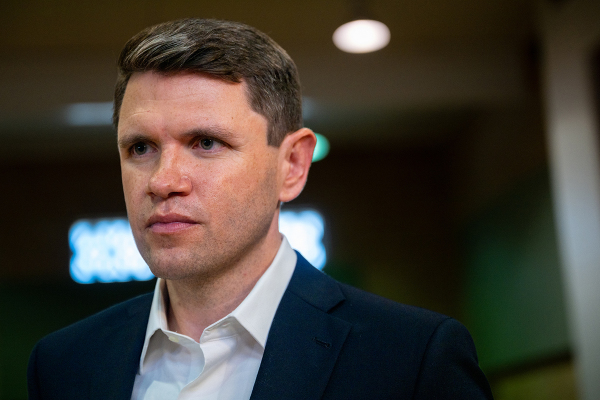
Danny Burmawi was afraid he would be killed for leaving Islam. After converting to Christianity while living in Jordan, he fled to Lebanon in 2009, and his own brother threatened to behead him if he returned home.
After 14 years of studying theology and serving in Christian ministry across the Middle East, Burmawi came to the United States with a warning to Western Christians: When churches compromise their convictions to accommodate the culture, they risk leaving a spiritual vacuum that other ideologies can fill.
Today, Burmawi is a political commentator and the founder and CEO of the Ideological Defense Institute (IDI), which educates policymakers and churches about Islam. IDI has developed a curriculum to help congregations understand how biblical convictions shaped Western civilization. Churches can request in-person training from the organization’s team or access it online.
Born and raised in Jordan, Burmawi said he does not remember ever meeting a non-Muslim until he was 17 years old.
“All over the Islamic world, and all of us, we have been told the same thing about the infidels — that Muslims are superior. Anyone who is Christian, they are polytheist. They worship three gods, ... all [non-Muslims] must be subjugated, must submit to Islam,” Burmawi told The Christian Post.
Burmawi said he began to question what he had been taught as he studied Islamic history and read more about the religion.
“When you become committed, you're honest with yourself, and you start reading to understand what's going on,” he said. “And God sent someone my way who had converted at the time in secret.”
For security reasons, Burmawi shared few details about the person who helped him convert, but he said this person helped him find Christ by “planting the seeds of doubt in [his] heart.”
“I walked away the moment I read the Gospel,” he said.
Converting from Islam to Christianity in Jordan comes with societal consequences, such as referral to sharia courts and loss of their legal rights, according to the watchdog group Open Doors.
Christian converts in Jordan also face the risk of violence or death from extremist groups and even their own families, the group reports.
Fearing for his life, Burmawi fled to Lebanon in 2009. After he left, his brother said he would behead Burmawi if he ever returned.
For the next 14 years, Burmawi studied theology and served as a missionary in eight countries, planting churches and evangelizing. He moved to the U.S. in 2023, the same year Hamas terrorists attacked Israel on Oct. 7.
Burmawi said the West’s response to the Hamas-led attack motivated him to start IDI out of concern that some Westerners were viewing jihadi violence mainly through political language such as “resistance” and “liberation,” rather than examining the ideology behind it.
“If Israel was attacked for who Israel is, not what Israel does, then the West is also Israel,” he said. “We are all Israel, but we don’t realize it yet.”
Westerners misunderstand Islam when they approach it only as an individual faith comparable to Christianity, Burmawi argued. Instead, he said, Islam should be understood as a political and legal system, with sharia, or Islamic law, serving as a framework for governing society.
“When you think of Islam, don’t think of Christianity, think of the United States,” he said. “When you think of sharia, don’t think of Christian canon or Jewish halakha, but think of the Constitution of the United States.”
He said Islamic teachings shape how some Muslims view people outside the faith, a framework that divides the world into Muslims and “infidels."
Burmawi said Islam appeals to Westerners, especially young people, because it offers “confidence” and “structure” that he believes the West has lost.
“And that confidence, that structure is something that we crave as human beings,” he said.
Burmawi also criticized churches that, in his view, have compromised their principles to accommodate the culture and keep congregants.
“The Church has compromised its principles in order to accommodate the culture, in order to keep, you know, the seats filled with people,” Burmawi said, adding that the result is a “vacuum” he believes harmful ideas can fill.
His point is not that Christians should restrict other people’s freedom, he said, but that churches should stop treating faith and public life as unrelated. Christians, he argued, should be willing to discuss how their beliefs inform laws and public policy instead of avoiding political and cultural questions altogether.
“If Christians don’t make sure that the ideas that are being translated into laws are Christian, then another ideology is going to do that job,” he said.
"The Church needs to just step up and start addressing the public square again."
Samantha Kamman is a reporter for The Christian Post. She can be reached at: samantha.kamman@christianpost.com. Follow her on Twitter: @Samantha_Kamman