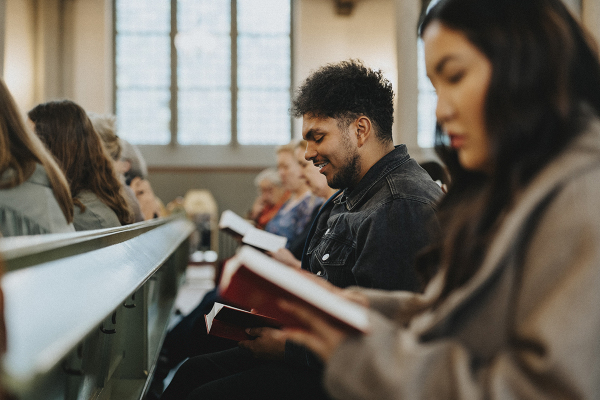
Religious participation linked to higher levels of student success: report

The religious practices of students, their families and teachers can help close learning opportunity gaps, according to a report that found that faith is associated with higher levels of student achievement.
Bryant Jensen, a professor of teacher education at Brigham Young University and Wheatley Institute affiliate scholar, and Irvin L. Scott, a senior lecturer at the Harvard Graduate School of Education and founding director of the Leadership Initiative for Faith and Education, authored the report titled “Faith in Educational Renewal: Religion as a Resource to Transform Learning Opportunities.”
The report, published last week by the BYU Wheatley Institute and the Leadership Initiative for Faith and Education at Harvard, analyzed existing research “on the role of religious faith in human flourishing.”
One study cited in the report found that middle- and high-school students who demonstrated the highest levels of religious participation had GPAs that were 0.144 points higher than those of their peers who never participated in religious activity.
Students from working-class families reportedly benefited more from religious participation than their higher-income peers, according to the report. Students from the poorest homes, however, demonstrated “weaker and less consistent benefits.” Male students also benefited more from religious participation, which was associated with weaker educational outcomes for female students.
"After nearly two centuries, the promise of U.S. public schools to foster effective and meaningful learning opportunities for all children across race and social class remains unfulfilled," Jensen said in a statement provided to The Christian Post.
"Large gaps in learning opportunities continue to persist by student race and ethnicity, while opportunity gaps by gender and family income are widening. We believe religious faith can help bridge these gaps."
Religious participation among students is associated with greater academic achievement in school, higher levels of formal schooling, and greater aspirations for higher education, according to the report.
The research suggests that these positive effects are due to moral codes, study skills and social and organizational ties that students can develop by participating in a religious faith.
Students learn moral codes from their faith traditions, which teach them to uphold certain behaviors concerning vices such as substance use, delinquency, sexual behavior, violence and truancy, the report noted.
Youth also learn skills through their religious activities that can benefit their school-based learning, such as “social competencies,” which may include public speaking and how to serve others, even when no one else is watching.
“These prosocial competencies reduce misbehavior in school and have been found to increase student motivation and student confidence to do well in school,” the report stated, highlighting research consistent with the authors’ thesis.
The report also cited studies that found regular religious activity can help students develop skills that transfer to academic learning at school. For example, studying religious texts can help students with their literacy skills, and attending worship services and sermons can provide them with “an ability to extract and summarize key ideas.”
“Finally, the effects of religiosity on student outcomes are explained by the social and organizational ties to others within the faith, including family members. These ties with adults and other youth and children — referred to as social capital — provide students with information, resources, values, trusted systems of support, and opportunities that they may not otherwise have access to,” the report found.
Regarding the influence that faith has on educators, the report noted that teachers “who feel 'called' to the profession, often connected to spiritual devotion, are more intrinsically motivated.”
The authors provided several recommendations they contend can positively impact children and youth regardless of their belief systems, such as partnerships between faith organizations and schools.
"While we do not advocate for public schools to teach religious doctrine or use public funds for religious purposes, partnerships with faith communities can offer untapped resources to enrich student learning opportunities, especially for those in disadvantaged communities," Scott told CP.
While the authors acknowledged that the impact of these programs is “limited but promising,” the report stated that “well-coordinated partnerships between schools and faith organizations can positively impact parental involvement and student reading outcomes.”
Samantha Kamman is a reporter for The Christian Post. She can be reached at: samantha.kamman@christianpost.com. Follow her on Twitter: @Samantha_Kamman