Jim Caviezel calls out 'posers' in Christianity, urges believers to stand firm: 'Get in the foxhole'

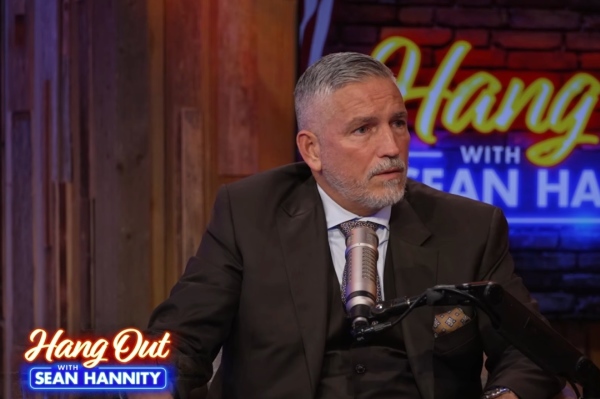
“The Passion of the Christ” actor Jim Caviezel is challenging Christians to "get in the foxhole" and stand firm in their convictions, warning that too many believers are unwilling to defend their faith when doing so comes at a personal or professional cost.
"These are also a lot of the posers in our faith. I'm talking about every denomination," the 58-year-old actor told The Christian Post. "When you refuse to get in a foxhole, that's how I know your level of commitment."
It's a conviction the actor sees reflected in his latest film, "Ghost Soldier," an action thriller about Henry “Fitz” Fitzgerald, a solitary former Green Beret and advanced weapons systems developer, who emerges from isolation to defend his neighbors against a powerful corporation determined to seize their land.
Caviezel said that while the film, which is rated PG-13 for strong violence, has plenty of explosions and military technology, it’s really about the obligation to act when others are unwilling, even when doing so invites suffering.
"Fitz gets involved. Fitz doesn't do the fist bump," Caviezel said. "Fitz is the Good Samaritan that goes over, and he lifts the poor guy up, and he puts him on his back."
"When I watch explosions and everything, I might watch it in the movie. Everybody else might like the movie, but I kind of go, boom," he said. "You've got to care about this character."
Directed by William Eubank, "Ghost Soldier," which released Wednesday through Sony Pictures, also stars Olivia Thirlby, Beau Knapp, Garret Dillahunt and Shea Whigham. The screenplay was written by Chris Papasadero, himself a Green Beret, who Caviezel said gave the story the credibility often missing from Hollywood action films.
"First time he ever wrote anything, but he wrote what he knew," Caviezel said. "Versus somebody who's in the industry and says, you know, that's where it becomes very Hollywoodish."
The actor has spent much of his career portraying men whose morals place them in extraordinary circumstances, from Edmond Dantès in "The Count of Monte Cristo" to Jesus in "The Passion of the Christ" and former federal agent Tim Ballard in the surprise Angel Studios hit "Sound of Freedom."
"When I'm looking at this story, the first thing I'm just looking [at is] how it reads, if there's any truth to it," Caviezel said, adding that working with director Ridley Scott on "G.I. Jane" helped prepare him for "The Passion of the Christ," during which he suffered a separated shoulder and endured prolonged exposure to cold weather.
"They're going to find out what your level of commitment is pretty quick," he said of those seeking to become Green Berets. "You might have 120 guys, maybe 20 will make it through."
In "Ghost Soldier," Fitz's transformation begins when he encounters the family of a former military comrade who was killed in action. The family welcomes him into their home and opens their hearts to him through prayer.
"He has to come out to help a boy, which helps the family," Caviezel said. "They open up their hearts to him in prayer, and that's how it begins. … A lot of people in my industry have turned that away, and I never will because it's a lie.”
Caviezel drew parallels between Fitz and the biblical account of David, the shepherd boy overlooked by his father before being chosen to lead Israel.
"I saw my character as being that sheep herder, the one, the rare guy," he said. "This guy might not know God like the rest of us, but he has it. He's not going to leave his brother down."
After spending decades in the entertainment industry, Caviezel said he’s seen far too many people discourage open discussions of religion and politics. He lamented that political division has weakened the country, and how Americans have become reluctant to confront threats to their values.
"Our politics is going to kill our nation, and it's going to kill us," he said. "I also felt like where our industry has gone in the woke agenda. I'm just going to say it as it is. Go woke, go broke."
He also criticized the double standard he’s seen in Hollywood, where some political perspectives are openly embraced while others are discouraged.
"When I go to a function, they want to talk about Jesus, and then they say to me, 'We don't talk about religion. We don't talk about politics,'" he said, adding that the rise of Nazi Germany occured because of unwillingness to confront wrongdoing.
"A lot of bad wars happen because of that," he said. "Just ask the Jews in the Third Reich how that happened, and it happened over a series of time of people not wanting to get involved."
More than two decades after the release of "The Passion of the Christ," Caviezel also said he’s disillusioned by the way Hollywood categorizes movies with explicitly Christian themes. Christians, he stressed, should be on the front lines making quality content instead of being relegated to a label.
"They called us a faith-based film because we didn't count. We don't count. They have a truth. We don't have the truth," he said. "I was willing to fight back and say, 'No, we are holding, we have the truth. We are the truth.' And they hate that."
"Faith-based films is not a compliment," he added. "I believe that we should be able to make films that are better than all of their films because we have the truth. A lot of these faith-based films are done by filmmakers that aren't very good, and they make their movies, and then they go to their people and say, 'You need to watch this because we made this for you.' … I've never been like that. I'm going to make a film that I can beat anybody at any level. That's where I know where our Lord wants me."
Despite his criticism of the industry, Caviezel said he’s proud of the lasting influence of "The Passion of the Christ," which inspired a generation of Christian filmmakers and hit shows like “The Chosen” and “House of David.” The film’s follow-up, “The Resurrection of the Christ,” will be released in two parts in 2027 and 2028.
"It's still doing it," he said of the film's impact. "It's an annuity, like money, except the money in this story is about souls. When you die, and you're gone, and people keep watching the work you did, and they keep coming back to God, that's best. That's the best annuity right there, you know."
Caviezel is also preparing for the release of "Zero A.D.," a biblical drama in which he portrays King Herod, the ruler who, according to the Gospel of Matthew, ordered the killing of young boys in Bethlehem after learning of Jesus' birth.
Having previously portrayed Christ, Caviezel said that taking on the role of one of the Bible's most notorious villains presented a challenge.
"If you play Jesus and you did what you did, you better be that much better when you ... do Herod," he said. "You're going to be compared, and I can't wait for you to see that."
The actor also connected the film's depiction of Herod's slaughter of children to his longstanding opposition to abortion, criticizing religious leaders who have failed to confront the practice.
"We should get rid of abortion before God has to do something," he said. "I get asked all the time about politics in my industry. And I say, 'Well, you have no problem talking about your politics, but then that's your choice and your freedoms. I don't get those same freedoms. You try to put me in a box.'"
Caviezel said that for him, the challenge is to remain faithful to those biblical convictions without compromising the quality of his work. And in "Ghost Soldier," he sees a character whose actions embody the courage he’s challenging Christians to exemplify in an increasingly fractured culture.
"Fitz gets involved," Caviezel said. "He's not going to leave his brother down."
Leah M. Klett is a reporter for The Christian Post. She can be reached at: leah.klett@christianpost.com