Psychologist hails SCOTUS ruling against 'conversion therapy' ban: 'Politicians have no business'

A licensed clinical psychologist in California who helps clients with unwanted same-sex attraction and gender identity issues praised the recent U.S. Supreme Court decision in Chiles v. Salazar, which struck down a Colorado law banning so-called "conversion therapy" for minors.
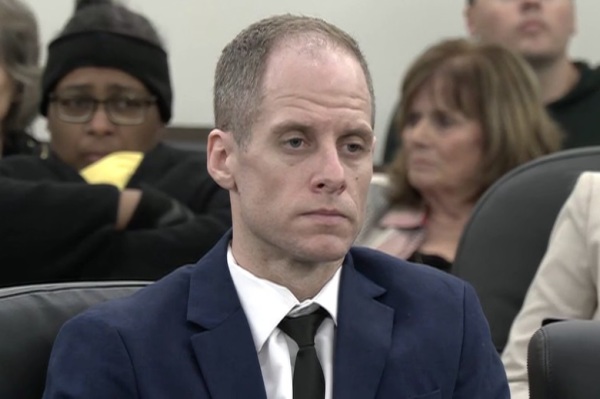
"I'm excited that the court chose to protect the constitutional rights of psychotherapists," Dr. Joseph Nicolosi Jr. told The Christian Post in a phone interview Tuesday, shortly after the high court's 8-1 ruling was announced.
Nicolosi, who serves as president of the nonprofit Reintegrative Therapy Association and penned an amicus brief for the case last year, said he was pleasantly surprised by how lopsided the decision was.
"We thought it would be a 6-3 decision, or perhaps a 7-2 decision; but not 8-1," he said. "So this is great. I think people are getting the message: politicians have no business telling people that their therapy goals are illegal."
Nicolosi, whose state was the first of about two dozen to enact a conversion therapy ban for minors since 2012, argued in his amicus brief that such laws are vague and constitute viewpoint discrimination under the First Amendment while hindering legitimate, evidence-based psychotherapy.
He also noted the definition of "conversion therapy" has changed over the decades, and that state laws banning it "employ vague and overbroad language, creating an effect that deters therapists from engaging in evidence-based treatments and open discourse with clients." The brief drew a distinction between "conversion therapy" aimed at changing sexual attractions and therapy by which sexual attractions can sometimes be changed as a byproduct of processing trauma.
Justice Neil Gorsuch, writing the opinion of the court, echoed Nicolosi's concerns about the First Amendment, noting that the Colorado law was especially problematic because it attempted to regulate the talk therapy of Kaley Chiles, the Christian therapist who served as the plaintiff in the case.
"Colorado's law does not just regulate the content of Ms. Chiles's speech. It goes a step further, prescribing what views she may and may not express," Gorsuch wrote.
"While the First Amendment protects many and varied forms of expression, the spoken word is perhaps the quintessential form of protected speech. And that is exactly the kind of expression in which Ms. Chiles seeks to engage."
Alone in her dissent was Justice Ketanji Brown Jackson, whose appeal to "medical consensus" was dismissed by Gorsuch, who noted such supposed consensus "is not static; it evolves and always has."
During oral arguments for the case last fall, Justice Sonia Sotomayor questioned the purpose of the legal challenge, noting there had been no prosecutions and "no enforcement" of the law during the six years of its existence. Nicolosi told CP that Sotomayor's point ignores the intended effect of such laws, which is to intimidate therapists.
"The laws are designed to be vague, broad and create a chilling effect," he said. "Their mere existence is enough to chill speech, whether or not someone is actually prosecuted."
Nicolosi expressed optimism that the court's decision will liberate and embolden therapists to offer the services their clients seek.
"It's not just about clients; it's also about therapists," he said. "There are many therapists who have been afraid to participate in this work because these bans have such a chilling effect. Now we may see more courageous therapists coming forward and helping this very underserved population of individuals who have unwanted sexual attractions."
Nicolosi added that he hopes the ruling might also lead to a legal domino effect around the world, where therapists in countries such as Canada potentially face imprisonment for offering therapy that does not affirm homosexuality and transgenderism, even if the patient is a consenting adult seeking change.
In Europe, some countries have effectively criminalized even "advertising" for so-called conversion therapy, which has prompted free speech concerns among Christians, especially. Matthew Grech, a 36-year-old Christian man, scored a legal victory in Malta on March 4 after being dragged into court repeatedly over three years for giving his testimony to a local media outlet about repenting of homosexuality because of his faith.
"I hope other courts in different countries take notice and follow suit," Nicolosi said of Chiles v. Salazar. "The government shouldn't be deciding who gets treatment and who doesn't. The government shouldn't interfere in private client-therapist relationships by dictating what goals clients are prohibited from pursuing."
During an interview with CP last December, Nicolosi said clients "deserve the right to pick their own therapy goals." He acknowledged that telling the truth about unwanted same-sex attraction and similar topics is an uphill cultural battle, but that some degree of change is possible for those who are willing.
"I'm not talking about flipping a light switch. We're talking about rotating a light dimmer. We're talking about gradual shifts of varying degrees," he said. "No one can guarantee an outcome. No two people respond identically, but even a few degrees of shift can be very helpful to some people, and they deserve to know that this can be an option for them."
Jon Brown is a reporter for The Christian Post. Send news tips to jon.brown@christianpost.com