Puerto Rico gives legal protection to unborn babies; pro-lifers praise 'historic moment'


Puerto Rico passed a new law amending its penal code on murder to include the killing of unborn babies.
Puerto Rican Gov. Jenniffer González-Colon, a Republican, signed the amended Senate Bill 923 on Thursday, also known as the Keishla Madlane Law, which recognizes unborn babies as human beings.
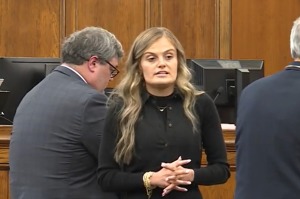
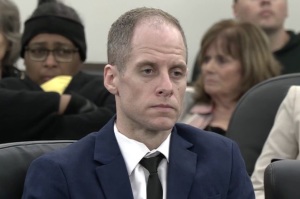
The legislation was named after Keishla Madlane Rodríguez Ortiz, who, along with her unborn child, was murdered in 2021 by her lover, former Puerto Rican boxer Félix Verdejo-Sánchez.
González said in a statement on Thursday that “the legislation has the purpose of maintaining coherence between civil and criminal provisions by recognizing the unborn child as a human being.”
According to the abortion rights advocacy organization Center for Reproductive Rights, abortion is legal in Puerto Rico for reasons involving a woman’s “life or health,” which in the United States territory also extends to "mental health and socio-emotional well-being.”
Several pro-life advocacy organizations, which oppose abortion, have voiced their support for the law. SBA Pro-Life America called it a "historic moment" in Puerto Rico.
"A powerful example and a win for moms and babies. We applaud this bold step for human dignity!" the group posted on social media.
Kristan Hawkins, president of the national campus activist organization Students for Life of America, celebrated what she called a "big win."
"Thank you to Gov. Jenniffer González for affirming what science has made clear for decades: Life begins at conception!" Hawkins wrote on X.
Critics of the new law include Dr. Carlos Díaz Vélez, president of Puerto Rico’s College of Medical Surgeons, who contends it “will bring disastrous consequences” to pregnant women.
“This will bring complex clinical decisions into the realm of criminal law,” Díaz told The Associated Press, maintaining it could unlawfully interfere with critical medical decisions.
“The problem is that no medical recommendations were followed here,” he continued, noting the reported lack of public hearings on the proposal. “This is a serious blow. … It puts us in a difficult situation.”
Last December, Gonzalez-Colon signed a similar law, Senate Bill 504, which amends the Civil Code of Puerto Rico to clarify that “Every human being is a natural person, including the conceived child at any stage of gestation within the mother’s womb.”
“Every human being has legal personality and capacity from the moment of conception and is a subject of law for all purposes that are favorable to him or her. The inheritance rights that the law recognizes in favor of the unborn child are subject to the event of birth,” stated SB 504.
“The representation of the human being in gestation corresponds to whoever will exercise it when he or she is born and, in case of impossibility or incapacity, to a legal representative or court-appointed guardian.”
Senate Bill 504 states: “Every human being has legal personality and capacity from the moment of conception and is a subject of law for all purposes that are favorable to him or her. The inheritance rights that the law recognizes in favor of the unborn child are subject to the event of birth. The representation of the human being in gestation corresponds to whoever will exercise it when he or she is born and, in case of impossibility or incapacity, to a legal representative or court-appointed guardian."
The measure proclaims there could be "benefits that the unborn child could receive under this new legal framework," including protections "parents could claim from health insurance companies, in personal injury lawsuits, in donations and property rights, and even in the context of labor rights that their parents could claim on behalf of the unborn child, among others.”
The policy affirms, however, that “the rights recognized to the unborn child do not diminish the power of the pregnant woman to make decisions about her pregnancy in accordance with the law.”