Samuel Rodriguez says Republicans could lose ground with Latino voters in midterms

Hispanic Evangelical leader Samuel Rodriguez believes conservatives could most certainly lose ground with Latino voters in the 2026 midterm elections through what he calls votes of abstention as the community struggles with higher costs of living and the Trump administration's aggressive immigration enforcement.
During an exclusive interview with The Christian Post at the 25th anniversary summit of the National Hispanic Christian Leadership Conference (NHCLC) held at the Museum of the Bible in Washington, D.C., the NHCLC president outlined the main concerns that congregational leaders convey to him at the national level.
He also analyzed their relationships with the federal administration, detailed the psychological support initiatives for ministers and reviewed the achievements and challenges of the movement after a quarter of a century of operation.
The electoral pulse and the concern over Hispanic abstention
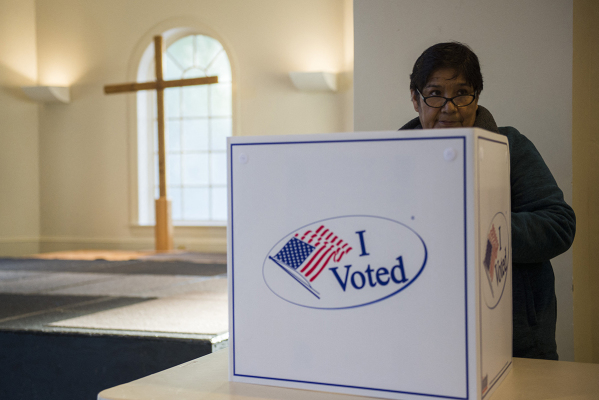
When asked about the electoral climate among Hispanic pastors in the lead-up to the midterm elections next month, Rodríguez acknowledged a marked institutional concern about the shift in civic engagement trends. Hispanic support for conservative proposals has declined significantly compared to previous cycles, he said.
“The Latino vote, which we managed to reach close to 50% in support of a conservative Christian agenda focused on family values, no longer exists in 2026,” Rodríguez told the Spanish-language Christian Post.
He attributed this shift primarily to economic pressures stemming from international conflicts that drove up fuel and food prices, as well as immigration enforcement measures implemented by U.S. Immigration and Customs Enforcement under Kristi Noem’s previous tenure at the Department of Homeland Security.
“Therefore, what was once 50% is now around 30%,” he explained.
Rodriguez, who is of Puerto Rican descent and pastors New Season Church in Sacramento, California, emphasized that Hispanic believers do not support platforms that promote abortion, gender ideology or positions aligned with Marxism and antisemitism.
However, he warned that the direct consequence of the current discontent is not a shift of votes toward progressive options, but rather voter abstention.
"What this will unfortunately cause is many Evangelical Christians to stay home," Rodriguez said. "I am trying to convince people: this election is the bulwark against Islam infiltrating this country; it is the bulwark against socialism and communism winning in this country."
"If the left retains control of the Senate and the House of Representatives, it will be a very difficult time for those committed to the Lamb's agenda," the pastor continued. "Therefore, there is a sense of warning and great desperation to mobilize the Church at this time."

Government access and the warning against policy priorities
Regarding the dialogue between churches and power structures in the U.S. capital, Rodríguez asserted that there is a formal and constant closeness with the Republican Party and the Executive Branch.
"Access to the White House has been unprecedented," he said. "I have access to the president. I can easily make a call, and I've met with him multiple times this year. Members of Congress, too. And it's mutual: they reach out to us, they call us, there's a weekly conversation with the White House."
In response to questions about the practical results of these contacts in the face of migration frictions, he attributed the difficulties to bureaucratic dynamics and reaffirmed the existence of a commitment to the Latin sector.
However, Rodriguez warned against what he called a lack of strategic perspective within the believing electorate by prioritizing legislative issues.
"Frustration arises when we reach these moments, when there are issues and the community suffers from political myopia," he stated. "If the Latino Christian community says that immigration is more important than abortion, that's where things get damaged. If they say, 'immigration is more important than this transgender agenda that's coming after our children,' there's a problem. And what I'm trying to do is convince people that there is a collective agenda, but there are top priorities that come first, and everything else will follow."
Rodríguez concluded this section by emphasizing the impact of these decisions: "We cannot sacrifice everything on the altar of immigration."
Regarding the civic role of pulpits, he advised local leaders to distance themselves from partisan affiliations and focus preaching on fundamental biblical principles. He noted that doctrines such as human life, marriage, gender identity and trust in God over the state should guide the congregation.
He also expressed his alarm at the resurgence of international antisemitism.
"The wall of fire against Marxism, socialism, antisemitism, Islam and the transgender agenda is called the Latin Christian community," Rodríguez said.
New leadership and generational continuity
Reflecting on the organization's motto, "One Movement, Many Voices," Rodríguez highlighted the participation of prominent figures such as Dr. Carlos Campo, Dr. Gilberto Vélez, Dámaris Carbaugh, Wanda Rolón, Iván de la Torre, Manny Rosario, Christine D'Clario, Redimi2, and Miel San Marcos, among others.
When asked about the new generations that require greater visibility for the future of the movement, he mentioned emerging communicators and pastors belonging to Generations Z and Alpha, including Roberto Arbino, Juan Rivera, Eli Bonilla Jr., Ivon Alemán, Lorena Rodríguez, Cynthia Rosario, Nizak Rosario and Christopher Montelongo.
Regarding his own role at the head of the organization, Rodríguez summarized: "I am a Samuel. I want to emphasize: my name is not David; it is Samuel. My job as president of the NHCLC is not to be David; it is to be Samuel: to seek out the Davids."
Mental health resources for pastoral ministry
One of the central themes discussed during the summit was the operation of the Ministerial Health Center, an area focused on responding to emotional and personal burnout in pastoral families.
Rodríguez confirmed that the most frequent diagnoses treated by this program include clinical cases of "depression, anxiety attacks, and marital and child issues," problems that have increased significantly in the last three years.
The president of the NHCLC dismissed the cultural and religious stigmas that have traditionally prevented pastors from seeking psychological assistance, arguing that asking for help implies a lack of faith. To address this need, he explained that the organization has implemented academic partnerships that combine faith with validated scientific tools.
"We are providing proven resources, resources based on faith and science, that have had a remarkably positive impact on promoting peace," Rodríguez stated. This initiative includes mobile applications, digital educational materials, and in-person support centers throughout the country to assist clergy and their spouses.
Strategic collaboration and community recognition
Within the framework of the Kingdom Collaborators Network, Rodríguez stressed the need to dismantle ministerial competition between congregations in order to promote coordinated work in cities.
"Christ sent the apostles, commissioning them two by two. That is to say ... there is no such thing as a lone cowboy in the Kingdom. Quite the contrary: collaboration is the DNA of the Kingdom," he emphasized, basing the initiative on the text of John 17:21 .
As part of this collaborative model, the NHCLC awarded the "Pastors of the Year" recognition this year to Mark and Wanda Novales for their work at the City Reach Church congregation in Philadelphia.
Rodríguez cited this case, along with efforts in cities like Chicago, Dallas, Milwaukee and communities in Puerto Rico, as examples where "the Latino Evangelical church is not only impacting the Latino community: it is leading the way and not leading the way in impacting the entire community."
At the conclusion of the interview, Rodríguez expressed his main aspiration for the next decade of the Hispanic church: that the priestly prayer of Jesus Christ for unity be fully realized among the leaders and ministries of the continent.
This article was originally published in Spanish by Christian Post Español.
Javier Bolaños is a journalist with more than 20 years of experience in radio, television and written press. He has extensive knowledge of the Latin American reality, having traveled to most all of the countries of the region. He has been the regional producer for Latin America of Global News Alliance (GNA), a news agency that is a partner of Christian Daily International.
He was general producer of CBN News' Mundo Cristiano news program for 10 years and until recently also served as director of Evangélico Digital, an online publication focused on Latin America linked to the Spanish Evangelical Alliance. He has been an international correspondent for various media outlets covering presidential elections, natural disasters and major sporting events such as the Olympics and World Cups.
You can contact him at: javier.b@christiandaily.com