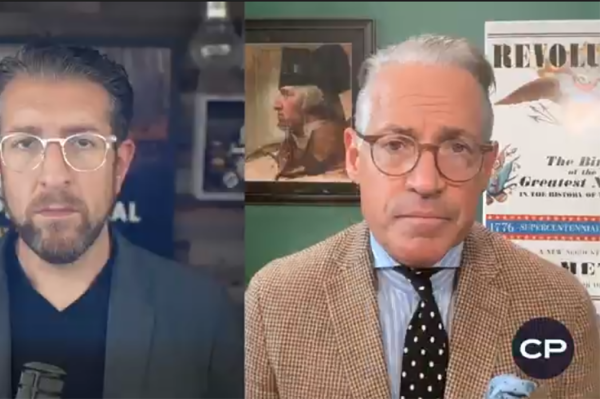


Scott Sauls on how mercy became personal

Correction Appended
In 2022, Scott Sauls was seemingly at the height of his career.
Mentored by the late pastor and author Tim Keller, Sauls was leading Christ Presbyterian, a rapidly growing three-campus church based on the Nashville-Brentwood border, had written several bestselling books (featuring endorsements from Keller) and was a highly sought-after speaker both within the Presbyterian Church of America and beyond.
But by 2023, it all came crashing down. In a move that was a shock to those who admired Saul’s work from afar, Christ Presbyterian Church voted to accept his voluntary resignation from the church he’d led for 12 years after concerns were raised about leadership and an investigation by the Nashville Presbytery.
It was “a crazy time,” the 58-year-old husband and father of two told The Christian Post.
“I can remember some of it, and some of it's just a fog,” he said.
But three years later, Sauls, who now leads a parachurch ministry focused on mentoring Nashville-area leaders and influencers, is clear-eyed about the personal failures, work addiction and unhealthy ambition that contributed to his downfall — and God’s faithfulness amid it all.
“I came out of that season recognizing that I was a workaholic, and in a pretty extreme way; 70 hours a week for 20-something years,” he reflected. “Churning out books and touring them while also pastoring a megachurch, raising kids and being a husband.”
“My addiction was acceptable,” Sauls added. “My addiction got rewarded outside of the home, friendships and personal life, the stuff that makes us deeply human. My addiction got rewarded with bonuses, bigger opportunities and invitations. But meanwhile, there's this shell on the inside that is affecting me, as well as people and those around me. I know it did.
"There was this feeling that, when Scott walks into the room, there’s this drive and intensity and focus. … I carried a very subtle kind of underground anxious presence that bled out on those around me. All I know is I don't want to go back there.”
Despite the undeniable pain of the situation, Sauls said the ordeal forced him to confront something he had spent much of his ministry helping others navigate: the difference between knowing about grace — often a focal point of his writings and teachings — and actually living in it.
“The whole mission of my ministry and writing has always been to help people believe that God loves them as much as He says He does,” he said, “all the while struggling to own it myself.”
It’s a topic he returns to, this time from a more personal lens, in his latest book, The Mercy King: How the Kindness of Jesus Heals Your Sin, Shame, and Weakness.

The book contends that Jesus isn't waiting for people to fix themselves before coming to Him, but instead pursues the broken, weary and ashamed with mercy that is “new every morning.”
“Mercy has come looking for you; all you need to do is receive it,” Sauls writes.
Initially started before his resignation, Sauls said the book had to be almost entirely rewritten after he left Christ Presbyterian and began the recovery process.
The original draft, he explained, felt too detached and academic for what he had lived through.
“Half of the book was written before those six months that led to my stepping away from church ministry,” he said. “Then I finished the book and actually ended up rewriting the whole thing.”
“It felt like it was written from more of a theologian perspective … as opposed to, ‘I need to put my own journey in this. I need to put my own heart and my own emotion and my own experience into it.’”
In the book, Sauls writes that subtle idols such as success and control often mask a “deeper ache." It’s only by embracing the mercy of Christ that true healing is possible.
For Sauls, part of that healing journey involved entering a 28-day addiction recovery program and beginning counseling with Nashville-based therapist Chip Dodd, who challenged him to stop minimizing his compulsive relationship with work.
“He said, ‘We really need to call it what it is: it’s work addiction, and it’s pathological,’” Sauls recalled. “He told me to treat it the same way you would alcoholism or drug addiction.”
Today, he belongs to ECO: A Covenant Order of Evangelical Presbyterians, a theologically adjacent denomination, though his work now looks very different from traditional pastoral ministry. Rather than leading a congregation, Sauls recently founded Healthy Leaders, Inc. and The Sycamore Community, a ministry with the stated aim of helping “high-achieving leaders and cultural influencers approach life honorably and meaningfully.”
Every participant in Scott’s program writes their own eulogy, an exercise he said he’s always struck by: “Not a single eulogy emphasized work accomplishments,” Sauls said of the more than 60 leaders he’s coached. “Even when they talked about work, they talked about character.”
The goal, he said, is helping people orient their lives toward what will matter most at the end.
“We want you to have a great funeral someday,” he said. “We want the people in the front row nodding in enthusiastic affirmation about every encouraging thing said about you.”
Removed from the nonstop demands of megachurch leadership, Sauls said he’s learning to live with a slower rhythm himself, though the process remains ongoing. It helps, he said, that his wife is a “Mary-type” personality, referencing the biblical sisters Mary and Martha, who remind him to slow down after decades of functioning almost entirely as a “human doing.”
“I’m still learning,” he said. “I still feel that pull of ‘got to get stuff done.’”
The experience also prompted Sauls to reexamine some of his theology: previously a complementarian, he said he’s now a “convinced egalitarian,” though he has “great sympathy” for his “complementarian brothers and sisters in Christ.”
Sauls said his differing viewpoint on the hot-button topic came after years of personal study, particularly through reading the work of influential Anglican priest and author Fleming Rutledge.
“She just took my breath away,” he said. “Her insights, her orthodoxy, her deeply rooted biblical theology.”
Still, he emphasized that faithful Christians can land differently on tough questions, like those surrounding women in ministry, adding: “I don’t want to be one of those people who says I’m not in fellowship with somebody because we land differently on this.”
And though he says he misses certain rhythms of pastoral ministry, like preparing sermons and shepherding a congregation, Sauls no longer measures success the way he once did.
“There’s going to come a time where all of this is not going to matter nearly as much to you as it does right now,” he said. “Set your older self up to thank your younger self someday.”
For younger pastors and ministry leaders, particularly those wired for achievement, Sauls said his goal is to instill in them the kind of wisdom he once struggled to follow himself.
“Slow down,” he said. “Guard your days off. Guard your nights at home, because you’re never going to get them back.”
“The pressure to perform is off,” he added. “Your judgment day has been removed from the future and placed onto Christ. You have nothing left to prove, nothing left to fear and nothing left to hide.”
The Mercy Kingreleases June 2.
Correction: This article has been updated to reflect that Sauls age is 58.
Leah M. Klett is a reporter for The Christian Post. She can be reached at: leah.klett@christianpost.com