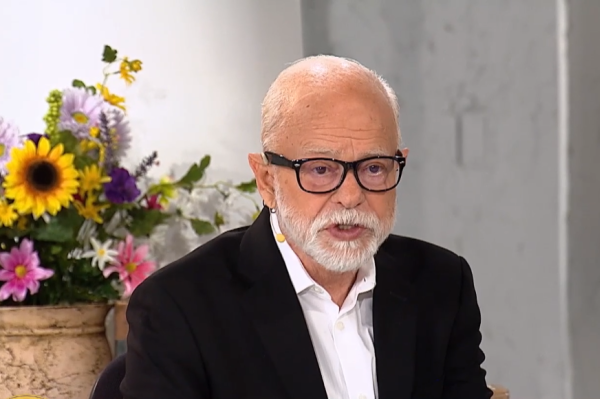


Robert Jeffress talks America's past blessings, future ahead of 250th anniversary


Pastor Robert Jeffress says that his upcoming Sunday message on the United States’ 250th anniversary won’t be the “typical flag-waving, rah-rah patriotic service” some might expect.
Instead, Jeffress, senior pastor of First Baptist Dallas, said the special sermon titled, "America at the Crossroads: Can We Survive Another 250 Years?" will deliver “a very frank and biblical assessment of where America has been and where we are going and what our future is in the years and decades ahead.”
“We have experienced God’s blessing for 250 years because of our strong Christian foundation,” he told The Christian Post on Wednesday. “Ultimately, we know from Scripture that America as we know it will cease to exist, certainly by the last years of Earth’s history, known as the Great Tribulation.”
According to Jeffress, the book of Revelation describes an America in those final years before the return of the Lord Jesus Christ in which there will be “no freedom of press, no freedom of assembly, no freedom of religion, no freedom of commerce, which means the United States as we know it will have ceased to exist since we will be under the rule of a one leader dictator commonly known as Antichrist.”
“So that’s the future,” he added. “We don’t know when it’s going to happen, but it is going to happen eventually.”
Despite the grim outlook, Jeffress emphasized that his upcoming sermon is “not a fatalistic message,” but rather points to the present responsibility of Christians, drawing from Deuteronomy 30.
“We as a nation have a choice. We can experience God’s blessings right now or God’s curses right now,” he said. “Truly patriotic Christians will want God’s blessings on our nation."
He gave a list of four things we can do to secure such blessings: take a stand, cast a vote, say a prayer, and share the Gospel.
"That," said Jeffress, "is what our duty is in this present time of American history.”
Amid ongoing conflict with Iran and other geopolitical challenges, the pastor addressed the tension many Christians are experiencing with the knowledge that ultimate judgment is coming while still being called to engage the culture for Christ.
“I think that’s why Jesus called us to be both salt and light,” Jeffress explained. “Salt in Jesus’ day was a preservative. It didn’t prevent the decay of meat, but it delayed the decay of meat. It gave the meat a longer shelf life. And in the same way, we as Christians in a pagan world are to be an influence, not that we’re going to prevent the ultimate demise of our culture, but we can delay it.”
Citing Jeremiah 29:7, Jeffress pushed back against Christian isolationism, particularly when it comes to engaging the culture of some of life’s biggest questions.
“The Bible says we are to seek the welfare of the city where we have been in exile and pray to the Lord on the city’s behalf,” he said. “God commanded the Israelites living in Babylonian captivity not to isolate themselves from the captivity or from Babylon, but to influence Babylon, to seek the welfare of Babylon. And the best way to do that is by exercising their faith in the culture in which [they] lived.”
Jeffress added, “There is always that tension between working to push back the darkness and at the same time sharing the culture’s only hope, which is the faith in Jesus Christ. The only way we’re going to ultimately change America is by changing the hearts of Americans, and only the Gospel of Jesus Christ can do that.”
The First Baptist Dallas pastor was at the White House for an Easter event last Wednesday when Paula White-Cain, who serves in the Faith Office, compared President Trump’s political trials and near assassinations to the persecution Jesus endured, which drew criticism from both theologians and commentators alike who saw the comparison as blasphemous.
Jeffress, however, offered a measured response to White-Cain’s comments and compared them to similar language used in pastoral counseling.
“In Hebrews 4, we’re told that Jesus is a sympathetic high priest who has been tested in all things as we are and yet without sin,” he said. “When I say to somebody, if you’ve lost a loved one in death, Jesus knows how you feel because He’s experienced that with His friend Lazarus. When I say to somebody, when you feel betrayed, Jesus understands that because He was betrayed.”
Jeffress continued, “When I say that, I’m not equating the person I’m talking to to Jesus. I’m not saying they’re the same. I’m saying they’ve gone through some of the similar experiences, and I believe that’s all Paula White was saying.”
“I don’t think she equates Donald Trump with Jesus,” he added. “I know Donald Trump does not equate himself with Jesus, so that’s the only way I interpreted it.”
Ian M. Giatti is a reporter for The Christian Post. He can be reached at: ian.giatti@christianpost.com.