i
i
This content is paid for by an advertiser and published by CP Brand Solutions. The Christian Post newsroom was not involved in creating this content. Learn more about CP Brand Solutions.
This content is paid for by an advertiser and published by CP Brand Solutions. The Christian Post newsroom was not involved in creating this content. Learn more about CP Brand Solutions.



Is your church ready for the next American Revival?
How Pastors and Churches Can Prepare for a Quiet Revival Emerging Across America
You've heard the whispers. Something is shifting. People are waking up to faith in unexpected places—even Joe Rogan and Russell Brand¹ are talking about God.
According to Ed Stetzer, this “quiet revival” is already happening—outside the walls of church, in podcasts, music and surprising testimonies. The signs aren't loud, but they're real, and they're growing.
And the data confirms it: Bible reading in America is surging. Today, 42% of adults nationwide read Scripture weekly²—levels we haven't seen in years.
So, the question isn't if God is stirring hearts. It's whether your church is prepared to meet them when they show up.
This article is for pastors and church leaders who don't want to miss the moment. We'll show you the signs of what's unfolding, why many churches will miss it and how yours can respond not just with open doors, but with actual paths for real spiritual growth.
Signals of Revival in America Now
If you're paying attention, revival isn't just wishful thinking—it's already showing signs of life. Not through stadium events or viral worship nights, but through flickering awakenings in unexpected places.
1. Public figures are openly exploring faith
Joe Rogan, one of the most influential media voices in America, recently confirmed he's attending a non-denominational church.³ That may not sound radical, but for someone with Rogan's audience, it signals a shift. Faith is becoming speakable again in places it once wasn't.
2. There's rising hunger for Scripture and spiritual meaning
Bookstore owners⁴ report young people walking in saying, "I want a Bible. All my friends are reading this thing."
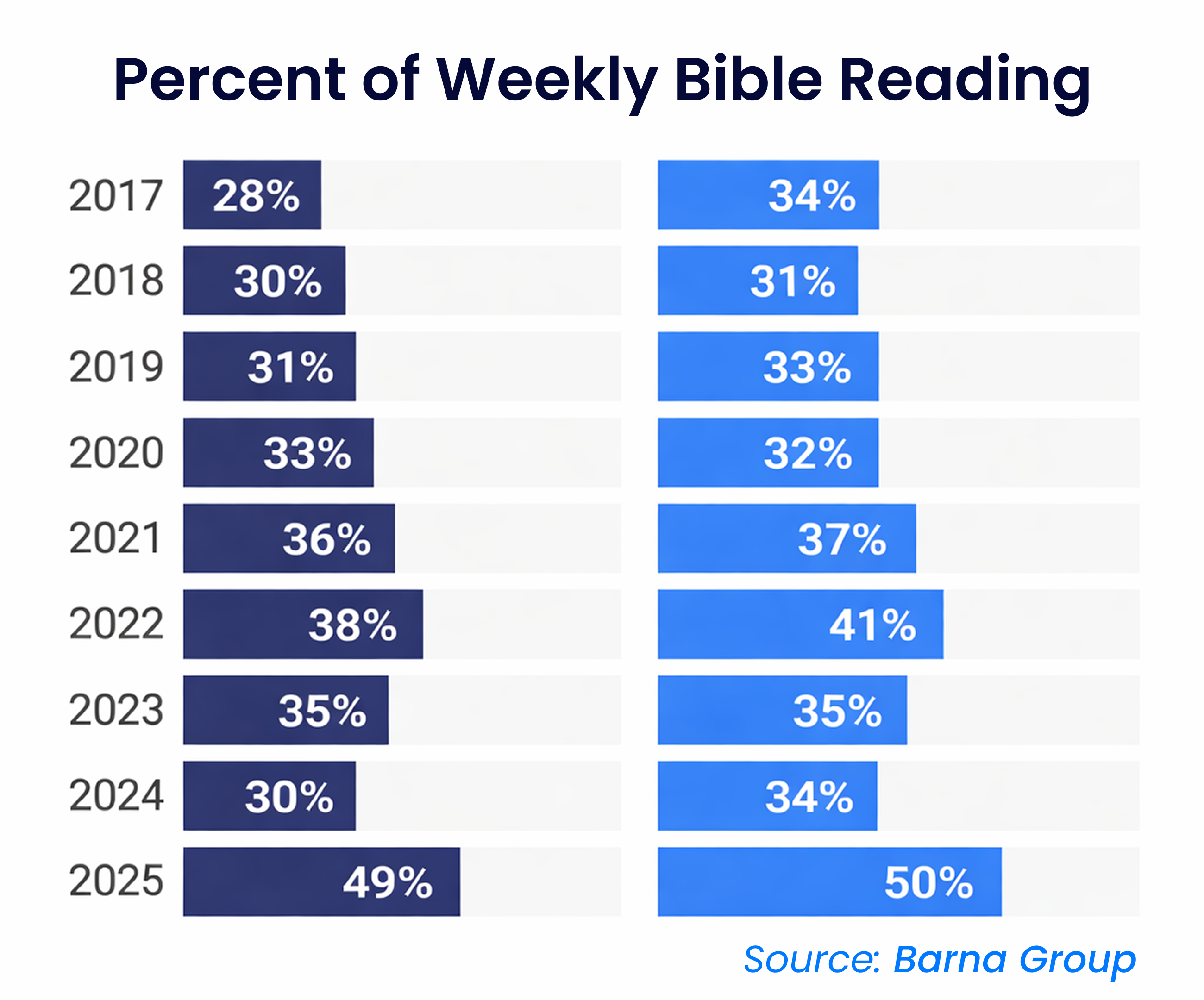
And the data backs it up. According to Barna, Bible engagement among Gen Z and Millennials jumped nearly 20% in 2025, one of the largest year-over-year surges Barna has ever recorded.²
Also, the American Bible Society reported an uptick in Bible engagement across the country⁴, especially among Millennials.
These aren't just one-off anecdotes. They're part of a broader movement of people asking bigger questions and seeking something deeper.
3. Even mainstream media is noticing
A recent USA Today piece called this a "quiet revival"⁵—something happening beneath the surface, in conversations, curiosity and culture.
That alone is worth paying attention to. When even secular outlets start taking faith seriously, you know the tide is turning.
These aren't cultural quirks. They're invitations. And most churches aren't ready to respond.
Why Many Churches Will Miss This Revival
Here's the hard truth: this revival won't fail because people aren't hungry. It will fail because churches aren't ready.
The problem isn't that God isn't moving; it's that many churches are still structured for maintenance, not momentum. And unless that changes, the people who are waking up to faith will quietly slip through the cracks.
Here are three reasons many churches won't catch this wave:

1. They're waiting for crowds, but not cultivating connection
Most pastors are trained to spot revival in big, visible ways: full rooms, loud worship, emotional moments. But this revival isn't coming in a flood. It's coming one person at a time—individuals asking quiet questions in the back row.
If your church is only prepared for big altar calls and high-energy Sundays, you'll miss the seekers sitting quietly in the back—the ones who aren't rushing to altars but hoping someone sees that they are there.
2. They have no follow-up plan for spiritual seekers
This might be the most common—and costly—gap.
Even churches that do attract visitors or spark curiosity often don't have a clear way to engage people beyond the Sunday service. No personal outreach. No thoughtful follow-up. No digital systems to guide people from "I visited once" to "I'm growing in faith."
The numbers are sobering: only about one in four first-time guests ever receives any kind of follow-up.⁶ And yet, churches that are intentional about follow-up retain nearly twice as many guests⁶ as those that don't. That gap is the difference between a visitor quietly slipping away or beginning a real journey of faith.
Without a strategy to nurture a person's spiritual journey, those flickers of interest can quickly die out.
3. They're stuck in old rhythms that don't match new on-ramps
Revival today won't look like it did in the 1990s. People's expectations have changed. The spiritual journey now often begins before someone ever walks through a church's doors. They join through a podcast, YouTube sermon or social media post.
Churches that ignore these new on-ramps will find themselves speaking to the choir while the curious go elsewhere.
If revival is coming—and the signals say it is—your church needs more than hope. It needs a plan.
What Churches Must Be Ready to Do for Revival
If revival is already happening—even in small ways—what should pastors actually do? Here are three practical shifts that reflect the reality of this movement:
They'll be the ones prepared to do the slow, faithful work of walking with people on a spiritual journey.
Here's what that looks like in practice:
1. Shift from performance to presence—and make space for real questions
Today's seekers aren't looking for slick answers. They're looking for a safe space to explore faith and to ask questions without being judged or rushed.
They're arriving with doubts, deconstruction or zero church background. They don't need a perfect Sunday service; they need a place where they feel seen, heard and safe to ask hard questions.
If your church is built to impress rather than connect, you'll miss them.
Practical shift: Train greeters, group leaders and staff to make room for slow spiritual journeys—not just quick conversions.
2. Build clear next steps on a Sunday
People might visit your service once. That doesn't mean they know what to do next.
They're wondering: Should I come back? Is there a way to learn more without signing up for a class? Will someone even notice I came?
If you don't answer these questions for them, the answer will be no … and they'll disappear.
Practical shift: Make it easy for people to keep exploring, one step at a time. Create a simple, visible "next step" pathway. One simple way: tap technology that lets guests explore next steps right from their seat—finding events, filling out a connect card or beginning a low-pressure email journey when they're ready.

3. Embrace digital tools that support relational follow-up
Revival today is both physical and digital. People explore faith on their phones before they show up at your doors. And yet, when they do show up, they often disappear just as quietly, unless someone follows up.
This is where most churches drop the ball not out of laziness, but out of a lack of systems. It's not about automation replacing relationships; it's about making sure no one slips through the cracks.
Practical shift: Use tools like VisitorReach that not only puts your church on their phone, but also creates personal, automated follow-up that helps new visitors feel seen, not sold to.
How VisitorReach Fits In
Today's revival often starts online—in a late-night Google search, a podcast comment section or a scroll through social media. That's why churches need more than open doors. They need to be visible where seekers are already looking.
That's exactly where VisitorReach comes in.
What is VisitorReach?
VisitorReach is a tool that helps make sure churches are showing up on social media and search engines right when people are seeking their answers to their questions. It starts connecting with people through texting before they even walk through your doors. Then, it helps facilitate follow-up with visitors in a personal, automated and thoughtful way, so no one gets missed, and every person who walks through your doors knows they matter.
With VisitorReach, your church can:
Show up where seekers are searching: Put your church in front of people on Google, Facebook and Instagram right when they're asking spiritual questions.
Start conversations before they arrive: Connect with seekers through texting and digital touchpoints—building trust before they even set foot in your building.
Follow up with visitors personally and consistently: Create automated but thoughtful follow-up journeys, so no one slips through the cracks after visiting.
Free your team to focus on relationships: Spend less time on administrative work, and more time discipling people instead of chasing contact info.
It's not just about technology. It's about intentionality.
VisitorReach isn't about technology for technology's sake. It's about making sure every spiritual seeker has a pathway—from first question, to first visit, to first step of faith. VisitorReach lets you:
- Send timely, personal messages that feel human, not robotic
- Create automated journeys that match where someone is in their spiritual journey
- Stay connected with people over weeks or months, not just days
- Follow up consistently and build trust over time without needing more manpower
It ensures that every person—whether they're a Joe Rogan-type exploring faith for the first time, or a long-lost believer returning after years away—gets seen, heard and invited deeper.
In this moment, where revival looks like a quiet reawakening, follow-up matters more than ever.
Don't let your church miss this moment.
This revival is happening now, but it won't wait for churches to catch up. The seekers are already showing up. The question is whether you'll be ready when they do.
VisitorReach helps you meet people where they are, follow up when it matters and turn quiet curiosity into lasting faith.
Schedule your free demo today and discover how to move from missed moments to meaningful ministry.