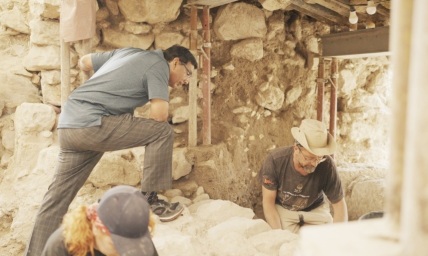
Conservative filmmaker and bestselling author Dinesh D’Souza says in his new book that archaeological discoveries offer growing evidence of the Bible’s historical accuracy and challenge skeptics who question its account of ancient events.
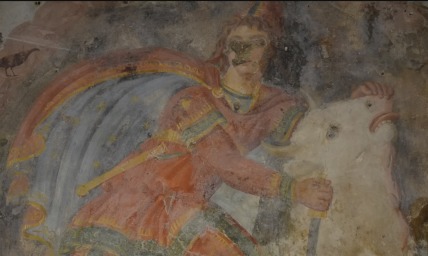
A 1,700-year-old inscription discovered at a Roman-era temple in southeastern Turkey is offering archaeologists rare evidence of how Christianity replaced one of the Roman Empire's most influential mystery religions.
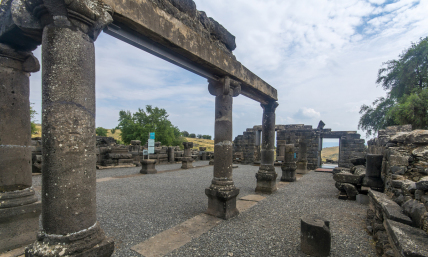
A region in the state of Israel known as the biblical location where Jesus walked on water has yielded a rare ancient gemstone thought to be more than 1,500 years old.
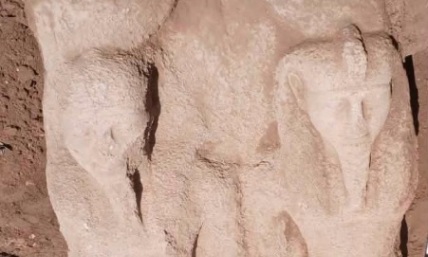
The discovery of a massive statue thought to represent Ramses II — frequently depicted in films as the pharaoh in the biblical Book of Exodus who refused to release the enslaved Israelites — is shedding new light on ancient Egyptian civilization in the East Delta region.
A team of Israeli and German archaeologists has found the skeletal remains of up to 89 individuals, most of them infants and young children, inside a repurposed ancient cistern at Tel Azekah, a site about 19 miles southwest of Jerusalem, in what researchers say is the first discovery of its kind in Israel.
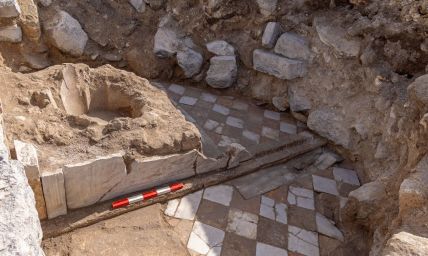
Archaeologists working near the Sea of Galilee — a region closely associated with the ministry of Jesus — have uncovered a 1,400-year-old Christian artifact that researchers believe offers new insight into early baptism practices.
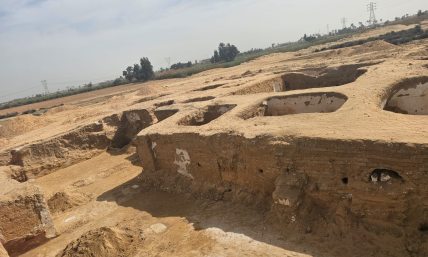
Egyptian archaeologists have unearthed a 1,500-year-old monastic complex in the Nile Delta, including a fifth-century building believed to have served as a reception facility for pilgrims, Egypt’s Ministry of Tourism and Antiquities announced.
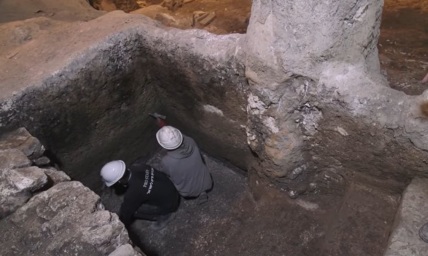
Excavations beneath the Western Wall Plaza uncovered a rock-hewn mikveh, or ritual bath, dating to the final days of the Second Temple period and providing insight about the days leading up to the Romans' destruction of Jerusalem and burning of the Jewish temple.
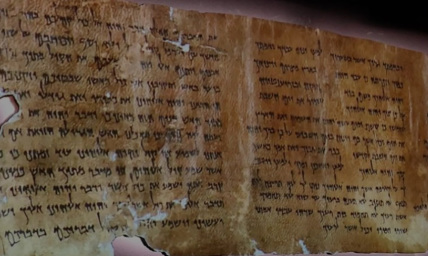
Israeli researchers from Tel Aviv University’s School of Science have developed a computer tool that could facilitate the complex study of the ancient Dead Sea Scrolls. The 2,000-year-old scrolls were written in Hebrew and were first discovered by chance in 1947 in caves close to the Dead Sea.