As a young atheist, he saw the universe as one big machine. Then he studied quantum physics, read the New Testament for the first time, and noticed something startling: Jesus talked like a quantum physicist.
Researchers from universities in the UK, Denmark and Sweden have proposed a new framework for understanding how repeated interactions with increasingly human-like artificial intelligence could influence people's behavior and self-perception.
Science asks how the natural world works. Naturalism insists, before the discussion begins, that nothing exists beyond nature. Confusing the two has done real damage.
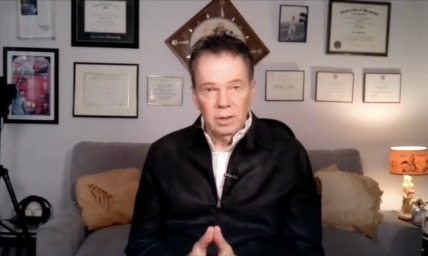
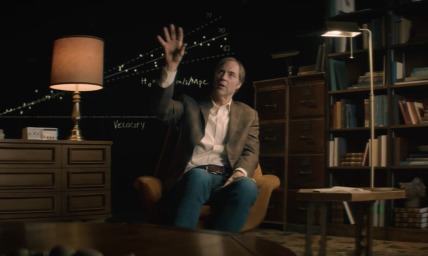
Former Harvard physicist and ABC News science editor Michael Guillén shares why modern scientific discoveries — particularly the existence of unseen realities like dark matter and the paradoxes of quantum physics — ultimately led him from atheism to Christianity, inspiring his new AI-generated documentary, "The Invisible Everywhere: Believing Is Seeing."
The new documentary “The Invisible Everywhere: Believing Is Seeing" chronicles Dr. Michael Guillén's decades-long journey from skepticism to Christian faith, highlighting the reality that modern scientific discoveries point beyond a strictly materialistic understanding of reality.
A comprehensive analysis of thousands of medical and social science studies has found that religious involvement is associated with better mental health outcomes far more often than not — with positive findings outnumbering negative ones by nearly 10 to one, according to a new report released by the Wheatley Institute.
Lee Strobel shares how the new documentary “The Story of Everything” presents a science-driven case for the existence of God, drawing on discoveries in cosmology, physics and biology.