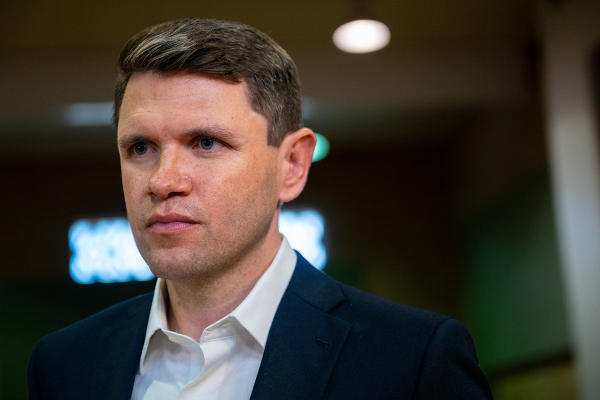
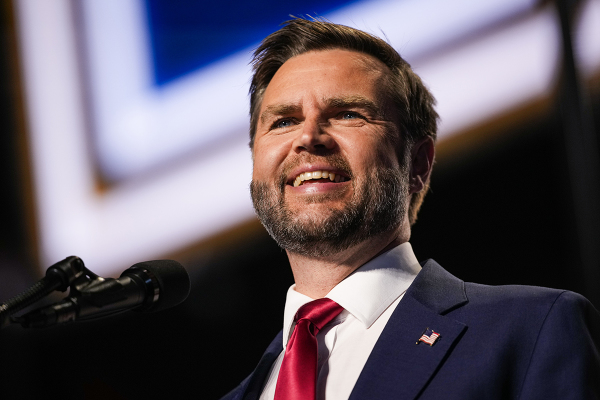
Cliffe Knechtle, son Stuart reveal why anxiety is causing Gen Z to ask harder questions about faith

On college campuses across America, from Dartmouth College to Harvard University, Cliffe Knechtle has spent decades fielding difficult questions of the faith: Why does God allow suffering? Is Christianity anti-science? Isn’t morality subjective? And increasingly, in the age of therapy culture and TikTok spirituality: Can God coexist with anxiety and mental health struggles?
Now, joined by his son, Stuart Knechtle, the veteran evangelist is seeing those questions intensify among Gen Zers, a generation shaped by social media, political polarization, pandemic isolation and deep skepticism toward institutions, including the Church.
“There’s a more firmly entrenched relativism. A more firmly entrenched agnosticism. A more firmly entrenched hyper-skepticism,” the 72-year-old pastor of Grace Community Church in New Canaan, Connecticut, told The Christian Post. “It’s nothing new in seed form. It’s been around for years and years. But it’s more firmly entrenched in our culture than I think it has ever been.”
That rising skepticism, and the emotional pain often fueling it, motivated the father-son duo’s new book, Demolishing Doubt: Discover How Your Deepest Questions Can Lead to Life-Giving Faith, releasing May 19 through Zondervan.
Drawing from decades of campus conversations and millions of online interactions through their ministry Give Me An Answer, the book contends that doubt is not the enemy of faith but often the doorway to a deeper, more intellectually grounded belief.

Stuart Knechtle, who has helped bring the ministry to a younger audience through viral social media clips and podcasts, told CP that Gen Z’s questions about faith are often personal, and moral relativism remains one of the most common themes among students.
“The therapeutic age that we’re in, anything tied to that, it’s, ‘Can you listen to my personal testimony? My mental health journey?’” he said. “My parents have been through a painful divorce. How do I respond?' We still get, ‘What’s true for you is true for you, what’s true for me is true for me.' And then we ask back, ‘Oh, is that true? How do you know that’s true?’”
The Knechtles’ approach stands in contrast to a growing trend among younger Americans who increasingly identify as “spiritual but not religious.” While many Gen Zers remain interested in meaning and morality, studies show that trust in organized religion and the importance of the Church’s place in culture has sharply declined.
According to Stuart, who also serves as assistant pastor of Grace Community Church, much of that distrust stems from hypocrisy and judgmentalism within churches themselves, citing a Barna Group finding that these are among the leading reasons young adults disengage from church.
“If they see the pastor, if they see the elders, and hopefully even some believers around them who’ve been at the church for a while, if they see that consistent walk in Christ, then they find that very attractive,” he said. “But too often, it’s the idea of Christians shoot their own.”
The 38-year-old evangelist acknowledged lingering wounds from purity culture and prosperity-gospel excesses that contributed to widespread deconstruction among millennials and Gen Z.
“A lot of this generation just does not find that attractive whatsoever,” Stuart said, referring to past approaches to sexuality within church culture. “Our sexuality is a big part of our identity. … We still need to speak into why sex is a very good and healthy thing, and it’s one of the centerpieces of marriage.”
Still, despite the hand-wringing over Gen Z’s mental health crisis and declining institutional trust, both father and son stressed they’re hopeful about the generation now filling America’s universities. In fact, Stuart said he's seeing anxiety itself push young adults toward deeper spiritual questions.
He said that increasingly, he is seeing students on campuses ranging from Ivy League schools to large public universities engaging Christianity with unusual seriousness.
“The instability as well as the anxiety has pushed Gen Z to seek after something more, where they can actually have that sense of durability,” he said. “People look at anxiety and instability as a really bad thing, but I think, no, it wakes people up. It’s a smelling salt.”
“It’s not just, ‘Hey, let me get caught up in a trend or a fad,’” Stuart said. “We still see people really wrestling through these issues, which I love.”
The Knechtles’ ministry model, which includes public Q&A sessions on college campuses where students can ask anything, has resonated: clips of tense but often respectful exchanges about atheism, sexuality, suffering and science have helped them build a social media following numbering in the millions. Last month, a wide-ranging interview the duo conducted with influencer Logan Paul went viral.
Part of their appeal lies in their insistence that Christianity can withstand scrutiny, Cliffe said, adding that skepticism can become spiritually productive when it drives someone toward inquiry.
“There are too many churches, I think, that still refuse to encourage people to ask questions,” Cliffe said. “‘Don’t ask questions. Just be quiet and listen and learn.’ I think that’s a big, big mistake. ... Doubt can be very healthy if doubt motivates me to study and to be honest with you. My doubts and the skeptical questions of people motivate me to crack a book, to read, to find answers.”
For Stuart, that process became personal during his sophomore year of college, when he underwent what he described as his own “crisis of faith.” Growing up as a pastor’s son in a town with a large Mormon population, he said he began questioning whether his own worldview had simply been inherited.
“I had to get to the point of saying, ‘Well, how do I know I’m not just brainwashed in my worldview?’” Stuart recalled.
The experience pushed him into a season of studying competing worldviews and wrestling honestly with doubt, something he says his parents never discouraged, adding: “They always invited me as an invitation to seek further.”
Cliffe rejected the idea that Christian belief requires intellectual surrender, emphasizing that Christianity is capable of answering life’s deepest questions about morality, purpose, suffering and death. This, he added, is what ultimately separates Christianity from the competing worldviews many young people are embracing today.
“Biblical faith is a response to evidence,” he said. “Biblical faith is not a blind leap into the dark. [I ask skeptics] ‘What are you living for? And what’s the evidence that whoever or whatever you’re living for is true?”
“The answers that I get to those two questions are so poorly thought out, it's embarrassing,” he continued. “It just reinforces my faith in Christ, that indeed, when it comes to evidence of reliability, there is nothing, and no one, who comes close to Christ when it comes to evidence of trustworthiness, evidence of credibility, evidence of reliability, and that helps me deal with my questions and my doubts in a wonderful way.”
Demolishing Doubtreleases May 19.
Leah M. Klett is a reporter for The Christian Post. She can be reached at: leah.klett@christianpost.com