Lawmakers urged to pressure Trump on refugee policy, warned Europe's speech restrictions could censor Americans
Quick Summary
- World Relief's Matthew Soerens made the appeal at a Wednesday Tom Lantos Human Rights Commission hearing.
- He says the administration's refugee suspension shut out Christians fleeing religious persecution.
- ADF Senior Counsel Jeremy Tedesco warned about the impact Europe's speech regulation could have on Americans.

A leader with an Evangelical humanitarian aid group urged members of Congress to press the Trump administration to reopen the refugee resettlement program after the United States resettled zero Christian refugees from the 50 countries where believers face the most severe persecution during fiscal year 2026.
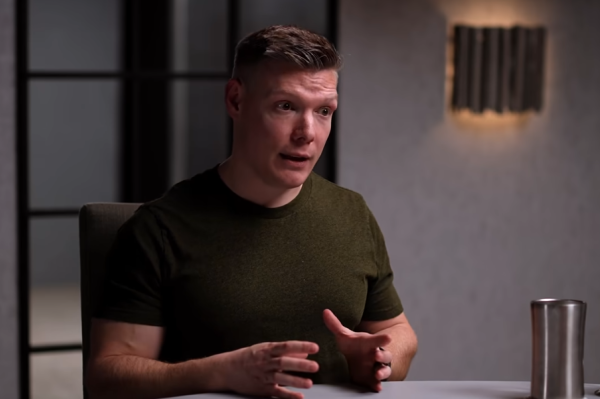
“Religious persecution [...] is on the rise globally,” Matthew Soerens, vice president of advocacy and policy at the refugee resettlement organization World Relief, said during a Wednesday hearing before the Tom Lantos Human Rights Commission titled “Worldwide Persecution of Christians: Responding to New Challenges.”
“That affects individuals of many different faiths, and at World Relief — as Christians who believe that God has made every human being in his image with inherent dignity — we are deeply committed to advocating for religious liberty for all people, not just fellow Christians, consistent with Article 18 of the Universal Declaration of Human Rights."

The hearing was led by commission co-chairs Reps. Chris Smith, R-N.J., and James McGovern, D-Mass., and touched on several other topics, including the global reach of European Union’s speech restrictions.
On refugees, Soerens stressed that nearly 225,000 Christians were forced to flee from their homes last year. Open Doors, a global watchdog organization that monitors Christian persecution in over 60 countries, reports in its latest annual report that more than 388 million Christians worldwide live in areas where they face high levels of persecution for their faith. Soerens noted during the hearing that this figure accounts for “roughly one out of seven Christians globally.”
"When persecution becomes sufficiently acute, some are forced to flee," he said. "In their most recent report, Open Doors reported that 224,129 Christians had to leave their homes to escape persecution just in the prior year."
Soerens argued that because of the Trump administration’s “abrupt reversal of past [refugee resettlement] commitments,” refugees fleeing religious persecution have been “completely shut out from resettlement in the United States.”
He highlighted a 2026 report co-authored by World Relief and Open Doors US, describing the fiscal year 2026 findings as “stark.”
“For the first time on record, zero Christian refugees were resettled to the United States from any of these countries. Not just a few, zero," Soerens said. "That’s down from 29,478 Christian refugees resettled from the top 50 countries in fiscal year 2024.”
The Trump administration’s suspension of refugee resettlement in January 2025, followed by a limited reopening that prioritized individuals from South Africa, effectively excluded Christians and other religious minorities fleeing persecution elsewhere, Soerens said.
“By excluding refugees from the rest of the world, the U.S. has slammed the door on those fleeing persecution on account of their faith,” Soerens stated.
He highlighted the consequences for people already waiting for resettlement through the Lautenberg Amendment, which provides a pathway for certain religious minorities, including those from Iran and the former Soviet Union.
According to Soerens, at least 14,000 Iranian Christians and other religious minorities who were already in the process of resettlement had been left stranded.
He encouraged Congress to provide greater oversight of immigration courts to ensure those who have what he described as a “well-founded fear” of persecution are not returned to their country of nationality.
Another witness, Jeremy Tedesco, senior counsel and senior vice president of Global Free Speech at Alliance Defending Freedom (ADF), focused his testimony on what he described as increasing government restrictions on Christian expression in Europe and the potential for European regulations to affect Americans’ ability to share their beliefs online.
He cited the case of Päivi Räsänen, a Finnish member of parliament who faced seven years of criminal prosecution after posting a Bible verse on social media challenging her church’s participation in a pride parade.

Although Finland’s Supreme Court upheld her acquittal on the charges related to the social media post in March 2026, it convicted her over a booklet she published in 2004 expressing her Christian beliefs about marriage and sexuality.
“In today’s Europe, Christian beliefs are seen as an existential threat to those who seek to assert control through authoritarian overreach," Tedesco said. "Räsänen’s prosecution sends an unmistakable message: dare to share Christian views that go against the orthodoxies of the day, and you may find yourself a convicted criminal."
Tedesco also referenced the cases of Isabel Vaughan-Spruce and Adam Smith-Connor in the United Kingdom, both of whom faced charges after they prayed outside abortion facilities. Vaughan-Spruce and Smith-Connor were accused of violating restrictions that prohibit certain activities within a couple hundred feet of abortion facilities.
“It’s hard to believe, but in Europe, expressing foundational Christian beliefs, holding a sign, offering to talk and even silently praying have become targets of criminal enforcement,” the ADF senior counsel asserted during his testimony.
He also warned that the European Union’s Digital Services Act (DSA), which regulates online platforms, could extend those restrictions beyond Europe.
The law gives European officials authority over how major online platforms handle content and requires companies to address categories of speech such as hate speech and disinformation.
Tedesco argued that the law’s requirements, combined with potential financial penalties of up to 6% of a company’s annual worldwide revenue, create incentives for platforms to remove disputed content.
“The DSA gives European officials the machinery to export European speech restrictions worldwide, often targeting Christians and their most fundamental practices and beliefs,” Tedesco said.
“The threat is not abstract. Because of these large and complex censorship systems, online platforms are strongly incentivized to apply European speech rules globally. This means churches, ministries, and speakers feel the effects of European censorship far beyond Europe’s borders, including here in the United States.”
He argued that the regulations could lead companies such as Google, Meta and X to apply European speech restrictions globally rather than risk financial penalties.
As a result, Tedesco warned that sermons, Christian testimonies and biblical teachings could be suppressed online even when no criminal charges have been filed and no court has considered the speech in question.
“Religious freedom and free speech are precious because they protect our deepest convictions and our ability to share them with others. They are essential to a free society,” he declared. “When governments claim the power to punish peaceful expressions of faith, everyone's freedom is endangered.”
“Congress must stand firmly for these freedoms. Defend Christians facing persecution in Europe and protect Americans from foreign censorship,” Tedesco continued. “Our right to speak and live according to our faith must never depend on whether those in power approve of what we believe.”