Grandmother of 2 kids killed in OKC bombing shares remarkable Christian witness: 'God has done a work in my life'

Kathy Sanders lost her two young grandsons in the 1995 Oklahoma City bombing, which led to decades of grief and her contemplating suicide. Her Christian faith ultimately taught her how to forgive the men responsible while simultaneously carrying out her own investigation to uncover answers about the attack.
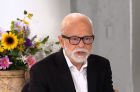
Sanders, whose grandsons Chase Smith, 3, and Colton Smith, 2, were killed at the Alfred P. Murrah Federal Building, discussed her journey during a recent interview with Tucker Carlson. She also described her decades-long effort to investigate questions surrounding the bombing.
Consumed by grief after the bombing, Sanders said her husband, Glenn Wilburn, remained angry at both God for not saving their grandsons and Timothy McVeigh, who was convicted and executed for the bombing.
Wilburn often talked about spitting on McVeigh’s grave and drinking champagne to celebrate his execution, she recalled. But Wilburn died at age 47, before McVeigh was executed.
Sanders said she eventually reached such a low point that she contemplated suicide but could not go through with it because of her husband and daughter.
After hearing television host John Walsh tell bombing survivors that they would grieve deeply but survive, Sanders said she began praying to God and gradually discovered that while she could not change her grief, she could choose what to do with her anger.
“I said, ‘Lord, you’re going to have to help me. I can’t live like this,’” Sanders recalled.
She said forgiveness became a process that began when she started praying for McVeigh and Terry Nichols, McVeigh’s convicted co-conspirator.
“I’ve since learned that forgiveness isn’t an event; it’s a process,” Sanders said.
After her husband died, Sanders said she attended one of Nichols’ trials and met a woman she believed was his mother in a hallway. She introduced herself, comforted her, and the two eventually became friends. Nichols was not sentenced to death in his federal trial, and Oklahoma later sought his execution in a state case.
Sanders later received a letter from Nichols and began corresponding with him and speaking with him by phone.
During those conversations, Nichols told Sanders that his family had rarely attended church except for weddings, funerals or for a free meal. After his arrest, however, he said he read a Bible left in his jail cell and listened to a radio preacher. He subsequently invited Jesus into his life.
Sanders said she understood why people might question whether Nichols’ religious conversion was genuine, but she chose to believe him.
“I know a lot about jailhouse religion,” Sanders said. “I’m nobody’s judge. I chose to believe him.”
She acknowledged that Nichols did not deserve mercy but said that was precisely what made forgiveness meaningful.
“If he deserved it, it wouldn’t be mercy," she said.
Nichols’ son, Josh, was 12 when the bombing occurred and had not seen his father in four years by the time McVeigh was executed. Josh was 16 at the time, Sanders said.
Josh’s mother brought him to Oklahoma, and the two stayed at Sanders’ home for four days. Sanders said Josh told her that classmates had nicknamed him “Bomber” and beaten him after school, eventually leading him to drop out.
Sanders said she told no one, including her own family, about the visit.
On his last day in Oklahoma, Sanders said, Josh asked her to take him to the memorial. There, she stood with her arm around him at chairs 60 and 61, which represent two of the victims killed in the attack.
She said the moment showed her the “transformation” her faith had produced, and that her decision to forgive “changed the ending” to her story.
While Sanders says her faith helped her forgive those responsible for the bombing, she has continued pursuing answers about what happened in Oklahoma City.
Sanders also said she believes the government knew of the bombing beforehand and tried to stop it.
For nearly three decades, Sanders has pursued her own inquiry into the bombing and the government's investigation, Oklahoma television station KOKH reported. Her inquiry has focused on an unidentified leg, designated P-71, found after the attack and initially mistaken for a known victim, an error later attributed to a clerical mistake.
In 2015, the Oklahoma State Medical Examiner’s Office said a DNA profile from the leg matched none of the known victims, a finding the station and The Washington Times reported that December after it went undisclosed for more than two decades.
Stephen Jones, McVeigh’s defense attorney at trial, contended that the leg belonged to a third participant in the bombing, telling KOKH in 2015 that people “still walk unaccountable” for the attack, though government investigators have maintained that McVeigh and Nichols acted alone.
After confirming the profile, the medical examiner’s office cited an ongoing investigation and turned the evidence over to the FBI. Charles Key, a former Oklahoma state representative, said in 2015 that the person should be identified because it could implicate others who were never brought to justice.
Sanders is not the first bombing survivor to seek access to the P-71 DNA profile. Jane Graham, who was on the ninth floor of the Murrah Building during the attack, requested the same information from the state in 2018. The Oklahoma Attorney General's Office denied her request, saying she had offered no proof she was an immediate relative of P-71 and was not involved in any legal action tied to the profile, according to KOKH.
Nichols wrote to Sanders that DNA testing would “break the case wide open,” referring to the unidentified leg.
Last month, Sanders went to the Oklahoma County District Court, seeking an order compelling the medical examiner’s office to hand over records on the specimen’s recovery, testing and disposition. The filing said past written requests under the Oklahoma Open Records Act had been denied, citing state statutes that bar release except by court order.
In a June 25 letter included with the filing, the Oklahoma Attorney General's Office said P-71 "has not been identified" and "remains an open case and investigation," according to KFOR.
Sanders said many of the investigators she has worked with over the years have died, and she hopes to learn whose leg it was during her lifetime. She believes advances in DNA technology could resolve the question and potentially bring closure to victims and their families.