John Piper on whether raising hands in worship is 'showing off'
Quick Summary
- John Piper responds to a question about the ethics behind raising hands in worship on his podcast.
- Theologian emphasizes that the motive behind worship actions is more important than the actions themselves.
- He warns against assuming any behavior is spiritually safe, highlighting the need for discernment.

When Christians lift their hands during worship, pray publicly or share Scripture online, are they expressing genuine devotion — or performing for the approval of others?
That question was at the center of a recent episode of the “Ask Pastor John” podcast featuring theologian and pastor John Piper, who addressed a listener's concerns about Jesus’ warning in Matthew 6 against practicing righteousness “to be seen by others.”
The listener asked whether expressive acts of worship, such as raising hands, closing eyes or displaying emotion in church, could cross the line into hypocrisy, the very behavior Jesus condemned when He warned against public displays of prayer done for human praise.
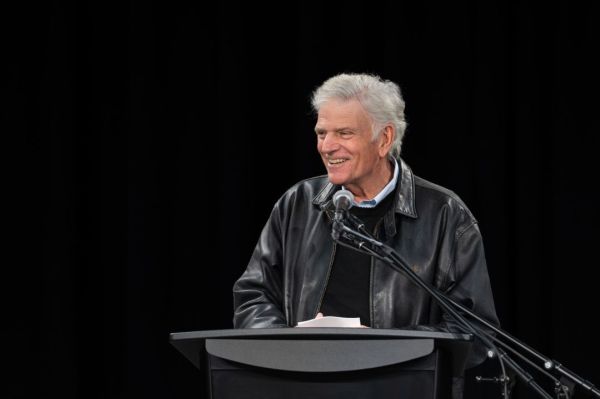
Piper, the 80-year-old founder of Desiring God and longtime pastor of Bethlehem Baptist Church in Minneapolis, said the issue Jesus raises in Matthew 6 is not primarily about outward actions, but about inward motives.
“The question is our motive, not first our action,” Piper said, emphasizing that Jesus’ teaching repeatedly probes whether people desire God’s approval more than the admiration of others.
At the heart of Matthew 6, Piper said, is a test of spiritual authenticity: whether God is real to believers as a Father and whether His promised reward outweighs the satisfaction of human praise.
Piper said Jesus’ examples are meant to expose the condition of the human heart, not to create a checklist of forbidden public behaviors. Christians, he said, cannot live out their faith invisibly.
“You can’t live the Christian life and not be known for being a godly person. You can’t,” Piper said, pointing to Matthew 5:16, where Jesus instructs believers to let their good works be seen so that God receives glory.
At the same time, Piper warned against assuming that any behavior is spiritually “safe.” Even humility itself, he said, can become a source of pride.
“There are no safe spaces. There are no safe behaviors in this world — none,” Piper said. “Our human hearts are infected with indwelling sin and are capable of being proud of the most humble, kind and generous behaviors.”
According to Piper, the teaching of Matthew 6 applies to every aspect of public faith, including worship posture, church attendance, praying before meals, wearing religious symbols and posting Scripture on social media.
The line between faithfulness and performance, he said, is crossed when actions are motivated by three things: a craving for human praise, when they disregard love for others, or when believers seek their own glory rather than God’s.
In one example, Piper described worshiping in a large congregation where no one raises their hands. In that context, he said, discernment and love should guide whether personal freedom is expressed or restrained for the sake of others.
“[T]hat’s why Paul prayed that our ‘love may abound more and more, with knowledge and all discernment’ (Philippians 1:9),” he said.
The ultimate question, Piper said, returns to the heart: whether believers want God Himself more than visibility, affirmation or recognition.
“Finally, public faithfulness becomes public performance when we fail to hope that God will be glorified more than we will be glorified. We just fail to want that; we don’t want it. That’s a failure. Which brings us back to where we started: Is God real for us? Is he a precious Father to us? Is the promise of his reward far more desirable to us than the rewards of human admiration?”
A similar argument was made by Sam Andres, a pastor and writer, in a 2023 article published by The Gospel Coalition, where he defended physical expressiveness in worship as both natural and biblical.
“Physical expressiveness is a natural way to celebrate what we love,” Andres wrote, comparing raised hands in church to sports fans instinctively lifting their arms in celebration or mourners slumping their bodies in grief.
“Our bodies are as much part of us as our inward selves. When we pray and worship, it’s good to incorporate both body and soul. We may be able to better engage mentally when we engage bodily.”
Still, Andres warned against what he called “hyper-individualism” in worship. Corporate worship, he wrote, is not a collection of private spiritual experiences but a shared act of glorifying God together.
“When physical expression draws attention to the individual,” Andres wrote, “we should consider whether it’s an aid in glorifying God together — or an unhelpful distraction.”